
About Richard Sanderville
Lived 1864 – 1951 (aged 86–87). Richard Sanderville was an artist.
Richard "Dick" Sanderville ( – February 25, 1951), also known as Richard Sandoval, Chief Bull or Bull Head, was a Indigenous American farmer, interpreter, language preservationist, and tribal leader of the Piegan Blackfeet. Sanderville was a practitioner of Plains Indian Sign Language (PISL), a lingua franca used by Plains Indians, and was critical to the preservation of the Piegan dialect of Plains Sign Language. Many of Sanderville's narratives utilizing Plains Sign Language are preserved and held by private institutions including the Smithsonian Institution and the Denver Art Museum.
Early life and education Sanderville was born in 1866 in Fort Benton, Montana (then part of Montana Territory) to a Mexican-Shoshone father, Isador Sandoval Jr., and a Piegan Blackfoot mother. Sanderville's father and grandfather were both named Isadore Sandoval, however the family's Spanish name was later anglicized. Isadore Sandoval Sr. (also spelled Isidore) was a translator, hunter, and trapper for the American Fur Company at Fort Union on the Missouri River. Isadore Sr. worked as a translator for Prince Maximilian of Wied-Neuwied From March 26, 1890, to November 8, 1892, Sanderville received education at the Carlisle Indian Industrial School, an American Indian boarding school in Carlisle, Pennsylvania as part of the Indian Civilization Act. After graduating from Carlisle Sanderville attended the Fort Shaw Indian Boarding School in Fort Shaw, Montana from January 1, 1893, to January 6, 1894. Scott's work in the field of PISL was heavily influenced by ethnographer Garrick Mallery who also specialized in PISL, Mallery being one of the first specialists in PISL to compile mixed media on the subject. Sanderville eventually became Scott's primary informant on PISL and assisted in the writing of the Dictionary of Indian Sign Language, an experimental film dictionary which utilized sign language, rather than written words. The Dictionary of Indian Sign Language is often remarked as being one of the earliest attempts of salvage ethnography made by both Scott and Sanderville.
Sanderville was an open critic of the National Park Service, particularly Horace M. Albright, due to the expansion and encroachment of Glacier National Park onto federally recognized Blackfoot land in 1930's. Sanderville later helped establish the Museum of the Plains Indian in North Browning, Montana. Outside of interpreting and translating Sanderville worked for the Culver Military Academy in Culver, Indiana in 1943 during World War II.
Personal life Sanderville was married twice in his life, first to Nancy Sheppard, a Kutenai woman, in 1894, and later to Anna Alberton, a Blackfoot woman, in 1917 following Nancy's death.
Don’t just read it —
keep it.
Full-length biographies made to live with: read them, listen on the way to work, watch them tonight.
- E-book
- Audio
- Video
Instant download · yours to keep · every purchase keeps this site free
Important facts
People in Richard Sanderville's life
Named in this biography and alive at the same time
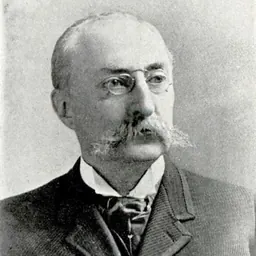
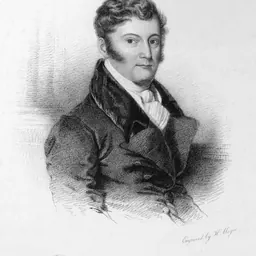

Related people
Same field, nearest in time
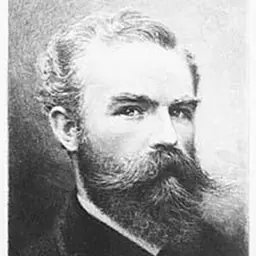



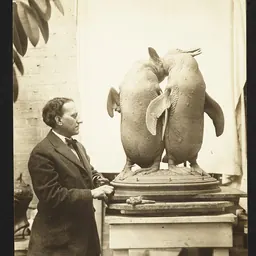

Contemporaries
People whose lives overlapped Richard Sanderville's



Frequently asked questions
Who was Richard Sanderville?
Blackfoot artist
When was Richard Sanderville born?
Richard Sanderville was born in 1864.
When did Richard Sanderville die?
Richard Sanderville died in 1951.
What was Richard Sanderville's occupation?
Richard Sanderville was an artist.
Sources & further reading
· Wikipedia: Richard Sanderville
· DBpedia: Richard Sanderville
Cite this page
APA: Biography.guide. (2026). Richard Sanderville. https://biography.guide/richard-sanderville/
MLA: "Richard Sanderville." Biography.guide, https://biography.guide/richard-sanderville/.
Chicago: "Richard Sanderville." Biography.guide. https://biography.guide/richard-sanderville/.
Data last updated: 2026-09-20 · Spot an error? Report a correction.
Page generated 2026-09-27 05:01 UTC