
About Richard Riemerschmid
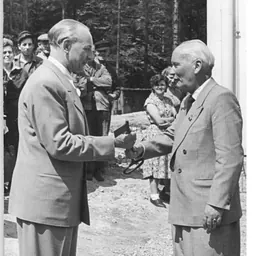
Lived 1868 – 1957 (aged 88). Richard Riemerschmid was a German architect, painter, designer, urban planner, university teacher and photographer.
Richard Riemerschmid (20 June 1868 – 13 April 1957) was a German architect, painter, designer and city planner from Munich. He was a major figure in Jugendstil, the German form of Art Nouveau, and a founder of architecture in the style. A founder member of both the Vereinigte Werkstätte für Kunst im Handwerk (United Workshops for Art in Handcrafts) and the Deutscher Werkbund and the director of art and design institutions in Munich and Cologne, he prized craftsmanship but also pioneered machine production of artistically designed objects.
Life and career Riemerschmid was born in Munich, the sixth of nine children of Eduard Riemerschmid, who headed the Munich distillery founded by his father Anton Riemerschmid, and his wife Amalie. After completing his Abitur at the Wilhelmsgymnasium in 1886 and military service in the army, he studied at the Academy of Fine Arts, Munich under Gabriel Hackl and Ludwig von Löfftz from 1888 to 1890 He produced advertising of various kinds on commission, including series of pictures for albums for the Stollwerck chocolate company of Cologne, one called "The Seasons" (Jahreszeiten) for Album No. 4 of 1899.
He was a co-founder of the Vereinigte Werkstätten für Kunst im Handwerk (United Workshops for Art in Handcrafts) (1897 or 1898, originally Dresdner Werkstätten für Handwerkskunst, later Deutsche Werkstätten für Handwerkskunst and now Deutsche Werkstätten Hellerau) and the Deutscher Werkbund (1907), which he headed from 1920 to 1926. (which merged with the Academy of Fine Arts in 1946), and from 1926 to 1931 was a professor at and the director of the Kölner Werkschulen (an art and design college which was a forerunner of the Academy of Media Arts Cologne). he created furniture, carpets, fabric and wallpaper designs and glass and porcelain pieces. He created several interior designs, including for the Munich Kammerspiele (1900/1901). With Joseph Maria Olbrich and his friend and colleague Bruno Paul, he designed the 30 luxury cabins of the fast ocean liner SS Kronprinzessin Cecilie, launched in 1906, at the time one of the most ambitious and successful German passenger vessels, and he, Paul, and Johann Poppe, house designer for the North German Lloyd Line, were to have co-designed the interiors of the never finished SS Columbus of 1914. The furniture in his 1899 show interiors was praised for its style, for varying the repetitive verticals by adding a diagonal note to the framing of a glass-fronted cabinet and having chairs taper upwards from a broad base, and above all for remaining true to simplicity. He began designing furniture because he could not find what he wanted for his flat after his marriage. In 1903–04 he designed a dinner and coffee service for Meissen porcelain, part of their attempt to incorporate art nouveau designs; it was well received by the critics but did not sell well, although some were also sold through the Workshops. It has been reissued as Blaue Rispe (blue meadow-grass).
Riemerschmid designed the site plan, the factory and some of the housing for Hellerau (now part of Dresden), which was the first garden city of the English type to be built in Germany. As an architect, he is known particularly for his houses: his own house in Munich, the Villa Fischel in Kiel, the Fieser villa in Baden-Baden, and the Frank villa in Göttingen and country house in Witzenhausen, and for the uncompleted "Walddorfstraße" workers' housing complex in Hagen, Westphalia, although his major contribution to Jugendstil architecture was his interior for the Munich Schauspielhaus (playhouse; later the Kammerspiele).
At the United Workshops in Hellerau, Riemerschmid developed a programme of machine production of art furniture. For example, a chair in his "music room" exhibit at the German Art Exhibition in Dresden in 1899 was so popular, the Workshops immediately placed it in production, it was also being manufactured and sold by Liberty's the next year, and it was widely copied. He subsequently expanded this to the production of house kits. One such house, ordered in 1922 at an exhibition and erected in 1923 in Rodenkirchen near Cologne from 4,000 parts, mostly wood but including tiles and heating stoves, was disassembled and stored in Leverkusen in 1978. In 1984 the State of North Rhine-Westphalia declared it a landmark, and research revealed that it was the only example of the model ever built. A grandchild of the original purchaser had the pieces moved in 2004 to Simbach am Inn, Bavaria and reassembled there at considerable cost, assisted by the Deutsche Stiftung Denkmalschutz (German Foundation for Landmark Protection).
In 1895, Riemerschmid married the actress Ida Hofmann. They had four children.
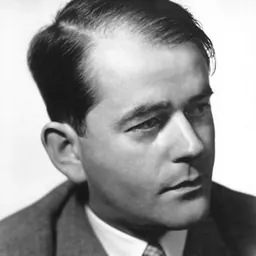
After the Nazi regime came to power in 1933, Riemerschmid was forced out of the Werkbund, and in 1943 Hitler forbade the award of the Goethe Medal for Art and Science to him as urged by Albert Speer. However, he did receive the medal on 20 July that year.
He is buried in the cemetery at Gräfelfing, which he laid out in 1913. His drawings are in the architectural museum at the Technical University of Munich and his other papers in the German Art Archive of the Germanisches Nationalmuseum in Nuremberg.
Selected works 1898–1906: Personal villa in the style of an English cottage, Pasing, Munich. Later extensions: studio and connecting building. Furnishings removed in 2010. 1899: "Music salon" interior, shown at the German Art Exhibition in Dresden 1900: "The art-lover's room" interior, shown at the Paris Exposition of 1900 1901: Interior design of the Schauspielhaus (later the Kammerspiele) in Munich (architect: Max Littmann) 1902: House for Alfred Mailick at Bahnhofstraße 17, Moritzburg, Saxony 1902–1903: Fieser villa in Baden-Baden 1904: "Rector's room at the Industrial School in Nuremberg" interior, shown at the 1904 World's Fair in St. Louis 1904–05: Fischel villa in Kiel 1905: Rudolph villa in Dresden (destroyed) 1905–06: Sultan villa in Grunewald, Berlin, commissioned in 1904 by Berlin industrialist Adolf Sultan, father of pianist Grete Sultan; demolished 1965. 1906: Frank villa in Göttingen 1906: Fritz Frank country house in Witzenhausen 1907–10: Walddorfstraße Workers' Settlement for Hagener Textilindustrie Gebrüder Elbers AG in Hagen (only 11 houses built of the planned 87 buildings) 1909–10: Scholten villa in Duisburg (demolished) 1909–11: Manufacturing plant, Deutsche Werkstätten für Handwerkskunst, Moritzburger Weg 67, Hellerau, Dresden 1909–11: Hoffmann villa in Halle 1909–13: Wieland villa in Ulm 1910: "Dining room" and "lady's chamber" interiors, shown at the 1910 International Exposition in Brussels 1910–12: Schwalten villa at Schwaltenweiher, Ostallgäu 1910–12: Carl villa, for the publisher Hans Carl, Höhenbergstraße 35, Feldafing 1911: Naumann villa in Riesa 1914: Interior design and furniture for the villa in the Werkbund exhibition at Cologne 1922: Factory building for Anton Riemerschmid Liquors on Prater Island, Munich 1924: War memorial, Schloßstraße, Ismaning 1925: Exhibition hall at the German Transport Exhibition in Munich 1928: Pavilion for Hermann Reckendorf GmbH, publisher, at the "Pressa" international press exhibition in Cologne 1928–29: Schaffer villa in Klingenmünster 1929–31: Wefelscheid villa in Bendorf
Selected publications Wege und Irrwege unserer Kunsterziehung. Berlin: Reckendorf, Künstlerische Erziehungsfragen. Flugschriften des Münchner Bundes. 2 vols. Munich: Müller, 1917, 1919
Honours 1914: Geheimrat, Kingdom of Bavaria 1924: Geheimer Regierungsrat, Bavaria 1943: Goethe-Medaille für Kunst und Wissenschaft 1951: City of Munich architecture prize 1952: Großes Bundesverdienstkreuz (Commander) 1952: City of Munich grand prize for art 1954: Honorary membership in the Academy of Fine Arts, Munich 1955: Honorary doctorate in engineering, Technische Hochschule Stuttgart, now the University of Stuttgart
Don’t just read it —
keep it.
Full-length biographies made to live with: read them, listen on the way to work, watch them tonight.
- E-book
- Audio
- Video
Instant download · yours to keep · every purchase keeps this site free
Important facts
People in Richard Riemerschmid's life
Named in this biography and alive at the same time





Related people
Same field, nearest in time


Contemporaries
People whose lives overlapped Richard Riemerschmid's




Frequently asked questions
Who was Richard Riemerschmid?
German architect, painter, designer, and city planner (1868-1957)
When was Richard Riemerschmid born?
Richard Riemerschmid was born on 20 June 1868 in Munich.
When did Richard Riemerschmid die?
Richard Riemerschmid died on 13 April 1957 in Munich.
What was Richard Riemerschmid's occupation?
Richard Riemerschmid was an architect, painter, designer, urban planner, university teacher and photographer.
What nationality was Richard Riemerschmid?
Richard Riemerschmid was German.
Sources & further reading
· Wikipedia: Richard Riemerschmid
· DBpedia: Richard Riemerschmid
Cite this page
APA: Biography.guide. (2026). Richard Riemerschmid. https://biography.guide/richard-riemerschmid/
MLA: "Richard Riemerschmid." Biography.guide, https://biography.guide/richard-riemerschmid/.
Chicago: "Richard Riemerschmid." Biography.guide. https://biography.guide/richard-riemerschmid/.
Data last updated: 2026-09-20 · Spot an error? Report a correction.
Page generated 2026-09-27 05:29 UTC