
Richard Reid
British terrorist
About Richard Reid
Born 1974. Richard Reid is a British terrorist.
Islamic radicalisation Upon his release from prison in 1995, He later began attending the Finsbury Park Mosque in North London, headed at that time by the anti-American cleric Abu Hamza al-Masri, who was described as "the heart of the extremist Islamic culture" in Britain.
Reid spent 1999 and 2000 in Pakistan and trained at a terrorist camp in Afghanistan, according to several informants.
After his return to Britain, Reid attempted to obtain duplicate passports from British government consulates abroad. He lived and travelled in several places in Europe, communicating using an address in Peshawar, Pakistan, coincidentally where al-Qaeda was formed in the late 1980s. They restrained him using plastic handcuffs, seatbelt extensions, leather waist belts and headphone cords. An off-duty doctor on board administered a tranquilizer to him, which he found in the emergency medical kit of the airliner. The flight was immediately diverted to Logan International Airport in Boston, Massachusetts, the closest airport in the United States.
The explosive apparently did not detonate due to the delay in the departure of Reid's flight. The rainy weather, along with Reid's foot perspiration, made the fuse too damp to ignite.
Legal proceedings and sentencing
Reid was immediately arrested at Logan International Airport after the incident. Two days later, he was charged before a federal court in Boston with "interfering with the performance of duties of flight crew members by assault or intimidation", a crime which carries a penalty of up to 20 years in prison and a $250,000 fine. Additional charges were added when he was formally indicted by a grand jury. The judge ordered Reid held in jail without bail, pending trial due to the gravity of the crimes and the perceived high risk that he would try to flee. Officials at the time indicated that Reid's shoes contained 10 ounces (283 g) of explosive material characteristic of C-4, enough to blow a hole in the fuselage and cause the plane to crash.
During a preliminary hearing on 28 December, an FBI agent testified that forensic analysis had identified the chemicals as PETN, the primary explosive, and TATP (triacetone triperoxide), a chemical needed to detonate the bomb with a fuse and match. The prosecutor obtained a grand jury indictment and on 16 January 2002, Reid was charged with nine criminal counts related to terrorism, namely: Attempted use of a weapon of mass destruction Attempted homicide Placing or transporting an explosive or incendiary device on an aircraft or public mass transportation vehicle, Attempted murder Two counts of interference with flight crew members and attendants on an aircraft Attempted destruction of an aircraft or public mass transportation vehicle Using a destructive device during and in relation to a crime of violence Attempted destruction of an aircraft Attempted wrecking of a mass transportation vehicle
The ninth charge, attempted wrecking of a mass transportation vehicle, was dismissed on 11 June 2002, because the Congressional definition of "vehicle" did not include aircraft.
Reid pleaded guilty to the remaining eight counts on 4 October 2002. On 31 January 2003, he was sentenced by Judge William Young to the maximum of three consecutive life sentences and 110 years with no possibility of parole. Reid was also fined the maximum of $250,000 on each count, a total of $2 million.
During the sentencing hearing, Reid said he was an enemy of the United States and in league with al-Qaeda. When Reid said he was a soldier of God under the command of Osama bin Laden, Young responded:
Conspirators
Although Reid had insisted that he had acted alone and had built the bombs himself, forensic evidence included material from another person. Badat has said that he had been instructed to board a flight from Amsterdam to the United States. Badat never boarded and withdrew from his part of the conspiracy. Badat did not warn criminal or aviation authorities about Reid.
Badat confessed immediately after being arrested by police. The detonator cord in Badat's bomb was found to be an exact match for the cord on Reid's bomb,
Changes in airline security procedures As a result of these events, some airlines encouraged passengers departing from an airport in the United States to pass through airport security in socks or bare feet while their shoes are scanned for bombs. From 2006 to 2025, the TSA required all passengers to remove their shoes for screening. Scanners do not find PETN in shoes or strapped to a person. A chemical test is needed. However, even if the X-ray scanners cannot detect all explosives, it is an effective way to see if the shoe has been altered to hold a bomb.
In 2011, the rules were relaxed to allow children 12 and younger and adults 75 and older to keep their shoes on during security screenings. The initial 2006 rule was repealed on July 7, 2025, when the TSA suspended the requirement of passengers removing their shoes for screening. The TSA announced the repeal of the rule the following day on July 8 and that "he new policy will increase hospitality for travelers and streamline the TSA security checkpoint process, leading to lower wait times" and that "ther aspects of TSA’s layered security approach will still apply during the TSA checkpoint process. For example, passengers subject must still clear identity verification, Secure Flight vetting, and other processes."
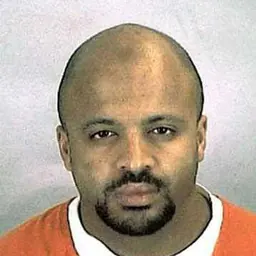
Alleged role in 9/11 Captured al-Qaeda terrorist conspirator Zacarias Moussaoui stated at his sentencing hearing in 2006 that Reid was a co-conspirator in the September 11 attacks on the United States, and that Moussaoui and Reid had intended to hijack a fifth aircraft and crash it into the White House in Washington, D.C., as part of the attacks that took place that day. Department of Justice investigators and the federal prosecutors were skeptical of Moussaoui's claim that Reid was involved in the plot.
Prison restrictions Reid filed a lawsuit challenging the restrictions placed on him in prison which controlled his communications with lawyers and other non-prisoners, limited his access to Muslim clerics, and prevented him from joining in group prayer at the prison. In 2009, Reid went on a hunger strike and was force-fed and hydrated for several weeks. It was unknown whether Reid's hunger strike was related to his lawsuit. The Department of Justice, after consulting its counter-terrorism section, the prosecuting US attorney's office, and the Federal Bureau of Investigation, allowed Reid's prison restrictions to expire in 2009, rather than renewing them, making his lawsuit moot.
Don’t just read it —
keep it.
Full-length biographies made to live with: read them, listen on the way to work, watch them tonight.
- E-book
- Audio
- Video
Instant download · yours to keep · every purchase keeps this site free
Important facts
People in Richard Reid's life
Named in this biography and alive at the same time


Related people
Same field, nearest in time


Contemporaries
People whose lives overlapped Richard Reid's





Frequently asked questions
Who is Richard Reid?
British terrorist
When was Richard Reid born?
Richard Reid was born on 12 August 1974 in Bromley.
What is Richard Reid's occupation?
Richard Reid is a terrorist.
What nationality is Richard Reid?
Richard Reid is British.
Sources & further reading
Cite this page
APA: Biography.guide. (2026). Richard Reid. https://biography.guide/richard-reid-terrorist/
MLA: "Richard Reid." Biography.guide, https://biography.guide/richard-reid-terrorist/.
Chicago: "Richard Reid." Biography.guide. https://biography.guide/richard-reid-terrorist/.
Data last updated: 2026-09-20 · Spot an error? Report a correction.
Page generated 2026-09-27 05:27 UTC