
About Richard Norris Williams
Lived 1891 – 1968 (aged 77). Richard Norris Williams was an American tennis player.
Richard "Dick" Norris Williams II (January 29, 1891 – June 2, 1968), generally known as R. Norris Williams, was an American tennis player and passenger aboard . He survived the sinking of the Titanic.
On January 11, 1919, in Paris, France, Williams married Jean Haddock (1890–1929), daughter of Arthur Henry and Matilda (Stewart) Haddock. They had four children. Jean died aged 38 on April 20, 1929, in Philadelphia. Williams remarried Frances West Gillmore (1908–2001), daughter of Major General Quincy Adams Gillmore II and Frances West (Hemsley) Gillmore, on October 2, 1930. She was a great-granddaughter of Quincy Adams Gillmore.
Tennis career
In 1911, Williams won the Swiss Championship.
In 1913, Williams lost to Maurice McLoughlin at both the Wimbledon Championships and at the U.S. Championships.
Williams is best known for his two men's singles titles at the U.S. Championships. In 1914 he defeated Bill Johnston in the second round and McLoughlin in the final. In 1916 he defeated Bill Johnston in the final.
Williams also won the U.S. Clay Court Championships in 1912 and again in 1915. He won the Pennsylvania Lawn Tennis Championships at the Merion Cricket Club on grass in 1912 defeating eight-time champion Wallace F. Johnson in the final and again in 1914 defeating Bill Tilden in the final. In 1925 he won the Newport Casino Championships defeating McLoughlin in the final.
In 1920, after returning from WWI, Williams won at Norwood on grass in Britain in 1920 defeating Johnston, the ranking world No. 1 at that time, in the semifinal and James Cecil Parke, the world ranked No. 4 for that year, in the final. In 1922 at Glen Cove, Long Island, N.Y. on grass Williams won the Nassau Bowl defeating Frank Hunter in the final in three straight sets.
At age 36, Williams won the Pennsylvania Lawn Tennis Championships at Merion Cricket Club again in 1927 defeating Manuel Alonso Areizaga, ranked world No. 5 for that year, in the final in four sets.
During the 1924 Olympics, at the age of 33 (and with a sprained ankle), Richard Norris Williams became a gold medalist in the mixed doubles, partnering Hazel Hotchkiss Wightman. He went on to captain several winning Davis Cup teams from 1921 through 1926 as well as the 1934 team. At age 44, he retired from Championship Tennis.
Rankings Williams was ranked among the world's top ten from 1912 to 1914, reaching No. 2 in 1914, and again from 1919 to 1923. In the U.S. he was ranked No. 2 by the USLTA for four straight years from 1912 to 1915 and reached U.S. No. 1 in 1916. Williams was ranked U.S. No. 3 by the USLTA in 1920 and again in 1923.
Style Williams had a reputation in singles of always hitting as hard as possible and always trying to hit winners near the lines. This made him an extremely erratic player, but when his game was sporadically "on", he was considered unbeatable. New York Times tennis writer Allison Danzig claimed that Williams had “one of the most daring attacks tennis had seen. He never played safe. He stood in close, took the ball on the rise, often on the half volley, and played for the lines.” “At his best he was unbeatable, and more dazzling than Tilden." Williams stated, "I saw one of the four great funnels come crashing down on top of him. Just for one instant I stood there transfixed – not because it had only missed me by a few feet … curiously enough not because it had killed my father for whom I had a far more than normal feeling of love and attachment; but there I was transfixed wondering at the enormous size of this funnel, still belching smoke. It seemed to me that two cars could have been driven through it side by side." He made his way to the partially submerged Collapsible A, holding onto its side for quite a while before getting in. When Williams entered the water, he was wearing a fur coat which he quickly discarded along with his shoes. Those in Collapsible A who survived were eventually picked up by Fifth Officer Harold Lowe on Lifeboat No. 14 and taken to RMS Carpathia. Although abandoned by RMS Carpathia, Collapsible A was recovered a month later by RMS Oceanic. On board the lifeboat was the discarded fur coat which was returned to Williams by the White Star Line.
After entering the lifeboat, he spent several hours knee-deep in the freezing water. Carpathia arrived on the scene to rescue survivors. The ordeal left his legs so severely frostbitten that the Carpathias doctor wanted to amputate them. Williams, who did not want his tennis career to be cut short, opted instead to work through the injury by simply getting up and walking around every two hours, around the clock. The choice worked out well for him: later that year, he won his first U.S. Tennis Championship, in mixed doubles, and went on to win many more championships including the Davis Cup with fellow survivor Karl Behr.
It was not until after the publication of A Night to Remember (1955), a book about the Titanic disaster, that Williams became acquainted with its author Walter Lord. In 1962, Williams met with Lord and gave a detailed account of the sinking.
Military service, business career, historical society R. Norris Williams Tombstone in St. David's Episcopal Church graveyard Williams served in the United States Army during World War I and was awarded the Croix de Guerre and the Legion of Honor. After the war, he continued playing championship tennis.
Williams, also a noted Philadelphia investment banker, was president of the Historical Society of Pennsylvania.
Death Richard Norris Williams died of emphysema on June 2, 1968, aged 77, in Bryn Mawr, Pennsylvania. He was interred at St. David's Episcopal Church in Radnor, Pennsylvania.
Grand Slam finals
Singles: 3 (2 titles, 1 runner-up) ResultYearChampionship SurfaceOpponentScoreLoss 1913 U.S. National Championships Grass Maurice McLoughlin 4–6, 7–5, 3–6, 1–6Win 1914 U.S. National Championships Grass Maurice McLoughlin 6–3, 8–6, 10–8Win 1916 U.S. National Championships Grass Bill Johnston 4–6, 6–4, 0–6, 6–2, 6–4
Doubles: 7 (3 titles, 4 runners-up)
Mixed doubles: 1 title ResultYearChampionship SurfacePartnerOpponentsScoreWin 1912 U.S. National Championships Grass Mary Browne Eleonora Sears Bill Clothier 6–4, 2–6, 11–9
Singles performance timeline
Events with a challenge round: (WC) won; (CR) lost the challenge round; (FA) all comers' finalist
Don’t just read it —
keep it.
Full-length biographies made to live with: read them, listen on the way to work, watch them tonight.
- E-book
- Audio
- Video
Instant download · yours to keep · every purchase keeps this site free
Important facts
People in Richard Norris Williams's life
Named in this biography and alive at the same time




Related people
Same field, nearest in time
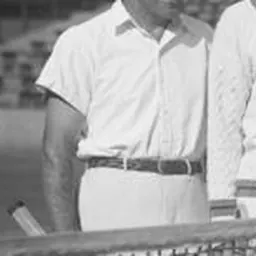



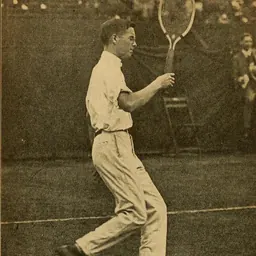
Contemporaries
People whose lives overlapped Richard Norris Williams's


Frequently asked questions
Who was Richard Norris Williams?
American tennis player (1891-1968)
When was Richard Norris Williams born?
Richard Norris Williams was born on 29 January 1891 in Geneva.
When did Richard Norris Williams die?
Richard Norris Williams died on 2 June 1968 in Bryn Mawr.
What was Richard Norris Williams's occupation?
Richard Norris Williams was a tennis player.
What nationality was Richard Norris Williams?
Richard Norris Williams was American.
Sources & further reading
· Wikipedia: Richard Norris Williams
Cite this page
APA: Biography.guide. (2026). Richard Norris Williams. https://biography.guide/richard-norris-williams/
MLA: "Richard Norris Williams." Biography.guide, https://biography.guide/richard-norris-williams/.
Chicago: "Richard Norris Williams." Biography.guide. https://biography.guide/richard-norris-williams/.
Data last updated: 2026-09-20 · Spot an error? Report a correction.
Page generated 2026-09-27 05:23 UTC