
About Richard Maurice Bucke
Lived 1837 – 1902 (aged 64). Richard Maurice Bucke was a British psychiatrist and writer.
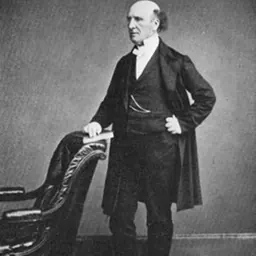
Richard Maurice Bucke (18 March 1837 – 19 February 1902) was a Canadian psychiatrist in the late 19th century. An adventurer during his youth, Bucke later studied medicine. Eventually, as a psychiatrist, he headed the provincial Asylum for the Insane in London, Ontario. Bucke was a friend of several noted men of letters in Canada, the United States, and England. Besides publishing professional articles, Bucke wrote three non-fiction books: Man's Moral Nature, Walt Whitman, and Cosmic Consciousness: A Study in the Evolution of the Human Mind, which is his best-known work.
Early life Richard Maurice Bucke was born in 1837 in Methwold, England, the son of Rev. Horatio Walpole Bucke (a parish curate) and his wife Clarissa Andrews. The parents and their children emigrated to Canada when he was a year old, settling near London, Upper Canada.
Horatio W. Bucke had given up the profession of religious minister, and trusted his family's income to their Ontario farm. A sibling in a large family, Richard Maurice Bucke was a typical farm boy of that era. He was an athletic boy who enjoyed a good ball game. When he left home at the age of 16, he traveled to Columbus, Ohio and then to California. Along the way, Bucke worked at various odd jobs. He was part of a travelling party who had to fight for their lives when they were attacked by a group of Shoshone people, on whose territory they were trespassing.
In the winter of 1857–58, he was nearly frozen to death in the mountains of California, where he was the sole survivor of a silver-mining party. He had to walk out over the mountains and suffered extreme frostbite. As a result, a foot and several of his toes were amputated. He then returned to Canada via the Isthmus of Panama, probably in 1858. Henry Mills Hurd says he returned to Canada in 1860.
Medicine and psychiatry
Bucke enrolled in McGill University's medical school in Montreal, where he delivered a distinguished thesis in 1862. Although he practiced general medicine briefly as a ship's surgeon (in order to pay for his sea travel), he later specialized in psychiatry. He did his internship in London (1862–63) at University College Hospital. During that time he visited France.
He was for several years an enthusiast of Auguste Comte's positivist philosophy.
Experience of "cosmic consciousness"
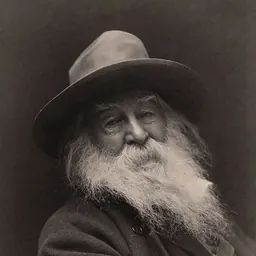
In 1872, after an evening of stimulating conversation with his friend Walt Whitman in the countryside, Richard M Bucke was traveling back to London in a buggy when he had a religious experience. He later described the characteristics and effects of the faculty of experiencing this type of consciousness as:
its sudden appearance a subjective experience of light ("inner light") moral elevation intellectual illumination a sense of immortality loss of a fear of death loss of a sense of sin
Bucke's personal experience of the inner state had yet another attribute, mentioned separately by the author: the vivid sense of the universe as a living presence, rather than as basically lifeless, inert matter.
Bucke did not immediately record the details and interpretation of his experience. This was not done until years later, and only after he had researched much of the world's literature on mysticism and enlightenment and had corresponded with many others about this subject.
Cosmic Consciousness
Bucke's magnum opus was his book Cosmic Consciousness: A Study in the Evolution of the Human Mind. The book is a compilation of various theories rather than strictly a simple record of his original mystical experience.
Bucke borrowed the term "cosmic consciousness" from Edward Carpenter, who had traveled and studied religion in the East. Bucke's friend,
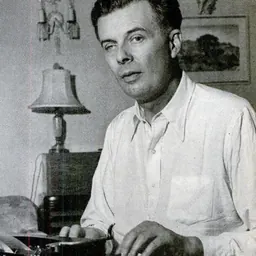
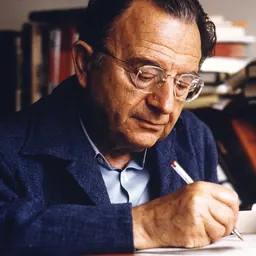
In 1882, Bucke was elected to the English Literature Section of the Royal Society of Canada. and it was essential to Aldous Huxley's concept of the perennial philosophy and Evelyn Underhill's concept of mysticism. Aurobindo uses the term cosmic consciousness in his work. Ramana Maharshi was asked about the nature of realization attained by westerners experiences cosmic consciousness, which he described as temporary and different from the realization of one's true eternal self. Erich Fromm says, in Psychoanalysis and Zen Buddhism, "What Bucke describes as cosmic consciousness is, in my opinion, precisely the experience which is called satori in Zen Buddhism" and that "Bucke's book is perhaps the book most germane to the topic of this article."
Along with William James's classic work The Varieties of Religious Experience (which cites Bucke), Bucke's Cosmic Consciousness has become part of the foundation of transpersonal psychology.
Bucke was part of a movement that sought to improve the care and treatment of mentally ill persons.
He was one of the founders of the Medical School of the University of Western Ontario. His papers are held at Western University's Archives and Research Collections Centre.
He was portrayed by Colm Feore in the 1990 Canadian film Beautiful Dreamers.
R. M. Bucke Memorial Society for the Study of Religious Experience, established by Raymond Prince in Montréal in 1964 as one of the first scientific societies whose aim was to investigate those characteristics of religious experience of interest to psychiatry. The society published several documents including Trance and Possession States in 1966, until the early 1990s. The archives are found at Western University's library.
Publications
Don’t just read it —
keep it.
Full-length biographies made to live with: read them, listen on the way to work, watch them tonight.
- E-book
- Audio
- Video
Instant download · yours to keep · every purchase keeps this site free
Important facts
People in Richard Maurice Bucke's life
Named in this biography and alive at the same time



Related people
Same field, nearest in time

Contemporaries
People whose lives overlapped Richard Maurice Bucke's



Frequently asked questions
Who was Richard Maurice Bucke?
Canadian psychiatrist (1837-1902)
When was Richard Maurice Bucke born?
Richard Maurice Bucke was born on 18 March 1837 in Methwold.
When did Richard Maurice Bucke die?
Richard Maurice Bucke died on 19 February 1902 in London.
What was Richard Maurice Bucke's occupation?
Richard Maurice Bucke was a psychiatrist and writer.
What nationality was Richard Maurice Bucke?
Richard Maurice Bucke was British.
Sources & further reading
· Wikipedia: Richard Maurice Bucke
· DBpedia: Richard Maurice Bucke
Cite this page
APA: Biography.guide. (2026). Richard Maurice Bucke. https://biography.guide/richard-maurice-bucke/
MLA: "Richard Maurice Bucke." Biography.guide, https://biography.guide/richard-maurice-bucke/.
Chicago: "Richard Maurice Bucke." Biography.guide. https://biography.guide/richard-maurice-bucke/.
Data last updated: 2026-09-20 · Spot an error? Report a correction.
Page generated 2026-09-27 05:27 UTC