
About Richard Leroy Millett
Lived 1938 – 2023 (aged 85). Richard Leroy Millett was a historian.
Richard Leroy Millett (September 25, 1938 – December 25, 2023) was an American historian, author, policy analyst, and professor best known for his expertise on Latin America—particularly civil–military relations and Central America. Among other teaching and research roles, Millett spent 33 years on the faculty of Southern Illinois University Edwardsville (SIUE), where he taught history and Latin American studies, retiring as a professor emeritus in 1999.
Early life and education Millett was born on September 25, 1938, in Providence, Rhode Island. His parents were Clara (Denham) Millett and Leroy Franklin Millett. He spent much of his childhood in Southern California.
Undergraduate Studies Millett attended Harvard College, where he was a member of Kirkland House, and earned an A.B. with honors in history in 1960. His senior honors thesis on United States intervention in Nicaragua marked the start of a 65-year career in Latin American history and military studies.
Graduate Studies Millett went on to earn his MA and PhD at the University of New Mexico in 1962 and 1966, respectively. His PhD dissertation, entitled The History of the Guardia Nacional de Nicaragua, 1925–1965, discussed the Nicaraguan National Guard's development under American sponsorship and impact on Nicaraguan political and social development, as well as the broader implications of this history for American foreign policy. Millett noted that the Nicaraguan National Guard had previously received "very limited attention" from scholars despite its great impact on Nicaraguan society.
Millett's dissertation eventually served as the foundation for his first book, Guardians of the Dynasty: A History of the U.S. Created Guardia Nacional de Nicaragua and the Somoza Family, published in 1977.
Career Millett had a distinguished academic career that extended to the public sphere.
Academic and Research career After obtaining his PhD in 1966, and before his retirement in 1999, Millett taught history and Latin American studies at Southern University of Illinois Edwardsville. Former students and colleagues remember him as a generous mentor who served on "countless master’s theses and PhD dissertation committees" and helped young scholars build professional networks in the United States and across Latin America. During this time, Millett became a resident of Marine, Illinois.
Between 1985 and 1989, Millett collaborated with political scientists David Ronfeldt and Konrad Kellen on a RAND Corporation study examining perceptions of U.S. involvement in Central America by Hondurans.
Between 2000 and 2001, Millett served as the Brigadier General H.L. Oppenheimer Chair of Warfighting Strategy at the Marine Corps University.
In 2017, Millett was awarded a fellowship by the Carnegie Council for Ethics in International Affairs for its "The Living Legacy of the First World War" research project. His work focused on "the lasting impacts of World War I on the [United States'] relations with 20 different countries of Latin America" as well as "forgotten aspects of the Western Hemisphere and World War I."
Advice to Governments Over the course of his career, Millett provided advice to the United States Military, State Department, and other governmental officials on Latin American affairs.
Views Millett has been described as "a historian with a strong interest in policy in the sense that policy needs to be informed by history." He has also stated that his studies of history and the Spanish language arose out of a desire not "to be one of those who treated Latin America simply as a stage on which [the United States] danced."
A reviewer of Guardians of the Dynasty described Millett's work as reflecting a "Christian humanist outlook."
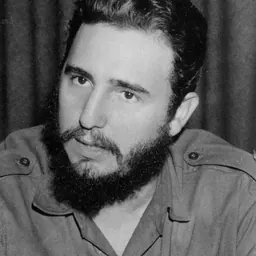
Cuba In Beyond Praetorianism: The Latin American Military in Transition, Millett and fellow academic Michael Gold-Bliss argued that "Latin America's armed forces clearly are moving beyond praetorianism," referring to the tendency of militaries to intervene in domestic politics. Focusing on Cuba as an example, Millett opined that the Cuban military was unlikely to openly oppose Cuban leader Fidel Castro in light of the high level of control his regime had over the military, but was nonetheless "condemned to a prolonged struggle for institutional survival."
Nicaragua Millett was highly critical of both the Somoza family, which ruled Nicaragua as dictators from 1936 to 1979, and the United States government's support of this dictatorship. His book, Guardians of the Dynasty, included an analysis of the United States' role in supporting the Nicaraguan National Guard, the National Guard's role in creating and maintaining the Somoza dictatorship, and other ways in which the United States and Nicaraguan elites enabled the Somoza dictatorship to survive for decades.
In March 1984, U.S. Senator Gary Hart gave an interview in which he claimed that Anastasio Somoza "kept cages with panthers inside" in the basement of his presidential palace, and that Somoza would feed his political opponents to the panthers for the entertainment of guests. Millett dismissed this claim as "quite apocryphal," explaining: "The Somozas were way too smooth for that, especially the old man. They were not brutal dictators until the last year. They were unbelievably corrupt. But corrupt and brutal are not the same things."
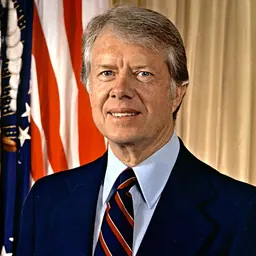
El Salvador In 1983, during El Salvador's Civil War, Millett wrote an article in the New York Times discussing whether the United States could stop far-right El Salvadoran "death squads" responsible for a number of atrocities. While not a part of the official Salvadoran military forces, which received billions of dollars in military aid from the United States under both President Jimmy Carter and President Ronald Reagan, these death squads were generally understood to be aligned with the Salvadoran government's purpose of combating leftist rebels.
In his article, Millett argued that "death squads are more a symptom than a cause of El Salvador's problems," recounting the history of political violence in the region, the failure of official condemnations to curtail death squad activities, and widespread perception that anti-death squad rhetoric by U.S. officials was largely performative. Millett opined that the United States would have to take a firmer, sustained stance against death squads to dismantle them, offering "four basic conditions" required for a successful strategy and warning that "partial commitments are a recipe for ultimate disaster." ) and then to Denice (Carr) Millett. He had three children: Lawrence Dean Millett (March 15, 1961 – July 23, 2003 ), Patricia Ann Millett, and Joan Millett. He passed away on December 25, 2023 (Christmas day).
Millett was a "man of deep Christian faith." During the COVID-19 pandemic, he started "a Sunday afternoon Zoom group" focused on the role of Christian faith in a "changing world." The group's participants came "from all over the globe."
Millett loved World Travel, traveling to nearly 100 countries over the course of his life. He was also a fan of the Chicago Cubs baseball team.
Selected Works Millett is said to have authored "over one hundred items, with articles appearing in Foreign Policy, The Washington Post, and The New Republic, among others." Illustrative books, articles, and other works include: 1966. The History of the Guardia Nacional de Nicaragua, 1925–1965 (PhD dissertation) 1977. Guardians of the Dynasty: A History of the U.S. Created Guardia Nacional de Nicaragua and the Somoza Family 1978. The Restless Caribbean: Changing Patterns of International Relations (Editors: Millett, Richard L.; Will, W. Marvin) 1996. Beyond Praetorianism: The Latin American Military in Transition (Editors: Millett, Richard L.; Gold-Bliss, Michael) 1997. The United States and Latin America's Armed Forces: A Troubled Relationship (Vol. 39 Journal of Interamerican Studies and World Affairs) 2002. Colombia's Conflicts: The spillover effects of a wider war 2010. Searching for stability: The U.S. Development of Constabulary Forces in Latin America and the Philippines 2015. Latin American Democracy: Emerging Reality or Endangered Species? (Editors: Millett, Richard L.; Holmes, Jennifer S.; Pérez, Orlando J.) .
Don’t just read it —
keep it.
Full-length biographies made to live with: read them, listen on the way to work, watch them tonight.
- E-book
- Audio
- Video
Instant download · yours to keep · every purchase keeps this site free
Important facts
People in Richard Leroy Millett's life
Named in this biography and alive at the same time





Related people
Same field, nearest in time




Contemporaries
People whose lives overlapped Richard Leroy Millett's



Frequently asked questions
Who was Richard Leroy Millett?
American Historian and Author
When was Richard Leroy Millett born?
Richard Leroy Millett was born on 25 September 1938.
When did Richard Leroy Millett die?
Richard Leroy Millett died on 25 December 2023.
What was Richard Leroy Millett's occupation?
Richard Leroy Millett was a historian.
Sources & further reading
· Wikipedia: Richard Leroy Millett
· DBpedia: Richard Leroy Millett
Cite this page
APA: Biography.guide. (2026). Richard Leroy Millett. https://biography.guide/richard-leroy-millett/
MLA: "Richard Leroy Millett." Biography.guide, https://biography.guide/richard-leroy-millett/.
Chicago: "Richard Leroy Millett." Biography.guide. https://biography.guide/richard-leroy-millett/.
Data last updated: 2026-09-20 · Spot an error? Report a correction.
Page generated 2026-09-27 05:18 UTC