
About Richard Lane
Lived 1584 – 1650 (aged 65–66). Richard Lane was a judge and barrister.
Sir Richard Lane (1584 – 12 May 1650), a.k.a. Edward Lane, was an English barrister who practised mostly in the Court of Exchequer. He acted as defence counsel to the Earl of Strafford when the Earl was impeached and attainted, and also represented Archbishop Williams and eleven other bishops who were imprisoned in the Tower of London in 1642.
During the English Civil War, Lane took the side of the king, who made him Chief Baron of the Exchequer and a member of the Privy Council. From 1645 until his death he was also Lord Keeper of the Great Seal, although after 1646 the appointment was a nominal one, as the Great Seal had been destroyed on the orders of Parliament. On 8 February 1605, he was admitted to the Middle Temple to train for a career in the law and was called to the bar on 22 November 1611.
Career Lane practised mostly in the Court of Exchequer. In 1615 he was appointed as deputy recorder of Northampton and in 1628 as the town's recorder. In 1634 he became attorney-general to the Prince of Wales. On 12 June 1635 he became a bencher of his inn, and during the same year he acted as counsel to the University of Cambridge. In 1637 he was elected as treasurer of the Middle Temple. In 1638 Henry Rich, 1st Earl of Holland, appointed him to serve as his deputy in the forest courts.
In the same year, 1632, the poet Thomas Randolph, the step-son of Lane's sister Dorothy, dedicated his The Jealous Lovers to Lane. had had the effect of repealing the declaratory power given to parliament by the Statute of Treasons of 1351, so that the present parliament had no authority to bring a bill of attainder against Strafford. Parliament rejected this argument, and the king assented to the bill of attainder. Strafford was beheaded on Tower Hill on 12 May 1641.
Lane remained loyal to the king when hostilities with Parliament broke out during the summer of 1642. He entrusted his library and other goods in London to his friend Bulstrode Whitelocke and joined the court at Oxford, where he was made welcome. The University of Oxford awarded him the degree of Master of Arts on 1 November 1642. In 1643, to punish Lane for his loyalty to Charles I, the Long Parliament gave orders for his estate to be sequestered and all his property at the Middle Temple seized. On 4 January 1644/45 Lane was knighted by the king and later the same month he was appointed a serjeant-at-law and Chief Baron of the Exchequer. On 31 January he received the Oxford degree of Doctor of Civil Laws.
In January 1645 Lane acted as one of the king's commissioners at Uxbridge,
Exile and death In March 1650, Lane followed the new king into exile, landing at St Malo in a poor state of health. He wrote to Charles II, asking him to make his eldest son, another Richard Lane, a groom of the bedchamber, a request which was honoured. Lane continued to Jersey, where he died on 12 May 1650, to be buried at St Helier. His funeral was attended by the Duke of York.
Lane's Reports in the court of exchequer beginning in the third, and ending in the ninth year of the raign of the late King James were published posthumously in 1657 and contained an important report of Sir Thomas Fleming's opinion in Bates's Case.
Don’t just read it —
keep it.
Full-length biographies made to live with: read them, listen on the way to work, watch them tonight.
- E-book
- Audio
- Video
Instant download · yours to keep · every purchase keeps this site free
Important facts
People in Richard Lane's life
Named in this biography and alive at the same time
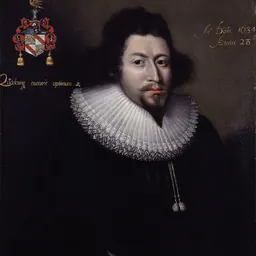


Related people
Same field, nearest in time

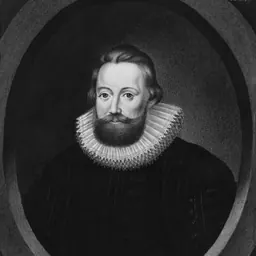

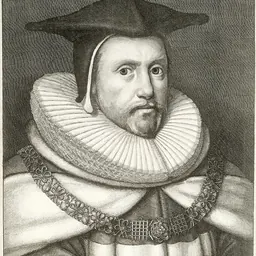
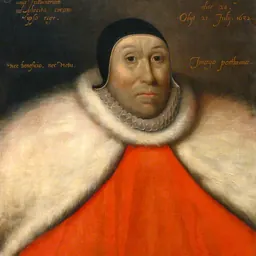
Contemporaries
People whose lives overlapped Richard Lane's


Frequently asked questions
Who was Richard Lane?
British judge
When was Richard Lane born?
Richard Lane was born in 1584.
When did Richard Lane die?
Richard Lane died in 1650 in Saint Helier.
What was Richard Lane's occupation?
Richard Lane was a judge and barrister.
Sources & further reading
· DBpedia: Richard Lane (barrister)
Cite this page
APA: Biography.guide. (2026). Richard Lane. https://biography.guide/richard-lane-judge/
MLA: "Richard Lane." Biography.guide, https://biography.guide/richard-lane-judge/.
Chicago: "Richard Lane." Biography.guide. https://biography.guide/richard-lane-judge/.
Data last updated: 2026-09-20 · Spot an error? Report a correction.
Page generated 2026-09-27 05:03 UTC