
About Richard Hooker
Lived 1554 – 1600 (aged 46). Richard Hooker was a British theologian, anglican priest, writer and parson.
Richard Hooker (25 March 1554 – 2 November 1600) was an English priest in the Church of England, Anglican divine, and an influential theologian. He was one of the most important English theologians of the sixteenth century. His defence of the role of redeemed reason informed the theology of the seventeenth-century Caroline Divines and later provided many members of the Church of England with a theological method which combined the claims of Revelation, reason and tradition. However, a growing number of scholars have argued that he should be considered as being in the mainstream Reformed theology of his time and that he sought only to oppose the extremists (Puritans), rather than moving the Church of England away from Protestantism. He attended Exeter Grammar School until 1569. Richard came from a good family, but one that was neither noble nor wealthy. His uncle John Hooker was a success and served as the chamberlain of Exeter.
Hooker's uncle was able to obtain for Richard the help of another Devon native, John Jewel, bishop of Salisbury. The bishop saw to it that Richard was accepted to Corpus Christi College, Oxford, where he became a fellow of the society in 1577. On 14 August 1579 Hooker was ordained a priest by Edwin Sandys, then bishop of London. Sandys made Hooker tutor to his son Edwin, and Richard also taught George Cranmer, the great nephew of Archbishop Thomas Cranmer. In 1580 he was deprived of his fellowship for "contentiousness" having campaigned for the losing candidate (John Rainolds, a lifelong friend who would become a leader of the Puritan party and participate in the Hampton Court Conference of 1604) in a contested election to the presidency of the college. However, he recovered it when Rainolds finally assumed the post".
London and marriage (1581–1595) In 1581, Hooker was appointed to preach at St Paul's Cross and he became a public figure, more so because his sermon offended the Puritans by diverging from their theories of predestination. Some ten years before Hooker arrived in London, the Puritans had produced an "Admonition to Parliament" together with "A view of Popish Abuses" and initiated a long debate which would last beyond the end of the century. John Whitgift (soon to become Archbishop of Canterbury) produced a reply, and Thomas Cartwright a reaction to the reply. Hooker was drawn into the debate through the influence of Edwin Sandys and George Cranmer. "There is a wheel within a wheel; a secret sacred wheel of Providence (most visible in marriages), guided by His hand that allows not the race to the swift nor bread to the wise, nor good wives to good men: and He that can bring good out of evil (for mortals are blind to this reason) only knows why this blessing was denied to patient Job, to meek Moses, and to our as meek and patient Mr Hooker." However, Walton is described by Christopher Morris as an "unreliable gossip" who "generally moulded his subjects to fit a ready-made pattern", and both he and John Booty give the date of the marriage as 1588. Hooker seems to have lived on and off with the Churchmans until 1595 and, according to Booty, he "seems to have been well treated and considerably assisted by John Churchman and his wife".
In 1591, Hooker left the Temple and was presented to the living of St Andrew's, Boscombe, Wiltshire to support him while he wrote.
Learned Discourse of Justification This sermon from 1585 was one of those that triggered Travers' attack and appeal to the Privy Council. Travers accused Hooker of preaching doctrine favourable to the Church of Rome when in fact he had just described their differences, emphasising that Rome attributed to works "a power of satisfying God for sin". For Hooker, works were a necessary expression of thanksgiving for unmerited justification by a merciful God. Hooker defended his belief in the doctrine of justification by faith, but argued that even those who did not understand or accept this could be saved by God.
Hooker also expresses in this work the classic ordo salutis that recognises the distinction between justification and sanctification as two forms of righteousness while at the same time emphasising the role the sacraments have in justification. Hooker's approach to this topic is seen as a classic example of the Anglican via media.
Of the Laws of Ecclesiastical Polity
Of the Laws of Ecclesiastical Polity (original spelling, Of the Lawes of Ecclesiastical Politie) is Hooker's best-known work, with the first four books being published in 1594. The fifth book was published in 1597, while the final three were published posthumously,
The Laws has been characterised as "probably the first great work of philosophy and theology to be written in English". The book is far more than a negative rebuttal of the puritan claims: it is "a continuous and coherent whole presenting a philosophy and theology congenial to the Anglican Book of Common Prayer and the traditional aspects of the Elizabethan Settlement".
Quoting C. S. Lewis, Stephen Neill underlines its positive side in the following terms: hitherto, in England, "controversy had involved only tactics; Hooker added strategy. Long before the close fighting in Book III begins, the puritan position has been rendered desperate by the great flanking movements in Books I and II. ... Thus the refutation of the enemy comes in the end to seem a very small thing, a by-product."
It is a massive work that deals mainly with the proper governance of the churches ("polity"). The Puritans advocated the demotion of clergy and ecclesiasticism. Hooker attempted to work out which methods of organising churches are best. Hooker's emphasis on Scripture, reason, and tradition considerably influenced the development of Anglicanism, as well as many political philosophers, including John Locke. In the Church of England he is celebrated with a lesser festival on 3 November and the same day is also observed in the calendars of other parts of the Anglican Communion.
Don’t just read it —
keep it.
Full-length biographies made to live with: read them, listen on the way to work, watch them tonight.
- E-book
- Audio
- Video
Instant download · yours to keep · every purchase keeps this site free
Important facts
People in Richard Hooker's life
Named in this biography and alive at the same time


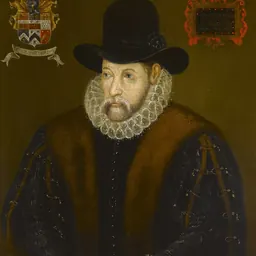
Related people
Same field, nearest in time
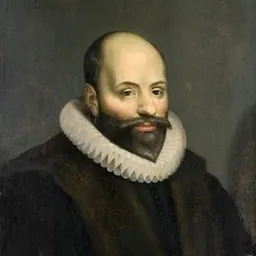
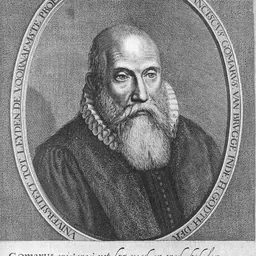
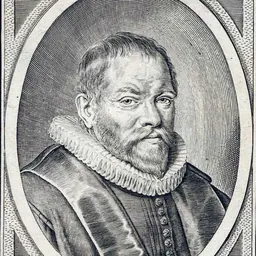
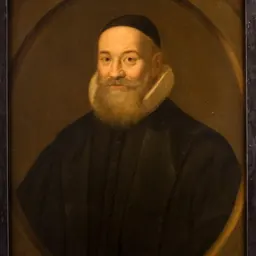

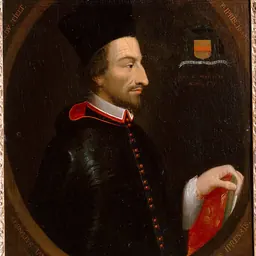
Contemporaries
People whose lives overlapped Richard Hooker's
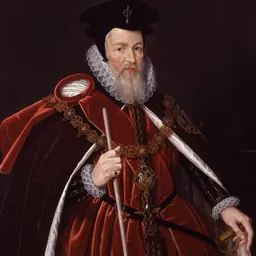


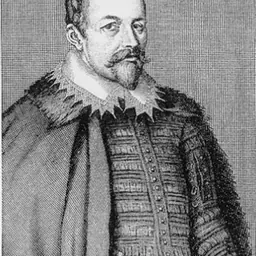
Frequently asked questions
Who was Richard Hooker?
English bishop and Anglican Divine
When was Richard Hooker born?
Richard Hooker was born on 25 March 1554 in Heavitree.
When did Richard Hooker die?
Richard Hooker died on 3 November 1600 in Bishopsbourne.
What was Richard Hooker's occupation?
Richard Hooker was a theologian, anglican priest, writer and parson.
What nationality was Richard Hooker?
Richard Hooker was British.
Sources & further reading
Cite this page
APA: Biography.guide. (2026). Richard Hooker. https://biography.guide/richard-hooker/
MLA: "Richard Hooker." Biography.guide, https://biography.guide/richard-hooker/.
Chicago: "Richard Hooker." Biography.guide. https://biography.guide/richard-hooker/.
Data last updated: 2026-09-25 · Spot an error? Report a correction.
Page generated 2026-09-27 05:12 UTC