
About Richard Hol
Lived 1825 – 1904 (aged 78). Richard Hol was a Dutch conductor, composer, pianist and organist.
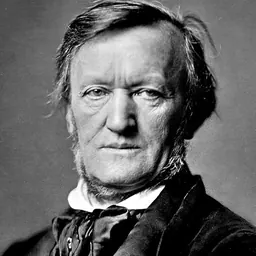
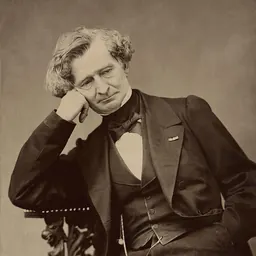
Richard (or Rijk) Hol (23 July 1825, in Amsterdam – 14 May 1904, in Utrecht) was a Dutch composer and conductor, based for most of his career at Utrecht. His conservative music showed the influence of Ludwig van Beethoven, Felix Mendelssohn, and Robert Schumann and the Leipzig school, though as a conductor he offered Dutch audiences the more revolutionary music of Hector Berlioz and Richard Wagner.
Life
Richard Hol followed a course in piano under Jan George Bertelman at the royal conservatory of Amsterdam; after his graduation in 1844 he made a living as piano accompanist. In part on the basis of his choral compositions he was appointed director of the Amsterdamse Toonkunstkoor in 1857. In 1862, when Johannes Verhulst was appointed to the position, Hol removed to Utrecht, where he came to occupy the center of musical life, taking up the post of Ferdinand Kufferath in directing the city concerts (stadsconcerten) and the Utrecht Toonkunstkoor for the remainder of his life. In addition he was organist at the cathedral, 1869–1888.
From 1875 he served as director of the Stedelijke Muziekschool at Utrecht, teaching music theory and history himself. Among his prominent pupils were Johan Wagenaar, who succeeded him as teacher and cathedral organist, Catharina van Rennes, and Hendrika Tussenbroek.
In his last years Hol published pieces in numerous journals and served from 1894 until his death as editor of the organ journal Het Orgel. When the Nederlandsche Toonkunstenaars-Vereeniging was founded in 1875, he served as its first director. Among the many decorations he received was his appointment in 1875 as a corresponding member of the Académie française.
He composed an anthem for Transvaal, in use until the British occupied it in 1887. His posthumous reputation remained largely confined to Dutch audiences and choral singing groups, until his four symphonies began to be recorded at the close of the 20th century.
His vaderlandische legende ("patriotic legend") for chorus, orchestra and organ, De Vliegende Hollander ("The Flying Dutchman"), Op. 70 (1874) was described in 1904 as frequently performed, in Le guide musical, reviewing a concert with a performance of the ballad, in The Hague.
His daughter, Jacoba, was a physical geographer.
Incomplete list of compositions
Symphonies No. 1 in C minor (1863) No. 3 in B, op. 101 (1867/1884) Uit de branding (premiered Amsterdam, 1894) De vliegende hollander, op. 70 (about 1880)
Songs and song cycles
Don’t just read it —
keep it.
Full-length biographies made to live with: read them, listen on the way to work, watch them tonight.
- E-book
- Audio
- Video
Instant download · yours to keep · every purchase keeps this site free
Important facts
People in Richard Hol's life
Named in this biography and alive at the same time





Related people
Same field, nearest in time


Contemporaries
People whose lives overlapped Richard Hol's



Frequently asked questions
Who was Richard Hol?
Dutch conductor (1825–1904)
When was Richard Hol born?
Richard Hol was born on 23 July 1825 in Amsterdam.
When did Richard Hol die?
Richard Hol died on 14 May 1904 in Utrecht.
What was Richard Hol's occupation?
Richard Hol was a conductor, composer, pianist and organist.
What nationality was Richard Hol?
Richard Hol was Dutch.
Sources & further reading
Cite this page
APA: Biography.guide. (2026). Richard Hol. https://biography.guide/richard-hol/
MLA: "Richard Hol." Biography.guide, https://biography.guide/richard-hol/.
Chicago: "Richard Hol." Biography.guide. https://biography.guide/richard-hol/.
Data last updated: 2026-09-26 · Spot an error? Report a correction.
Page generated 2026-09-27 05:14 UTC