
Richard Gerald Jordan
American death row inmate
About Richard Gerald Jordan
Lived 1946 – 2025 (aged 79). Richard Gerald Jordan was an American.
Richard Gerald Jordan (May 25, 1946 – June 25, 2025) was an American convicted murderer who was executed for the 1976 murder of 34-year-old Edwina Marter, the wife of a bank executive, in Mississippi. For years before his execution, Jordan was the state's oldest and longest-serving death row inmate. Though he admitted to the crime and his guilt had never been seriously called into question, Jordan filed multiple successful legal challenges to his sentence, and because of this, he was re-sentenced to death three times.
Jordan was unemployed and desperate for money when he devised a plot to break into the home of a bank executive. He called Gulf National Bank in Gulfport and learned the name of the commercial loan officer, Chuck Marter. He looked up the man's address in a telephone directory, then drove to the home and kidnapped Edwina Marter. He fatally shot her in the De Soto National Forest before calling her husband and attempting to collect ransom money from him.
After Jordan's 1976 guilty verdict and death sentence were vacated because automatic death sentences were determined to be unconstitutional, he was convicted again and re-sentenced to death the next year. After Jordan successfully appealed this sentence on constitutional grounds, he received another death sentence. After this third death sentence was again overturned on appeal, prosecutors offered Jordan a plea deal in which he would drop his appeals in exchange for life imprisonment without the possibility of parole. Jordan accepted the plea deal, then violated the agreement by appealing his new sentence on the grounds that life imprisonment without parole was not a permitted sentence in Mississippi at the time of the crime. Instead, he asked courts to reduce his sentence to life imprisonment with the possibility of parole (an available sentence in 1976). Courts found the plea agreement improper and granted a new sentencing hearing, which occurred in 1998, when he was again sentenced to death.
Subsequent appeals were filed in Jordan's case related to whether the lethal injection procedure could be considered to fall under the constitution provision prohibiting "cruel and unusual" punishment. Jordan was executed by lethal injection at the Mississippi State Penitentiary on June 25, 2025.
Early life Jordan was born in Hattiesburg, Mississippi, on May 25, 1946, to Mr. and Mrs. Homer H. Jordan. He grew up nearby in Petal. Neighbors later said that Jordan had a reputation as a good person through his school days. After graduating from Petal High School, Jordan was charged with check forgery. He agreed to join the U.S. Army in exchange for the charges being dropped and spent four or five years in the army, serving in the Vietnam War. According to Death Penalty Action's Abraham Bonowitz, Jordan was severely traumatized by his three terms of army service in Vietnam, and did not receive the support needed to overcome this trauma. While operating as a helicopter gunner, Jordan fired on a small hut suspected of shooting down a U.S. helicopter. However, women and children were found among the dead in the hut, a revelation that reportedly haunted Jordan.
In 1970, Jordan was court-martialed for falsifying official documents. He was sentenced to nine months at the United States Disciplinary Barracks in Fort Leavenworth.
Marter left the cash at a spot near Interstate 10 and Canal Road in Gulfport at 9:00am on January 13. An FBI agent and a Harrison County sheriff's deputy were waiting in a pickup truck near the site. When Jordan arrived to retrieve the money, they attempted to move in on him. Jordan ran the sheriff's office vehicle into a ditch and kept driving even when shots were fired at his car. The sheriff's deputy involved in the chase was Larkin I. Smith, who later became the Harrison County sheriff and then a U.S. congressman. Jordan told police officers that he had killed Edwina, and he took them to the body and the murder weapon. During a mental health evaluation after his arrest, Jordan told a psychiatrist that an accomplice actually shot Marter and then left before Jordan carried out the ransom scheme. However, Jordan's attorneys found his recollections to be distorted and inconsistent, and they did not use this claim in his defense.
Legal proceedings First trial (1976) In July 1976, Jordan went on trial for Marter's kidnapping and murder. He was granted a change of venue from Harrison County to Jackson County because of concerns that local news coverage of the crime might make it difficult to impanel an impartial jury in Harrison County. The trial was held in Pascagoula; jury selection was held on July 19. The trial lasted three days, and prosecutors called 24 witnesses; no one testified for the defense. The jury deliberated for four hours before returning a guilty verdict on a capital murder charge on July 21, 1976. The trial judge asked Jordan if he wished to address the court before sentencing, and Jordan declined.
Retrial (1977) Later that year, the U.S. Supreme Court held that automatic death sentences constituted cruel and unusual punishment in cases from North Carolina and Louisiana, and Jordan received a new trial. Jordan was found guilty of murder on March 2, 1977, and the sentencing hearing was held the same day. The Fifth Circuit vacated Jordan's death sentence and ordered that a new sentencing hearing be held in Jackson County Circuit Court.
In the spring of 1983, a few weeks before Jordan's new sentencing hearing, Denham withdrew from representing Jordan because he was planning to take a sabbatical from law practice. Gulfport attorney Joseph Hudson was appointed to replace him, and attorney Earl Stegall continued to assist in Jordan's defense. Owen was engaged in private practice by this time, but he agreed to act as a special prosecutor at the request of the Marter family. Jordan received another death sentence. The appeal went to the U.S. Supreme Court, which disagreed with the lower courts, set aside the third death sentence, and returned the case to the Mississippi Supreme Court in May 1986. The next year, the Mississippi Supreme Court ordered a new sentencing hearing.
Plea deal (1991) In 1991, instead of pursuing a fourth death sentence, the Harrison County district attorney offered a plea deal: Jordan would receive life imprisonment without the possibility of parole as long as he agreed not to challenge his sentence anymore. Jordan agreed to the deal and was sentenced accordingly. At the time of the plea deal, Mississippi's sentencing guidelines said that only two sentences could be handed down for a first-time capital defendant like Jordan: death and life imprisonment with the possibility of parole. Jordan challenged the propriety of the life without parole sentence, hoping that his sentence would simply be modified to life with the possibility of parole. Instead, the Supreme Court vacated the sentence, giving Jordan a new sentencing hearing.
Fourth death sentence (1998) After Jordan's life-without-parole sentence was vacated, the Harrison County District Attorney's office was recused from the case and former Assistant District Attorney Joe Sam Owen was appointed as a special prosecutor to represent the state. Realizing that he was again in jeopardy of a death sentence, Jordan asked Owen for the original sentence that had been handed down with the plea deal: life imprisonment without the possibility of parole. Owen refused to offer another plea deal, saying Jordan had violated the previous agreement by challenging his sentence. Owen pursued the death penalty at the next sentencing hearing in April 1998.
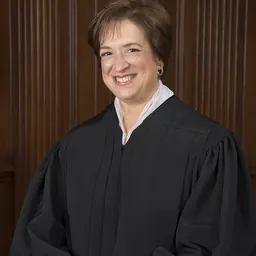
Jordan later appealed his death sentence, stating that prosecutorial vindictiveness led Owen to pursue the death penalty when he became irritated that Jordan had challenged his life sentence. To pursue this due process appeal, Jordan needed a certificate of appealability (COA), but the district court and the Fifth Circuit Court of Appeals refused to grant him one. The Fifth Circuit said that Jordan had failed to prove that Owen was vindictive. U.S. Supreme Court precedent does not require the defendant to prove the case's underlying merits before obtaining a COA. The issue went to the Supreme Court, which ruled against Jordan in 2015. Justice Sonia Sotomayor, joined by Ruth Bader Ginsburg and Elena Kagan, wrote a dissenting opinion that criticized the other justices for ruling on the underlying merits rather than issuing a COA. State legislation made lethal injection the execution method for all offenders sentenced after April 1984, but offenders who were already on death row were still subjected to execution by gas chamber until 1998, and the state did not begin carrying out lethal injections until 2002.
In later years, Jordan's execution was delayed by legal challenges to the lethal injection procedure filed by Jordan and by other inmates. Death penalty legislation in Mississippi required using a fast-acting barbiturate or similar drug in the execution cocktail. The state used pentobarbital until they could no longer obtain it. They planned to continue lethal injection with alternative drugs, but death row inmates challenged the use of these drugs in court, effectively bringing executions to a halt in 2012. The state passed a new death penalty statute in 2017 requiring a new three-drug execution cocktail: a sedative or anesthetic that can render a person unconscious; a muscle paralytic like vecuronium; and potassium chloride or a similar drug. Under the 2017 statute, if lethal injection is deemed unconstitutional or is otherwise unfeasible, the state may use execution by nitrogen asphyxiation, the electric chair, or firing squad.
Shortly after the 2017 changes to the death penalty statute, Jordan challenged the state's use of midazolam on the grounds that it does not render a person unconscious. The Mississippi Supreme Court ruled 7–2 to deny Jordan a hearing on the matter, but he had an ongoing federal court challenge against MDOC's use of midazolam. In November 2021, in Mississippi's first execution since 2012, the state used midazolam, vecuronium, and potassium chloride to execute David Neal Cox. In a statement issued before that execution, MDOC Commissioner Burl Cain refused to say where the department obtained the execution drugs.
Execution of Jordan Death warrant In early October 2024, the Mississippi attorney general, Lynn Fitch, filed a motion with the state supreme court to set an execution date within 28 days.
On May 1, 2025, the Mississippi Supreme Court set June 25, 2025, as the date for the execution.
Execution Jordan was executed by lethal injection at the Mississippi State Penitentiary as scheduled on June 25, 2025. His last meal consisted of chicken tenders, french fries, strawberry ice cream, and a root beer float. Jordan's last words were, "First I would like to thank everyone for a humane way of doing this. I want to apologize to the victim's family." He then thanked his lawyers and told his wife that he loved her, before saying, "I will see you on the other side, all of you." Jordan was pronounced dead at 6:16 pm EST.
He was the oldest man to be put to death in the United States since 83-year-old Walter Leroy Moody Jr. was executed in 2018 in Alabama. Jordan's execution also made him the longest serving death row inmate to have his sentence carried out, a distinction since surpassed by James Ernest Hitchcock.
Don’t just read it —
keep it.
Full-length biographies made to live with: read them, listen on the way to work, watch them tonight.
- E-book
- Audio
- Video
Instant download · yours to keep · every purchase keeps this site free
Important facts
People in Richard Gerald Jordan's life
Named in this biography and alive at the same time






Contemporaries
People whose lives overlapped Richard Gerald Jordan's




Frequently asked questions
Who was Richard Gerald Jordan?
American death row inmate (1946–2025)
When was Richard Gerald Jordan born?
Richard Gerald Jordan was born on 25 May 1946 in Hattiesburg.
When did Richard Gerald Jordan die?
Richard Gerald Jordan died on 25 June 2025 in Mississippi State Penitentiary.
What nationality was Richard Gerald Jordan?
Richard Gerald Jordan was American.
Sources & further reading
· Wikipedia: Richard Gerald Jordan
· DBpedia: Richard Gerald Jordan
Cite this page
APA: Biography.guide. (2026). Richard Gerald Jordan. https://biography.guide/richard-gerald-jordan/
MLA: "Richard Gerald Jordan." Biography.guide, https://biography.guide/richard-gerald-jordan/.
Chicago: "Richard Gerald Jordan." Biography.guide. https://biography.guide/richard-gerald-jordan/.
Data last updated: 2026-09-20 · Spot an error? Report a correction.
Page generated 2026-09-27 05:23 UTC