
About Richard Gardner
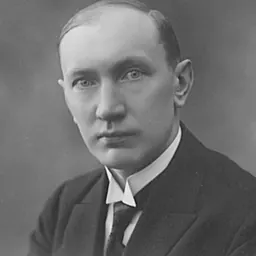
Lived 1931 – 2003 (aged 72). Richard Gardner was an American psychiatrist, university teacher, writer and businessperson, known for Parental alienation syndrome.
Work and career Gardner graduated from Columbia College, Columbia University in 1952 and SUNY Downstate Medical Center in 1956. After internship at Montefiore Hospital, he completed residencies in adult psychiatry and in child psychiatry at the New York State Psychiatric Institute. He was certified as a psychoanalyst in 1966 after training at the William Alanson White Institute.
From 1960 to 1962, he worked as director of child psychiatry in the U.S. Army Hospital, Frankfurt am Main, Germany. He also held academic teaching appointments at the William Alanson White Institute (1966–83), the University of Louvain, Belgium (1980–82), and at the University of St. Petersburg, Russia (1989-1997). He assisted the defense team of Margaret Kelly Michaels, which successfully appealed her prison conviction in the Wee Care Nursery School abuse trial. Further, he has been accused of devising his alienation theory "not based on any research but on his personal beliefs and biases, with an interest in providing a weapon for lawyers seeking to undermine a mother's credibility in court."
Gardner's observation of a "parental alienation syndrome" focused on how one parent may misuse the powers of socialization to turn a child against a once loved parent. Gardner's labeling of alienation processes as a "syndrome" remains controversial among psychiatrists, psychologists, and psychotherapists. PAS has not been recognized by the American Psychiatric Association or any other medical or professional association. It has been extensively criticized by scientists and jurists, who describe it as inadmissible in child custody hearings based on both science and law. Gardner asserted that PAS is scientifically valid and legally admissible. Proposals to include PAS in the Diagnostic and Statistical Manual of Mental Disorders have been controversial. PAS was not included in DSM-5.
The American Bar Association (ABA) published a review of parental alienation syndrome and concluded that it is without scientific basis. The ABA has since published a book acknowledging the phenomenon of distorting perception in a child. For example, when a child maintains that the mother never did anything for them, and yet there is "independent information that shows the mother did everything from breastfeeding to teaching the child how to read". However, this is different than a child's claims of abuse. Trocme and Bala studied over seven thousand abuse investigations and found that of the allegations that had been ultimately determined to be false, none had come from the children themselves.
Carol S. Bruch, Research Professor of Law at the University of California, Davis, implied that Gardner's description of PAS could inflict emotions on his audience. She found lack of careful analysis and rigor among the adopters of Gardner's observations.
In a 2002 article in the American Journal of Family Therapy, Gardner dismissed most of his critics as either biased or misinformed. "Attorneys frequently select out-of-context material in order to enhance their positions in courts of law... some of these misperceptions and misrepresentations have become so widespread that I considered it judicious to formulate this statement," he wrote.
In the same article, Gardner denied that he condoned pedophilia. "I believe that pedophilia is a bad thing for society," he wrote. "I do believe, however, that pedophilia, like all other forms of atypical sexuality is part of the human repertoire and that all humans are born with the potential to develop any of the forms of atypical sexuality (which are referred to as paraphilias by DSM-IV). My acknowledgment that a form of behavior is part of the human potential is not an endorsement of that behavior. Rape, murder, sexual sadism, and sexual harassment are all part of the human potential. This does not mean I sanction these abominations."
Gardner also advocated against mandatory reporting laws for child abuse, against immunity from prosecution of individuals reporting child abuse and for the creation of programs with federal funding designed to assist individuals claimed to be falsely accused of child abuse.
Personal life and death Gardner was born in The Bronx on April 28, 1931. He had three children with Lee Gardner before their divorce.
He committed suicide by stabbing himself at his home in Tenafly, New Jersey on May 25, 2003, at age 72. His son said that Gardner had developed type I complex regional pain syndrome, a neurological syndrome formerly known as reflex sympathetic dystrophy, a syndrome known for severe, intractable pain.
Works
Don’t just read it —
keep it.
Full-length biographies made to live with: read them, listen on the way to work, watch them tonight.
- E-book
- Audio
- Video
Instant download · yours to keep · every purchase keeps this site free
Important facts
People in Richard Gardner's life
Named in this biography and alive at the same time



Related people
Same field, nearest in time




Contemporaries
People whose lives overlapped Richard Gardner's



Frequently asked questions
Who was Richard Gardner?
American child psychiatrist (1931-2003)
When was Richard Gardner born?
Richard Gardner was born on 28 April 1931 in The Bronx.
When did Richard Gardner die?
Richard Gardner died on 25 May 2003 in Tenafly.
What was Richard Gardner's occupation?
Richard Gardner was a psychiatrist, university teacher, writer and businessperson.
What was Richard Gardner known for?
Richard Gardner was known for Parental alienation syndrome.
What nationality was Richard Gardner?
Richard Gardner was American.
Sources & further reading
Cite this page
APA: Biography.guide. (2026). Richard Gardner. https://biography.guide/richard-gardner-psychiatrist/
MLA: "Richard Gardner." Biography.guide, https://biography.guide/richard-gardner-psychiatrist/.
Chicago: "Richard Gardner." Biography.guide. https://biography.guide/richard-gardner-psychiatrist/.
Data last updated: 2026-09-20 · Spot an error? Report a correction.
Page generated 2026-09-27 05:27 UTC