
About Richard Clarke Cabot
Lived 1868 – 1939 (aged 70). Richard Clarke Cabot was an American scientist, known for Cabot rings, Hematology and Social work.
Professional career
Cabot studied philosophy at Harvard University before switching to medicine. Inspired by the beliefs of John Dewey, Cabot felt more drawn to action than contemplation, and he admired the work of Teddy Roosevelt and Jane Addams. After completing his studies in 1892, he turned down the role of the first bacteriologist at Massachusetts General Hospital to work in the hospital's much less prestigious outpatient department. At this time, outpatient wards dealt mostly with people who couldn't afford inpatient treatment, or for the treatment of incurable chronic conditions such as tuberculosis or diabetes. This involved working populations who lived in unhealthy, overcrowded accommodation, often recent migrants. Although Clarke credited his approach as similar to that of Anne Cummins in London. The hospital refused to support the hiring of social workers, and Cabot had to pay their wages himself. Pelten developed tuberculosis herself soon after taking up the position and was forced to retire. Cannon stayed in the position for forty years and became Head of Social Work at the hospital. Cabot and Cannon pioneered many programs to improve the health of patients, including art classes for psychiatric patients, low-cost meals for patients and research on the social factors that increased a person's likelihood of developing tuberculosis.
He is also credited with discovering Cabot rings, and for describing, along with his colleague, Locke, the eponymous Cabot-Locke murmur, a diastolic murmur occasionally heard in severe anemia, unrelated to heart valve abnormalities.
Cabot established a tradition of teaching conferences at Massachusetts General Hospital (MGH) that featured generating differential diagnoses, and founded the long-standing feature of Case Record of MGH in New England Journal of Medicine.
Family and personal life Cabot's paternal grandfather, Samuel Cabot Jr., became a sailor at age 19 and married Elizabeth Perkins, daughter of a successful Boston trader. Samuel Cabot III later took over the running of the firm.
Richard married Ella Lyman (1866–1934) in 1894; they both held Transcendentalist views. This philosophy, as well as his parents' commitment to philanthropy, had a strong influence on Richard. Around the end of the 19th century, such ideals were out of favor, with the dominant beliefs at the time being social Darwinism.
Don’t just read it —
keep it.
Full-length biographies made to live with: read them, listen on the way to work, watch them tonight.
- E-book
- Audio
- Video
Instant download · yours to keep · every purchase keeps this site free
Important facts
Family & relationships
People in Richard Clarke Cabot's life
Named in this biography and alive at the same time
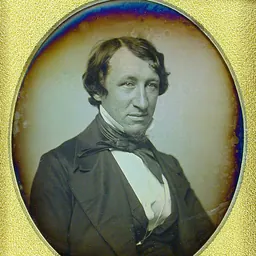



Related people
Same field, nearest in time


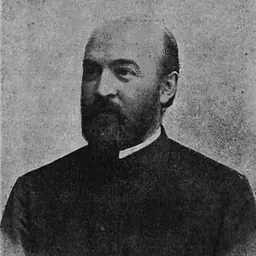
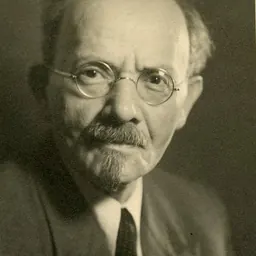
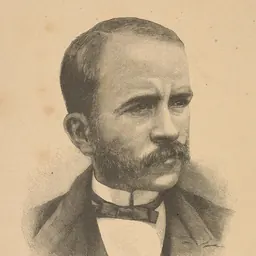
Contemporaries
People whose lives overlapped Richard Clarke Cabot's



Frequently asked questions
Who was Richard Clarke Cabot?
American physician (1868–1939)
When was Richard Clarke Cabot born?
Richard Clarke Cabot was born on 21 May 1868 in Brookline.
When did Richard Clarke Cabot die?
Richard Clarke Cabot died on 7 May 1939 in Cambridge.
What was Richard Clarke Cabot's occupation?
Richard Clarke Cabot was a scientist.
What was Richard Clarke Cabot known for?
Richard Clarke Cabot was known for Cabot rings, Hematology and Social work.
What nationality was Richard Clarke Cabot?
Richard Clarke Cabot was American.
Sources & further reading
· Wikipedia: Richard Clarke Cabot
· DBpedia: Richard Clarke Cabot
Cite this page
APA: Biography.guide. (2026). Richard Clarke Cabot. https://biography.guide/richard-clarke-cabot/
MLA: "Richard Clarke Cabot." Biography.guide, https://biography.guide/richard-clarke-cabot/.
Chicago: "Richard Clarke Cabot." Biography.guide. https://biography.guide/richard-clarke-cabot/.
Data last updated: 2026-09-26 · Spot an error? Report a correction.
Page generated 2026-09-27 05:14 UTC