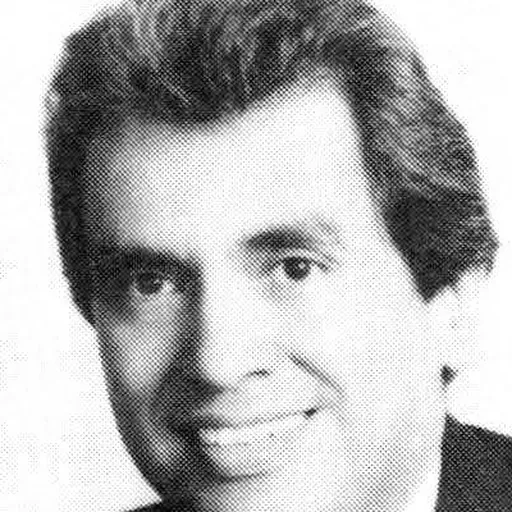
About Richard Alatorre
Lived 1943 – 2024 (aged 81). Richard Alatorre was an American politician.
Richard Alatorre (May 15, 1943 – August 13, 2024) was an American politician who was a member of the California State Assembly from 1973 to 1985 and the Los Angeles City Council from 1985 to 1999, the second Latino to serve on the council in the 20th century. While working as a lobbyist, he had been called "one of the most influential Latino politicians in the state".
Early life Alatorre was born on May 15, 1943 in Boyle Heights, California,
He began politics early, as he put it, "a student body officer or class officer every semester from junior high school through high school." He attended and graduated from Garfield High School in East Los Angeles, where he was student body president. In 1960 he heard John F. Kennedy speak at East Los Angeles College and began handing out Kennedy fliers and became involved in the campaign of Leopoldo Sanchez, a Latino candidate for judge.
Personality Los Angeles Times reporter Bill Boyarsky noted in 1985 that "Alatorre is a player. He likes the game. He knows how to push in public and private. He knows how to deal." and in the late 1960s he was a consultant to the U.S. Civil Rights Commission.
State Assembly Alatorre in 1975 while serving in the California State Assembly. Alatorre began his California Assembly career as an aide to Assemblyman Walter Karabian. Alatorre dated Carole Creason when she was working for Walter Karabian and State Senator Alfred Song in 1968. In 1971, he ran as the Democratic candidate for Assembly to succeed David Roberti, who had been advanced to the State Senate. His opponent was Republican Bill Brophy. But the day before the election, shots were fired into Brophy's house and, Alatorre told a reporter, the resulting publicity gave Brophy the boost he needed to win the seat. In 1972 Alatorre ran again, and this time he was elected. serving 12 years in various capacities, including Chairman on the Select Committee on Farm Labor Violence; Chairman of Human services Committee; Chairman of the historic 1980 Elections and Reapportionment Committee; Founder and Chairman of the Chicano Caucus for the California State Legislature; and Chairman of the Prison Reform Committee. During his tenure in the Assembly, he authored the California Agricultural Labor Relations Act.
In his Assembly years, from 1973 to 1985, Alatorre "proved himself a reliable member of Speaker Willie L. Brown's fund-raising political machine that milks the business community for money needed to elect Democrats." "Back-room powerbrokers" in the Assembly also "put him in charge of fashioning a legislative and congressional reapportionment that gave Latinos their most substantial political representation in history."
He "helped shape the state's farm labor law, which gave migrant workers collective bargaining rights. ... he got the University of California, Irvine School of Medicine to admit more minorities in return for an appropriation for a new teaching hospital."
It was said that Alatorre's election to the remainder of Snyder's term "filled a huge void in city politics and government" because a city council "without a Latino representative in American's pre-eminent Hispanic city was something of a civic embarrassment, magnified recently when the U.S. Justice Department filed suit against the city, charging that its reapportionment plan had denied Latino representation." Some of his other positions were:
Redistricting, 1986. Alatorre attempted to gain more influence for Hispanic voters by recommending a redistricting plan that would have moved the 13th District of City Councilman Michael Woo, a Chinese-American, away from Woo's power base in Hollywood and—"much against his will—into a two-thirds Latino district." The move was deemed unnecessary when Councilman Howard Finn died and his District 1 was moved into Northeast Los Angeles to give Latinos a clear shot at electing another council member.
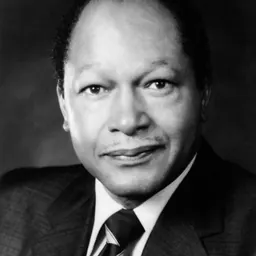
Other public agencies Transportation. After leaving the City Council, Alatorre was named by Mayor Tom Bradley to the Los Angeles Regional Transportation Commission, the forerunner to the Los Angeles County Metropolitan Transportation Authority; he became the first chairman of the MTA, and during his tenure championed the passage of the Gold Line and led the successful approval of the extension of the light rail into East Los Angeles. In that position, Alatorre tapped "lobbyists and contractors, all big campaign contributors" for more than $500,000 to benefit a children's charity he had created—and which hired an event planning firm founded by Angie Alatorre, his wife.
Insurance. In 1999, he was appointed by a State Senate committee headed by Senator John Burton to a $114,000-a-year job on the California Unemployment Insurance Appeals Board, but he resigned in 2001 after he agreed to plead guilty to tax evasion (below).
Legal problems
Political Reform Act In June 1986 Alatorre was accused of violating the state Political Reform Act in an "unusual civil lawsuit" filed by the city attorney's office in connection with Alatorre's successful race for a City Council seat in 1985. The suit contended that Alatorre and the treasurers of his two political finance committees, including his sister, had used money from his State Assembly campaign fund to run for City Council. The treasurers were indicted criminally, but City Attorney James K. Hahn said he lacked criminal evidence against Alatorre, and so Hahn filed the civil action. Alatorre claimed that the city attorney gave him "vague advice" and that he was a "guinea pig because his was the first election conducted under the city's new campaign law.
Conflict of interest In April 1987, the state's Fair Political Practices Commission said it was investigating whether Alatorre violated state laws regarding conflict of interest when he recommended that The East Los Angeles Community Union (TELACU) be awarded a $722,000 city grant to provide dial-a-ride service—this after accepting a $1,000 fee for speaking at one of the group's meetings.
Child custody In 1998 Alatorre and his wife, Angie, were involved in a bitter child custody dispute over the fate of Angie's nine-year-old niece, who had been living with them since the death of her mother, Angie's sister, Belinda. In considering the fitness of the Alatorre home, Superior Court Judge Henry W. Shatford was confronted with allegations that Alatorre had recently abused cocaine. Under sharp questioning, Alatorre said he was a recovering cocaine addict but had stopped using the drug nine years previously. The claim was contradicted by a court-ordered drug test that Alatorre failed. In the end, the judge ordered that the girl, then 10, should be returned to the Alatorres, in part because she had enjoyed "love, caring, affection and security" with them. Alatorre was at that point in a court-monitored drug rehabilitation program.
Tax evasion In 1998, federal authorities were investigating how Alatorre came up with more than $12,000, "much of it in cash," to use as a down payment on his Eagle Rock home. They were also looking into work on the Alatorre home that was financed by The East Los Angeles Community Union (TELACU), a nonprofit community development corporation with profit-making subsidiaries, which had sought "millions of dollars in MTA (Metropolitan Transportation Authority) and city deals backed by the councilman."
In 2001 he agreed to plead guilty to felony tax evasion, admitting to not reporting almost $42,000 he received from individuals attempting to influence him in his official duties. A plea bargain resulted in eight months of home detention and three years of supervised release.
Lobbying After his political career ended, Alatorre became a lobbyist and consultant. and the inquiry was dropped.
Personal life and death Alatorre was married to Angie and had two sons, Derrick and Darrell, and a daughter, Melinda.
Legacies
Alatorre-Eagle Rock View Park at the base of the landmark Eagle Rock in Northeast Los Angeles was named for Alatorre. It was planned to be a "passive use facility with benches, some nature paths and a small parking lot off Scholl Canyon Road." A Richard Alatorre swimming pool exists at 4721 Klamath Street in El Sereno. A collection of his official papers resides at the California State University, Los Angeles Department of Special Collections and Archives.
Don’t just read it —
keep it.
Full-length biographies made to live with: read them, listen on the way to work, watch them tonight.
- E-book
- Audio
- Video
Instant download · yours to keep · every purchase keeps this site free
Important facts
People in Richard Alatorre's life
Named in this biography and alive at the same time




Related people
Same field, nearest in time





Contemporaries
People whose lives overlapped Richard Alatorre's


Frequently asked questions
Who was Richard Alatorre?
American politician (1943–2024)
When was Richard Alatorre born?
Richard Alatorre was born on 15 May 1943 in Compton.
When did Richard Alatorre die?
Richard Alatorre died on 13 August 2024.
What was Richard Alatorre's occupation?
Richard Alatorre was a politician.
What nationality was Richard Alatorre?
Richard Alatorre was American.
Sources & further reading
Cite this page
APA: Biography.guide. (2026). Richard Alatorre. https://biography.guide/richard-alatorre/
MLA: "Richard Alatorre." Biography.guide, https://biography.guide/richard-alatorre/.
Chicago: "Richard Alatorre." Biography.guide. https://biography.guide/richard-alatorre/.
Data last updated: 2026-09-20 · Spot an error? Report a correction.
Page generated 2026-09-27 05:09 UTC