
Ricardo Lancaster-Jones y Verea
Mexican diplomat, historian, academic, booklover, art collector, entrepreneur
About Ricardo Lancaster-Jones y Verea
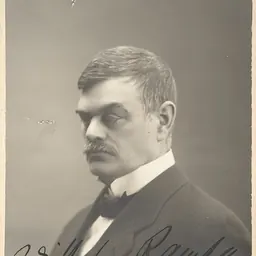
Lived 1905 – 1983 (aged 77). Ricardo Lancaster-Jones y Verea was a Mexican historian, diplomat, art collector, academic, journalist and scholar.
Ricardo Lancaster-Jones y Verea, MA BE KHS (9 February 1905 – 20 January 1983 ) was a Mexican historian and scholar who made significant contributions toward the study of the haciendas of the State of Jalisco (Mexico) in the twentieth century. His enthusiasm for history led him to become a professor of Regional History at the Faculty of Philosophy and Letters of Universidad Autónoma de Guadalajara in 1965. Later on, in 1973, he earned his MA degree in Latin American Studies at the University of New Mexico.
Biography Family and early life Ricardo Lancaster-Jones y Verea born in Guadalajara, Jalisco, to Alberto Lancaster-Jones y Mijares and Isabel Verea y Vallarta. His father, Alberto Lancaster-Jones y Mijares (1873–1958) was a British-Mexican sugarcane entrepreneur and scientist. His mother came from a family with a long tradition in the diplomatic service, politics, and the military.
Early studies and occupation St. Mary's Hall and the Immaculate Conception Chapel at the University of Dayton. Ricardo Lancaster-Jones y Verea studied in Mexico (Instituto de Ciencias and Escuela Libre de Ingenieros, both in Guadalajara), and in the United States (St Charles College, Grand Coteau, Louisiana and the University of Dayton, Ohio). He earned a Topographical Engineering degree at the Escuela Libre de Ingenieros de Jalisco (1928) and a Bachelor of Engineering (BE) degree at the University of Dayton (1929).
Contributing journalist Beginning in 1934, Lancaster-Jones wrote for the Gaceta de Guadalajara magazine, later becoming a contributing journalist for the El Informador newspaper. He continued writing for different magazines and newspapers from Guadalajara and Mexico City, such as Crónica Social Tapatía, El Mundo, Estudios Históricos, Excélsior, El Occidental, et al.
Luz Padilla y España was the eldest child of Arcadio Padilla y Romo de Vivar, and of Guadalupe España y Araujo.
Guadalupe España y Araujo was granddaughter of José María Araujo, a Guadalajaran attorney-at-law, District Judge and Knight of the Imperial Order of Guadalupe (27 February 1865).
Through her extended family, Luz Padilla y España was niece of: A) Carmen Padilla y Romo de Vivar, wife of the Guadalajaran academic and painter José Vizcarra (1874–1956).
Diplomat During the course of his life, Lancaster-Jones participated in some diplomatic activities with the United States, El Salvador, the United Nations and the Holy See:
Consulate of the United States The city of Downey, California became a Sister city of Guadalajara in 1960 during Ricardo Lancaster-Jones y Verea's presidency of the Asociación Consular de Guadalajara. 20px 1945: he was appointed as Advisor for Cultural Affairs to the United States consulate in Guadalajara.
United Nations Delegate 20px 1950: he was named as United Nations' Delegate to the State of Jalisco. From 1953 to 1960, he was Secretary General of its Regional Committee. During his presidency the city of Guadalajara became a sister city of Downey, California on 26 August 1960. The following year, he was named vice-president of the first Reunión Nacional de Cónsules, celebrated 18–20 November 1961, Veracruz, México.
In 1954, Lancaster-Jones gave more than a dozen photos to Paul Alexander Bartlett, depicting the haciendas Santa Cruz and El Cortijo (Jalisco) from 1880 to 1940, contributing to Bartlett's large-scale study of more than 350 haciendas throughout Mexico that Bartlett conducted between 1943 and 1985. Nowadays, these photographs are kept in the Benson Latin American Collection at the University of Texas at Austin.
Museo Regional de Guadalajara In 1952 the Governor of the State of Jalisco, José Jesús González Gallo (1900–1957), appointed Lancaster-Jones as Curator of the Museo Regional de Guadalajara, serving this post until 31 December 1953. During the two years he was in office, he reorganized the exhibition rooms, commanded the restoration of priceless works of art, and made a detailed inventory of the various museum collections. Since then, most of his essays on genealogy and heraldry were published in the Academia's Memorias; among others, La Familia Añorga y sus ramas de México (1949) stands out due to the extensive iconographic research on the families: Añorga, Barron, Escandón and Mijares. This study provide new facts to Captain José de Añorga's biography: he was the first Director of San Blas' shipyards, and the Port's Governor; this place became very important because the New Spain's explorations to North America's Pacific Coast departed from there. 1954: He became a numerary member with seat #21 and was appointed by Academia's president, José Ignacio Dávila Garibi, as Academia's Delegate to the State of Jalisco.
Academia de Genealogía y Heráldica Mota-Padilla
1950–53: He reorganized the Academia de Genealogía y Heráldica Mota-Padilla, being its President (1950–83). He has been praised by the academic Ramiro Ordoñez Jonama (former Vice Minister of Foreign Affairs of Guatemala) regarding his work by giving continuity to this institution.
University of New Mexico In 1973 Lancaster-Jones earned his M.A. in Latin American Studies at University of New Mexico with the thesis Haciendas de Jalisco y aledaños: fincas rústicas de antaño, 1506–1821 (published in Mexico the next year as Haciendas de Jalisco y Aledaños (1506-1821)). Then, he continued with the PhD studies under the guidance of Donald C. Cutter (1922–2014), emeritus professor of history at University of New Mexico from 1976 until 1978, then, his health broke down. After he recovered his health in late 1978, he didn't continued with the PhD degree for personal reasons.
Disciples Another noted disciple of Lancaster-Jones was Áurea Zafra Oropeza (died 11 August 2010, Guadalajara), among whose publications are Agustín Rivera y Agustín de la Rosa ante la filosofía novohispana (Sociedad Jalisciense de Filosofía, Guadalajara, 1994) and Las cofradías de Cocula (Agata, Guadalajara, 1996). Her La mujer en la historia de Jalisco was awarded in 1996 by the Government of the State of Jalisco.
Connoisseur According to Leopoldo I. Orendain (1898–1972), Ricardo Lancaster-Jones y Verea was a "real Connoisseur" whose enthusiasm as an art collector brought him to become advisor to several governors of Jalisco and various businessmen who sought for his help during the formation of their own collections of art. He was also a referee in testamentary appraisals.
José Cornejo Franco (1900–1977), Director of the Public Library of the State of Jalisco (1949–1977), avers that Lancaster-Jones collaborated with the formation of several private libraries and contributed with the reorganization of the Public Library of the State of Jalisco (1950–1959). In 1970 the restoration of the former Franciscan convent of Guadalajara owed to his work El Uso de Documentos en la Restauración de Edificios Antiguos (Use of Documents in the Restoration of old Buildings). This study was published the year before (1969), through it, he examines an inventory from 1718 of the same Franciscan convent (a manuscript of his own collection). Anticipating to his times as thirty years had to pass and so in the year 2000, the Escuela de Conservación y Restauración de Occidente (School of Conservation and Restoration of the West) was founded in Guadalajara.
Art collector When Ricardo Lancaster-Jones y Verea's paternal grandfather died in 1922, he inherited an important collection of Mexican Colonial Art (pieces from the Viceroyalty of New Spain period), He is mentioned among the most important art collectors in the State of Jalisco by Xavier Torres Ladrón de Guevara (1997).
Guadalajaran art collector Carlos Navarro gives remarkable importance to his oil painting portrait collection in his book El Retrato en Jalisco (2004). This collection included works from artists like: José María Estrada (1764–1860), Juan Cordero (1822–1884), Pablo Valdéz (1839–1898), Felipe Castro (1832–1902), Jacobo Gálvez (1821–1882), Gerardo Suárez (1834–1870), José Pamplona (1845–1867), Carlos Villaseñor (1849–1920) and José Vizcarra (1874–1956). His library had more than 35,000 volumes, most of them collected through the course of his life. Nowadays, those volumes are distributed among the libraries of El Colegio de Jalisco, the University of Texas and the University of New Mexico, as well as in private collections in Mexico and abroad. it was designed by the artist and academic Carlos Stahl (1892–1984). Nowadays, one of Ricardo Lancaster-Jones' bookplates can be found at the Colección de ex-libris de Guillermo Tovar de Teresa (Guillermo Tovar de Teresa's Bookplates Collection) at the Universidad Iberoamericana in Mexico City.
Sociedad de Anticuarios de Guadalajara In 1953 Lancaster-Jones established the Sociedad de Anticuarios de Guadalajara (Society of Antiquarians of Guadalajara), serving as General Secretary from 1953 to 1980.
Medalla al Mérito Consular by the Instituto Consular Interamericano As a published author, his name can be found also like: Ricardo Lancaster-Jones or Ing. Ricardo Lancaster-Jones.
Don’t just read it —
keep it.
Full-length biographies made to live with: read them, listen on the way to work, watch them tonight.
- E-book
- Audio
- Video
Instant download · yours to keep · every purchase keeps this site free
Important facts
People in Ricardo Lancaster-Jones y Verea's life
Named in this biography and alive at the same time







Related people
Same field, nearest in time

Contemporaries
People whose lives overlapped Ricardo Lancaster-Jones y Verea's




Frequently asked questions
Who was Ricardo Lancaster-Jones y Verea?
Mexican diplomat, historian, academic, booklover, art collector, entrepreneur (1905-1983)
When was Ricardo Lancaster-Jones y Verea born?
Ricardo Lancaster-Jones y Verea was born on 9 February 1905 in Guadalajara.
When did Ricardo Lancaster-Jones y Verea die?
Ricardo Lancaster-Jones y Verea died on 20 January 1983 in Guadalajara.
What was Ricardo Lancaster-Jones y Verea's occupation?
Ricardo Lancaster-Jones y Verea was a historian, diplomat, art collector, academic, journalist and scholar.
What nationality was Ricardo Lancaster-Jones y Verea?
Ricardo Lancaster-Jones y Verea was Mexican.
Sources & further reading
· Wikipedia: Ricardo Lancaster-Jones y Verea
· DBpedia: Ricardo Lancaster-Jones y Verea
Cite this page
APA: Biography.guide. (2026). Ricardo Lancaster-Jones y Verea. https://biography.guide/ricardo-lancaster-jones-y-verea/
MLA: "Ricardo Lancaster-Jones y Verea." Biography.guide, https://biography.guide/ricardo-lancaster-jones-y-verea/.
Chicago: "Ricardo Lancaster-Jones y Verea." Biography.guide. https://biography.guide/ricardo-lancaster-jones-y-verea/.
Data last updated: 2026-09-26 · Spot an error? Report a correction.
Page generated 2026-09-27 05:14 UTC