
Reza Attaran
Iranian actor, director, screenwriter and singer (born 1968)
About Reza Attaran
Born 1968. Reza Attaran is an actor, film director, singer, screenwriter, television actor and television director.
Reza Attaran (; born 10 May 1968) is an Iranian actor, director, and screenwriter. Originally from Kakhak, he earned a diploma in economics and pursued further studies in industrial design at the Faculty of Fine Arts, University of Tehran, but left to focus on a career in cinema. He has also lived in Sabzevar. Attaran began acting in theater during the 1980s, made his television debut in Bidaaran, and gained prominence through collaborations with Mehran Modiri in Parvaz 57 (1993) and Saat-e Khosh (1994–1995).
Attaran’s first directorial work was the children’s television program Sib-e Khandeh (1997). That same year, he debuted in cinema with Key of Marriage. He appeared in Kolah Ghermez va Sarvenaz (2002) and gained widespread recognition for directing and starring in the popular television series Khaneh Be Doosh (2004) and Moteham Gorikht (2005). His role in the film Khorus Jangi (2007) was followed by awards in 2010, including the Golden Smile Statuette and an Honorary Diploma for Best Actor at the second Sun Smile Ceremony for his performances in Vorood-e Aghayan Mamnoo and Asb Hayvan-e Najibi Ast.
In 2011, Attaran’s direction and acting in Khabam Miad earned him the Crystal Simorgh for Best Director, and his role in Bikhod va Bi Jahat secured an Honorary Diploma for Best Actor from the Cinema Critics Association. For his performance in Tabaqe Hassas (2013), he won the Crystal Simorgh for Best Actor. In 2014, Attaran was named Iran’s most profitable actor, with box office earnings of 1.6 billion tomans from films such as Tabaqe Hassas, Red Carpet, and Kalashnikov. He later starred in commercially successful films, including Nahang-e Anbar (2015), Nahang-e Anbar 2: Selection-e Roya (2017), Hezarpa (2018), and Enferadi (2019). In 2020, he won another Crystal Simorgh for Best Actor for his role in Roshan.
Early life and education Reza Attaran was born on 10 May 1968 in Mashhad. He has two older sisters and a younger brother, being the third child in his family. Originally from Kakhk, his mother died in an earthquake in the region. His father, Zabihollah Attaran, died in Mashhad on 15 January 2025. As a child, Attaran was a diligent student.
Career
1980s and 1990s: Early Career Attaran’s career began with theater performances under Hassan Hamed in the 1980s. He started at the Children and Young Adults Intellectual Development Center. He joined the children’s section of Mashhad’s IRIB in 1982, appearing in the program Rainbow. His collaboration with Hamed continued until 1991. He credits Hamed as his most significant influence.
In 1997, Attaran acted in Donya-ye Shirin, a children’s series directed by Behrooz Baghaei, aired on IRIB Channel 1. He later appeared alongside Khosrow Shakibai and Rambod Javan in Sarzamin-e Sabz, broadcast on IRIB Channel 2.
His directorial debut came with Sib-e Khandeh (1997), a weekly children’s program on IRIB Channel 1. In 1998, he acted, wrote, and directed Majid Delbandam alongside Majid Salehi and Yousuf Teymouri. In 1999, Attaran starred in, served as art director for, and wrote Qatar-e Abadi, a comedic series that parodied stories like Hassan Kachal, Scheherazade, and Robin Hood, incorporating social commentary. The series was among the most successful television programs of the late 1990s.
Cinema Reza Attaran’s first cinematic role was in Key of Marriage (1997), directed by Davood Movassaghi, where he acted alongside Alireza Khamseh and Nader Soleimani. Written by Afshin Sarfaraz, the film follows a man tasked with delivering smuggled goods to a gang in Tehran.
2000s: Directing and Television
Television In 2000, Attaran served as a consultant director and writer for Zire Aseman-e Shahr. Mehran Ghafourian, the director and producer, credited Attaran with creating all the characters, stating, “After the success of my previous projects, IRIB signed a contract with me to produce a show. I approached Reza Attaran, saying I wanted a project that would make waves. He agreed, and we spent months writing the script. Reza worked tirelessly, and he is the creator of Zire Aseman-e Shahr.”
In 2002, Attaran acted, directed, and wrote for the comedy series Koucheh Aghaghia. The following year, he took on the same roles for Khaneh Be Doosh, a series with a simple storyline that addressed social issues like poverty, greed, and ignorance. While praised for its comedic and satirical elements, some critics noted its simplistic narrative. The success of Khaneh Be Doosh inspired Attaran to use a similar style for Moteham Gorikht (2005), co-directed with Saeed Aghakhani. After this, he made a guest appearance in Ketabforoushi-e Hodhod (2006). In 2006, he directed, acted, and sang in Torsh o Shirin.
In 2008, Attaran was a consultant director for Se Dar Chahar, directed by Majid Salehi. That same year, he directed and starred in Bezangah, a Ramadan special for IRIB Channel 3. Despite his television success with series like Khaneh Be Doosh, Moteham Gorikht, Torsh o Shirin, and Bezangah earning him widespread popularity, Attaran parted ways with IRIB after facing restrictions. On 18 September 2008, the IRIB Oversight Council sent a letter to the organization’s management, citing public criticism and norm-breaking content, leading to the series’ suspension. However, IRIB Channel 3’s public relations later clarified that the broadcast would continue. Although Attaran still receives offers from IRIB, he has cited exhaustion as his reason for avoiding television work, and no official collaboration has been reported since.
Cinema In 2000, Attaran starred in his second film, Cinderella, alongside Poopak Goldarreh and Rambod Javan. In 2002, he appeared in Kolah Ghermez va Sarvenaz. He later acted in Hoo and Kolah-i Baraye Baran (2006). Reviews of Kolah-i Baraye Baran praised Attaran’s effortless performance and well-written dialogue, noting his ability to remain believable despite weak character development.
2007 was a prolific year for Attaran, with roles in five films: Tighzan, Quarantine, Khorus Jangi, Towfigh-e Ejbari, and Tasvieh Hesab. His performance in Khorus Jangi stood out, with critics attributing the film’s box office success to his presence despite a flawed script. In 2009, he starred in Nish-e Zanbour, which grossed 1.75 billion tomans after 72 days across 25 theaters. Producer Ali Sertipi noted the film aimed to differentiate itself from other recent comedies by avoiding superficiality, a goal he believed was largely achieved.
In 2010, Attaran played a fraudulent sergeant in Asb Hayvan-e Najibi Ast, showcasing a more subdued performance compared to his usual energetic roles. That same year, he starred in Vorood-e Aghayan Mamnoo, which solidified his reputation as an actor in 2011. Critics had mixed reviews, with Masoud Ferasti offering positive feedback. For his roles in Asb Hayvan-e Najibi Ast and Vorood-e Aghayan Mamnoo, Attaran won the Golden Smile Statuette and an Honorary Diploma for Best Actor at the second Sun Smile Ceremony.
2010s: Departure from Television, Cinematic Success, and Box Office Dominance After the series Bezangah, Reza Attaran left television. Attaran also appeared as a guest on the television program Gap, directed by Rambod Javan, which was broadcast on the iFilm network. In this program, he discussed his life, acting career, work approach, and marriage. Film critic Manouchehr Akbarloo highlighted the film’s ability to connect with audiences as one of its strengths. In the same year, Attaran acted in Bikhod o Bi Jahat, directed by Abdolreza Kahani. The film was released in cinemas on December 8, 2012, and Attaran received the Diploma of Honor for Best Actor from the Film Critics Association. The film received mixed reviews; some critics, like Masoud Farasti, criticized it for lacking serious mise-en-scène, while others, such as Mehrzad Danesh, praised its strong character development.
Following Bikhod o Bi Jahat, Attaran starred in Che Khoobe Ke Bargashti, directed by Dariush Mehrjooi, alongside Hamed Behdad and Mahnaz Afshar. The film was compared to Mehman-e Maman in terms of its format and set design. Attaran then collaborated with Behrooz Shoeibi in Dehliz, alongside Hanieh Tavassoli. The film premiered at the Fajr Film Festival. Attaran was nominated for the Crystal Simorgh for Best Actor for his performance in this film and won the Best Actor award at the 7th Critics Association Awards. While accepting the award, Attaran humorously remarked to the audience, “I’m happy even if I didn’t deserve this award. Receiving an award from critics in this period means a lot to me, especially since the state of cinema in the previous period was like a scorpion in a sack!” Masoud Farasti praised the film, stating, “Dehliz is a good, Iranian, and local film. The characters are identifiable, relatable, and represent people with real issues. The cinematography is balanced and doesn’t detract from the film.” However, critic Nima Hassani-Nasab described the film as low-quality, stating, “I’m among the few who aren’t kind to Dehliz. My stance is a reaction to the trend of minority-focused filmmaking that lowers the quality of good films. We’ve led our talented filmmakers astray with such excuses. Iranian cinema and Behrooz Shoeibi deserve better than Dehliz, and I hope we raise our expectations.”
In 2013, Attaran acted in Tabaqe Hassas, which was released on March 6, 2014, and grossed 1.45 billion tomans in Tehran by April 1, 2014, without any television promotion. Despite criticism that the film had “a simple but engaging story that could have offered more comedy but ultimately delivers little,” Attaran’s performance was well-regarded, and he was described as a charismatic actor loved by audiences. He won the Crystal Simorgh for Best Actor at the 32nd Fajr Film Festival for this role. However, Faramarz Gharibian, a jury member, revealed that the award was initially unanimously awarded to Navid Mohammadzadeh for Asabani Nistam!, but external pressures led to it being given to Attaran. Four days after the festival’s closing ceremony, Attaran stated in an interview that the Crystal Simorgh rightfully belonged to Navid Mohammadzadeh. During the Tabaqe Hassas press conference at the Fajr Film Festival, when asked if he would do anything to make audiences laugh and whether his acting involved breaking taboos, Attaran responded, “I’m very much among the people; I ride in their cars and see them. They all ask me to make something that makes them laugh. I believe society today needs laughter. A critic friend once said that Attaran would even pull down his pants to make people laugh. I’m ready to pull down my pants to make people laugh. I’ve held back my emotions a bit, but this is truly what society needs.” This statement sparked significant reactions. Jamshid Mashayekhi criticized Attaran’s comment, saying, “If Mr. Reza Attaran wants to make people laugh, it’s better to jump off a plane tree than to say such inappropriate things, which I’m ashamed to repeat.” In a later interview with Ehsan Alikhani on a Nowruz special program on Channel 3, Attaran addressed the controversy, calling it a misunderstanding.
In 2013, Attaran also starred in Esterahat-e Motlagh, directed by Abdolreza Kahani, which was released in 2014. The film sparked controversy due to physical interactions between Attaran and his wife. Although the film faced demands for edits, Kahani resisted, noting that Attaran was acting alongside his real-life spouse. The story follows a woman, played by Taraneh Alidoosti, who migrates from Damghan to Tehran to return to her previous workplace and encounters her abusive ex-husband during the journey. Like many of Kahani’s films, such as Asb Hayvan-e Najibi Ast, Esterahat-e Motlagh employs a dark atmosphere. He also directed and wrote Red Carpet. Critics noted that the film “lacks substance in its appearance and decoupage but contains many moral messages, though they are disjointed and fail to fully manifest in the main character.” Other critics remarked, “Attaran’s main point is that an Iranian, even if traveling to Mars, can still be recognized as Iranian from afar. Unfortunately, this idea doesn’t fully come to fruition, preventing the film from becoming a lasting work in Iranian cinema.”
Due to his artistic success in Tabaqe Hassas, Red Carpet, and Kalashnikov, Attaran was named the most profitable actor in Iranian cinema in 2014, with earnings of 1.6 billion tomans.
In 2014, Attaran starred in Nahang-e Anbar, directed by Saman Moghadam, playing a 50-year-old man, Arzhang Sanobar, narrating his past life. Initially scheduled to screen at the 33rd Fajr Film Festival, the film was reviewed and re-edited before its theatrical release in late May 2015. Despite criticism of the screenplay’s weaknesses, Attaran was credited with compensating for these flaws to some extent. Following Nahang-e Anbar, Attaran acted in Ginness and Man Salvador Nistam. Ginness was considered a departure from Attaran’s usual success, with critics noting that his lackluster performance stemmed from weak character development. His next project, Abnabat Choobi, was criticized for its lack of narrative logic and overly long introduction, and was generally deemed a weak film by critics.
In 2016, Attaran starred in Nahang-e Anbar 2: Selection-e Roya, which was released on May 10, 2017. The film grossed over 20 billion tomans, making it the highest-grossing film in Iranian cinema history at the time and currently ranking sixth. However, critics found it weaker than the first installment, noting, “The only positive aspect of the film might be Reza Attaran himself, who has, in recent years, established his own unique comedic genre in Iranian cinema. In this genre, the burden of weak and uninspired screenplays falls entirely on his shoulders, and he manages to carry them with his innate charisma.” Attaran’s next film, Khanoum-e Yaya, received negative reviews from both audiences and critics. He then starred in Mosadereh, directed by Mehran Ahmadi, which follows a naive SAVAK purchasing agent who flees Iran during the revolution after marrying a foreign woman. The film was criticized for starting strong but declining in quality, though some critics, such as Mohammadreza Lotfi, praised it as “a prime example of a proper and good industrial film, which is lacking in our cinema. It should serve as a model for filmmakers and industry leaders, showing what a standard film without cheapness or vulgarity looks like, one that sells well and maintains quality.” Despite its commercial success, the film was criticized as weak, with some reviews pointing out that its female characters were portrayed as unintelligent, and much of its humor relied on this premise.
In 2018, Attaran starred in and served as a consultant director for Zir-e Nazar, directed by Majid Salehi. The film received mixed reviews, with some critics describing its characters as “all sexually deviant, with no normal person present throughout the film,” while others noted that “the sexual humor in Zir-e Nazar, unlike films like Rahman 1400, is not crude and aligns well with the film’s essence.”
Attaran also appeared in Azad Mesl-e Hava (directed by Abdolreza Kahani), Enferadi (directed by Seyed Masoud Atyabi), and Roshan (directed by Rouhollah Hejazi). For his role in Roshan, he won the Best Actor award at the 39th Fajr Film Festival.
2020s
Home Entertainment Network In 2023, Reza Attaran starred in the home entertainment series Daftar-e Yaddasht. According to Milad Jalilzadeh in Farhykhtegan, the series had "almost no winning elements" aside from Attaran himself.
After a year-long hiatus from the home entertainment network, Attaran starred in the series Ajal-e Moallagh in 2024.
Cinema In 2023, Attaran acted in Villa-ye Saheli and Ghif. These films had a more successful box office opening compared to other films released during that period. Additionally, in 2024, he starred in the film Saddam.
Personal life Reza Attaran’s father, Zabihollah Attaran, spoke about his son’s passion for acting, stating, “To be honest, at first, I was opposed to it. I didn’t understand this field and thought it wasn’t a good profession, and my judgment was limited. But when I saw Reza’s enthusiasm for art and acting, I said, ‘Alright, my dear, pursue your work.’” In an interview regarding his decision not to have children, he said, “If you weigh the pros and cons of having children, I believe not having them is better. From the beginning, my wife and I were in agreement, and before marriage, we seriously decided against having children.” Attaran is also involved in charitable activities and visits charitable organizations. Additionally, he owns a photography studio located on a street in northern Tehran.
Public Appearance
Reza Attaran has received varied critiques from different individuals. Ali Sartipi commented on his personality, stating, “Attaran is selective. Sometimes he works for personal satisfaction; for instance, he acted in Khanoum-e Yaya, which I don’t find an appealing film. Perhaps he did it because he likes Kahani or for some other reason. I was the producer of Dracula, and that film, too, was a project Attaran did for personal reasons.” Vishka Asayesh remarked, “Without doing anything special, people are drawn to watching him.” Film critic Reza Dorostkar describes Attaran as a charismatic actor who shines in films like Hezarpa but falters in projects like Dracula. Manouchehr Hadi considers him a unique comedic actor whose inherent decency ensures his humor avoids vulgarity. Mohammad Hossein Farahbakhsh stated, “Attaran is a unique figure. He’s an actor who can elevate a mildly humorous situation to a much higher level.”
In 2018, Attaran was named the most profitable actor in Iranian cinema. His three films, Hezarpa, Mosadereh, and Khanoum-e Yaya, collectively grossed 56.751 billion tomans. Regarding this title, Attaran remarked, “I dislike the term ‘most profitable actor.’ It feels like you’re talking about a machine generating money for itself or others, while in reality, our cinema isn’t at that level. Each year, only a few films might break even.”
Attaran’s television series enjoy significant popularity among audiences. In Ramadan 2020, Motaham Gorikht remained the most-watched series of the month, even years after its initial broadcast.
Filmography
Film
Television
Web
Awards and nominations
Don’t just read it —
keep it.
Full-length biographies made to live with: read them, listen on the way to work, watch them tonight.
- E-book
- Audio
- Video
Instant download · yours to keep · every purchase keeps this site free
Important facts
People in Reza Attaran's life
Named in this biography and alive at the same time



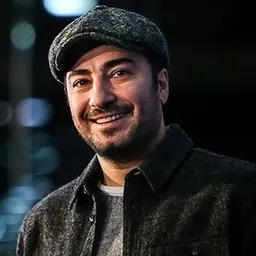


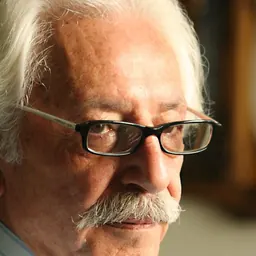

Related people
Same field, nearest in time



Contemporaries
People whose lives overlapped Reza Attaran's



Frequently asked questions
Who is Reza Attaran?
Iranian actor, director, screenwriter and singer (born 1968)
When was Reza Attaran born?
Reza Attaran was born on 31 March 1968 in Mashhad.
What is Reza Attaran's occupation?
Reza Attaran is an actor, film director, singer, screenwriter, television actor and television director.
What nationality is Reza Attaran?
Reza Attaran's recorded nationality: Serilanka Branch Post Office, Iranian peoples.
Sources & further reading
Cite this page
APA: Biography.guide. (2026). Reza Attaran. https://biography.guide/reza-attaran/
MLA: "Reza Attaran." Biography.guide, https://biography.guide/reza-attaran/.
Chicago: "Reza Attaran." Biography.guide. https://biography.guide/reza-attaran/.
Data last updated: 2026-09-20 · Spot an error? Report a correction.
Page generated 2026-09-27 05:17 UTC