
Rex Armistead
American Private detective, Conservative political operative
About Rex Armistead
Lived 1930 – 2013 (aged 83). Rex Armistead was an American private investigator and deputy sheriff.
Rex Armistead (February 23, 1930 – December 24, 2013) was a private detective, Mississippi Highway Patrol officer, and the leading operative for the since disbanded Mississippi State Sovereignty Commission. Later, he was heavily involved as an investigator for the Arkansas Project, a co-ordinated attempt in the 1990s to investigate then U.S. President Bill Clinton. The project was funded by conservative media billionaire Richard Mellon Scaife.
Background Armistead was born in Lula, a rural community in Coahoma County in northern Mississippi, to Roscoe Perry Armistead and the former Eula Mae Perryman. He attended Castle Heights Military Academy in Lebanon, Tennessee, and Memphis State University in Memphis, Tennessee. He served in the United States Army in the Korean War.
He was a member of the Masonic lodge, the Shriners, and the American Legion.
Career He began his work in law enforcement as a deputy sheriff for Coahoma County. He then was employed for many years as a state highway patrol officer. In the 1960s, as head of the highway patrol, he was sent to work for the Sovereignty Commission, a state body established to develop a legal method of maintaining Mississippi's then racial segregationist laws. He was selected to investigate the "Dixie Mafia" (a term Armistead apparently coined himself) by the then-Governor John Bell Williams, a Democrat. His role was investigative; he had no powers of arrest.
After working undercover, he became chief investigator of the highway patrol, during which time he was present in May 1970 at the Jackson State Killings, when state police opened fire on African-American student protesters at Jackson State College in the Mississippi state capital; two students were killed. He was one of the police witnesses who controversially alleged the presence of a student sniper, providing a pretext for the shooting. This allegation was dismissed by congressional investigation. Armistead then became chief investigator of the state Bureau of Identification, and then director of the criminal investigation section of the Mississippi Department of Safety, before becoming head of the Mississippi state police.
Working against the Dixie Mafia In 1976, Armistead became director of the Organized Crime Strike Force in New Orleans, Louisiana.
Regional Organized Crime Information Center On leaving the police, in the late 1970s, Armistead ran a non-profit crime-fighting organisation called the Regional Organized Crime Information Center in Memphis, which received a $2.3 million-a-year grant from the Law Enforcement Assistance Agency to help local police and prosecutors track the movements of habitual felony offenders across state lines.
Resistance to the civil rights movement Joe Conason notes that Armistead rose to be chief of Mississippi State Police under Governor John Bell Williams, "the last openly racist governor of Mississippi" and that "Armistead rose to power during an era of official terrorism and violent repression against black citizens and civil rights advocates". although it has been established that Armistead was involved in promoting three key aspersions of the Arkansas Project narrative - that Clinton had been protecting drug smuggling, that Clinton had himself used cocaine, and that Clinton was implicated in the alleged murder of Vince Foster. Armistead provided results from his investigations into Clinton's alleged protection of a cocaine smuggling ring while Clinton was governor of Arkansas to the House Banking Committee. All allegations were judged by federal authorities to be without foundation. The substance of the allegation was that Clinton had turned a blind eye to cocaine smugglers operating out of an airport in Mena, Arkansas, because a wealthy campaign contributor was said to profit from the illicit activity, and also because proceeds from the smuggling were allegedly funding a covert CIA operation. This organisation had also been involved in payments to witness in the Troopergate affair. Armistead travelled across North and South America purportedly gaining information, which he supplied to the House Banking Committee. Three federal investigations found that these allegations had no basis whatsoever. Armistead's report also formed the basis for articles in the American Spectator.
Armistead also investigated allegations that Bill Clinton had once used cocaine himself, providing material for R. Emmett Tyrrell, editor of the American Spectator, who published the (unsupported) allegations just before the 1996 presidential election. This was not the first time Armistead had spied on journalists; as part of his work for the Sovereignty Commission he had placed television news commentator Howard K. Smith under surveillance. Kangas had been critical of Scaife on online forums including Kangas' own website Liberal Resurgent. He had accused Scaife of being head of a vast right-wing conspiracy, and of persecuting Bill Clinton, whom Kangas considered to be a moderate Republican. Kangas was found with a pistol and forty-eight rounds of ammunition. Armistead and Gazarik were investigating whether Kangas had been out to kill Scaife.
Armistead v. Minor In 2002, Armistead lost a libel case against the Mississippi journalist Bill Minor. In a 1998 regular "Eyes on Mississippi" column, Minor referred to Armistead's "odoriferous background in Mississippi, ranging all the way from head-bashing of black civil rights workers to concocting a bizarre homosexual scandal in an attempt to defeat a gubernatorial candidate." The column was ruled by an 8-0 decision to be "substantially true". This case was heard on appeal because a lower court had ruled that Armistead was "libel-proof, meaning that his reputation was so bad that defamatory statements could not hurt him [any] more", a decision overturned by the appellate judge.
Death His services, with Mississippi Highway Patrol honors, were held at the Tunica Presbyterian Church in Tunica, Mississippi, at which he was a member.
Don’t just read it —
keep it.
Full-length biographies made to live with: read them, listen on the way to work, watch them tonight.
- E-book
- Audio
- Video
Instant download · yours to keep · every purchase keeps this site free
Important facts
People in Rex Armistead's life
Named in this biography and alive at the same time



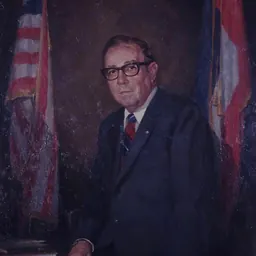
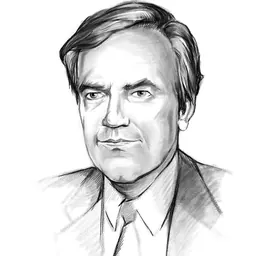


Related people
Same field, nearest in time
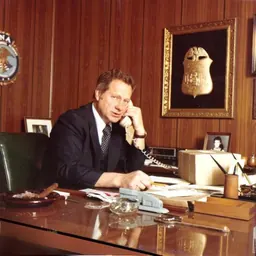





Contemporaries
People whose lives overlapped Rex Armistead's
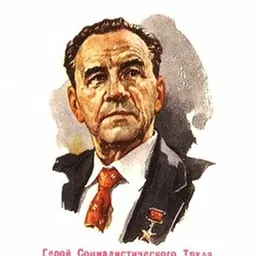
Frequently asked questions
Who was Rex Armistead?
American Private detective, Conservative political operative (1930-2013)
When was Rex Armistead born?
Rex Armistead was born on 23 February 1930 in Lula.
When did Rex Armistead die?
Rex Armistead died on 24 December 2013 in Blue Springs.
What was Rex Armistead's occupation?
Rex Armistead was a private investigator and deputy sheriff.
What nationality was Rex Armistead?
Rex Armistead was American.
Sources & further reading
Cite this page
APA: Biography.guide. (2026). Rex Armistead. https://biography.guide/rex-armistead/
MLA: "Rex Armistead." Biography.guide, https://biography.guide/rex-armistead/.
Chicago: "Rex Armistead." Biography.guide. https://biography.guide/rex-armistead/.
Data last updated: 2026-09-22 · Spot an error? Report a correction.
Page generated 2026-09-27 05:19 UTC