
About Rentarō Mikuni
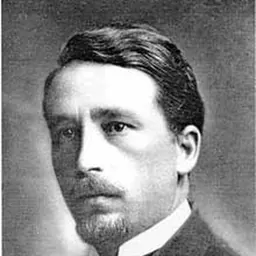
Lived 1923 – 2013 (aged 90). Rentarō Mikuni was a Japanese actor, screenwriter, film director and film actor.
was a Japanese actor and film director. He starred in several films of Keisuke Kinoshita, Mikio Naruse, Tadashi Imai, Shōhei Imamura, Tomu Uchida and many others. Mikuni received numerous awards for his performances and was awarded the Jury Prize at the 1987 Cannes Film Festival for his film Shinran: Path to Purity, which he wrote and directed.
Early years Mikuni's parents met in October 1922 at the port of Numazu. His mother had been a maid in Kure, but had been laid off and was on her way home. His father was working in Ōta, Gunma, and was on his way home. They hit it off so well that they did not return to their parents' home, but got married and began to live at Mikuni's father's residence. When he was seven months old, the family moved to his father's hometown, Nishiizu, Shizuoka Prefecture, where he grew up. Mikuni's father was an electrician, only graduated from primary school, so he wanted his son to have an education, so he sent Mikuni to former Touyou Middle School (later Shimoda High School in Shizuoka Prefecture). After landing in Qingdao, he wandered around, working in lunchbox shops and dance halls under false pretenses of age, and then wandered through Manchuria and the Korean peninsula (then under Japanese control). He fled with his girlfriend to Karatsu, Saga, and was thinking of crossing the ocean to the continent when he was arrested by Special Higher Police. reported him to police. He was sent to the front in China in December 1943. Regarding his lethargic attitude, his superiors tried to correct him by beating, but he wouldn't listen no matter how much they beat him. Eventually, he pretended to be sick and worked as a medic or tended to horses in the rear, where he remained until the end of the war.
Return to Japan and debut as an actor After returning to Japan, he wandered around Japan, working as a bus driver and peddler of laundry soap, miso, and other products. but it is generally believed to be as follows. While living in Tottori, Mikuni had taken a picture at a photo studio in Kurayoshi, Tottori. The owner of the studio had taken the liberty of submitting it to Shochiku's advertisement for new actors. Then in December 1950, a Shochiku producer, who had seen Mikuni's picture, happened to find Mikuni in Higashi-Ginza and scouted him. When he was scouted as an actor, he thought he would do any job as long as he could eat. Originally, Eiji Okada was scheduled to play the lead role, but his appearance was cancelled due to the Red Purge, and Mikuni was selected because he had a similar facial appearance. The stage name Rentaro Mikuni was taken from his role in this film. At the time of his debut, Mikuni's career was falsified and he was advertised as an intellectual and single male with a degree in engineering from Osaka University. This degree of falsehood was common in the movie industry at the time. Mikuni was favored by director Kinoshita and lived in his house for a while as a houseboy. He then became a research student at Haiyuza Theatre Company for some time in order to acquire acting skills. The following year, he continued to appear in Kinoshita's films Boyhood and Fireworks over the Sea. In 1952, Toho made a formal request to Shochiku to cast Mikuni as Toshiro Mifune's co-star in Sword for Hire, but Shochiku refused, in part because Mikuni was their employee. However, Mikuni, attracted by the high fee, It is said that a sign saying "Do not enter the dog, cat, or Mikuni" was attached to the gate of the Shochiku Ōfuna Studio in Kamakura. After that, Mikuni worked mainly in independent films and Nikkatsu, which did not participate in the five-company agreement. The 1956 Nikkatsu film The Burmese Harp, directed by Kon Ichikawa, and the 1957 independent film Stepbrothers, both of which he appeared in during this period, later became among his best-known works. In October 1956, his contract with Nikkatsu expired and he became a freelancer. In 1959, he signed an exclusive contract with Toei while maintaining his freedom to perform for other companies, which was unusual at the time. In 1965, he won Mainichi Film Awards for Best Actor for A Fugitive from the Past, in which he played a man who commits a series of murders amidst extreme poverty. In 1979, he won the Blue Ribbon Award for Best Supporting Actor for his portrayal of a devout Christian man who is the father of a serial killer in Vengeance is Mine. He became the first individual actor to win three Blue Ribbon Awards, and was called one of the most talented movie stars of the Shōwa era. The Tsuribaka nisshi series began in 1988, The humorous interaction between Su-san, the company president played by Mikuni, and Hama-chan, a useless employee played by Toshiyuki Nishida, gained national popularity, and the series continued until the 22nd film, Tsuribaka Nisshi 20: Final, released in 2009. He and his son, Koichi Sato, first co-starred in the 1986 film A Promise, and played father and son in the 1996 film adaptation of Oishinbo, and also co-starred in the 2011 film Someday. His last film was Chronicle of My Mother, released in 2012, and he appeared in 183 films during his lifetime.
He was also a talented calligrapher and painter. Mikuni had a deep knowledge of Buddhism and published several books, especially on Shinran.
He received Medal with Purple Ribbon in recognition of his outstanding achievements in the field of art and culture in 1984, In the scene where he beats Ineko Arima, the actress who plays a wife who had committed adultery in Night Drum, he seriously beat her from the test and hit her more than 20 times until the director gives his permission in the production, causing Arima's face to swell up.
Yoshio Shirai, a film critic and former editor-in-chief of Kinema Junpo, cited that Mikuni had prepared in his roles so thoroughly that he sometimes tended to overact, and needed a director who could control this well.
Personal life He was uninhibited in his relationships with women throughout his life. He was married four times. He disliked being tied down to one woman and left her as soon as he lost his passion for her, because it would narrow his horizons and interfere with his work as an actor. He lived with Taichi at her parents' house for a time. After months, he began to feel burdened by Taichi's passion and left her giving her a letter to say he was tired. He and his wife officially divorced in 1972. He gave most of his property to his wife and set off on a wandering journey to the Middle East. Sato's son and Mikuni's grandson, Kanichiro, also made his acting debut in 2017 after Mikuni's passing. Mikuni, who lived a free-spirited life, was said to have been feuding with his son Sato for many years. However, after the birth of his grandson Kanichiro, Mikuni doted on him so much that his relationship with his son was said to have improved. Mikuni once said of his grandson Kanichiro that he was not suited to be an actor because he grew up being loved.
Death In his final years, his health failed and he was hospitalized. Mikuni died in Tokyo on 14 April 2013 of acute heart failure at the age of 90. As per Mikuni's wishes, the funeral was held in secret with only relatives and related persons.
Filmography (selected)
Film The Good Fairy (1951) Husband and Wife (1953) Samurai I : Musashi Miyamoto (1954) Keisatsu Nikki (1955) A Hole of My Own Making (1955) The Burmese Harp (1956) Ryūri no Kishi (1956) Stepbrothers (1957) Night Drum (1958) Ballad of the Cart (1959) Kiku to Isamu (1959) The Catch (1961) Harakiri (1962) as Saitō Kageyu Wolves, Pigs and Men (1964) Kwaidan (1965) A Fugitive from the Past (1965) The Threat (1966) as Misawa Zatoichi the Outlaw (1967) The Profound Desire of the Gods (1968) Confessions Among Actresses (1971) as Minakawa Tabi no Omosa (1972) Coup d'État (1973) as Ikki Kita Himiko (1974) Two in the Amsterdam Rain (1975) Kiri-no-Hata (1977) Mount Hakkoda (1977) Never Give Up (1978) Vengeance is Mine (1979) Ah! Nomugi Toge (1979) Sailor Suit and Machine Gun (1981) The Go Masters (1982) A Promise (1986) Shinran: Path to Purity (director, 1987) A Taxing Woman's Return (1988) Tsuribaka Nisshi (1988) Wuthering Heights (1988) Rikyu (1989) as Sen no Rikyū Tsuribaka Nisshi 2 (1989) Tsuribaka Nisshi 3 (1990) Tsuribaka Nisshi 4 (1991) Musuko (1991) Luminous Moss (1992) Tsuribaka Nisshi 6 (1993) Daibyonin (1993) Tsuribaka Nisshi 7 (1994) Mitabi no Kaikyō (1995) Oishinbo (1996), Yūzan Kaibara Will to Live (1999) Taiga no Itteki (2001) The Wind Carpet (2003) Chronicle of My Mother (2012)
Television Hissatsu Shikakenin (1972) – episode 6 Akai Unmei (1976) The Women of Osaka Castle (1983), Toyotomi Hideyoshi Sekigahara (1981), Honda Masanobu
Books The White Path: Hōnen, Shinran and Their Times (Mainichi Shimbun, 1982 / paperback: Kodansha, 1986, ) Shinran (Hozokan, 1987, ) Waga Bonnō no Hi wa Moete: Shinran e Itaru Michi (Kobunsha, 1984, ) Shinran ni Itaru Michi (Kobunsha, 1987, ) A Letter to Actor X-kun (Akashi Shoten, 1985, ) How to Live and How to Die (KK Long Sellers, 2006, ) Shinran to Shinran: A Gaze into Modern Civilization (Fujiwara Shoten, 1990, ) Conversation and Dialogue with Hiroshi Noma The Depths of "Entertainment and Discrimination" (Kaihou Shuppansha, 1997 / Chikuma Shobō, 2005, ) Conversation and dialogue with sociologist Kazumitsu Okiura Living in the Wind Craze (Iwanami Shoten, 1999, ). Co-author with Yang Sok-il
Critical biography Shinichi Sano, (Kodansha, 2011, ) Naoko Utsunomiya, (Chuokoron-Shinsha, 2013, ) Naoko Utsunomiya, (Bungeishunjū, 2020, ).
Honours and awards Blue Ribbon Awards 1951: Best Newcomer for The Good Fairy 1960: Best Actor for The Great Journey 1979: Best Supporting Actor for Vengeance Is Mine 1989: Best Actor for Rikyu 2013: Special Award
Mainichi Film Awards 1961: Best Supporting Actor for Hadakako, The Catch 1965: Best Actor for A Fugitive from the Past, Nippon Thief Story 1974: Best Actor for Ragged Flag 1989: Best Actor for Rikyu, Tsuribaka Nisshi
Kinema Junpo Award 1965: Best Actor for Nippon Thief Story 1979: Best Supporting Actor for Vengeance Is Mine 1989: Best Actor for Rikyu 1991: Best Actor for My Sons
Hochi Film Awards 1979: Best Supporting Actor for Vengeance Is Mine 1989: Best Actor for Rikyu, Tsuribaka Nisshi 2
Japan Academy Film Prize 1989: Outstanding Performance by an Actor in a Leading Role - Rikyu, Tsuribaka Nisshi 2 1991: Outstanding Performance by an Actor in a Leading Role - Tsuribaka Nisshi 4 and My Sons 1995: Outstanding Performance by an Actor in a Leading Role - Mitabi no Kaikyō 2013: Special Award from the Chairman
Japanese Movie Critics Awards 1991: Best Actor for My Sons 2003: Diamond Grand Prize
Other Awards and Honours 1965: White Bronze Award for Best Actor, A Fugitive from the Past 1984: Medal with Purple Ribbon 1987: Jury Prize (Cannes Film Festival), Shinran: Path to Purity 2007: Mainichi Art Award, Special Prize for his performances in Tsuribaka Nisshi series and Hokushin Nanameni Sasu Tokoro 2010: 27th Yamaji Fumiko Film Award, Yamaji Fumiko Cultural Foundation Special Prize
Don’t just read it —
keep it.
Full-length biographies made to live with: read them, listen on the way to work, watch them tonight.
- E-book
- Audio
- Video
Instant download · yours to keep · every purchase keeps this site free
Important facts
Family & relationships
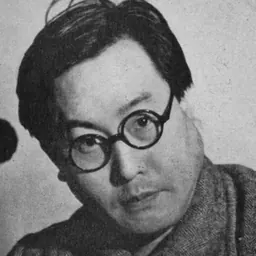
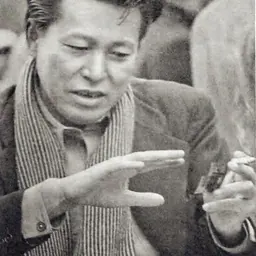
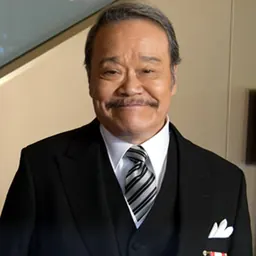
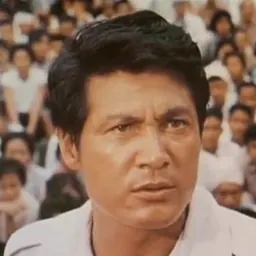
People in Rentarō Mikuni's life
Named in this biography and alive at the same time



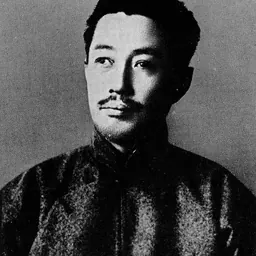
Related people
Same field, nearest in time


Contemporaries
People whose lives overlapped Rentarō Mikuni's

Frequently asked questions
Who was Rentarō Mikuni?
Japanese actor (1923–2013)
When was Rentarō Mikuni born?
Rentarō Mikuni was born on 20 January 1923 in Ōta-shi.
When did Rentarō Mikuni die?
Rentarō Mikuni died on 14 April 2013 in Inagi.
What was Rentarō Mikuni's occupation?
Rentarō Mikuni was an actor, screenwriter, film director and film actor.
What nationality was Rentarō Mikuni?
Rentarō Mikuni was Japanese.
Sources & further reading
Cite this page
APA: Biography.guide. (2026). Rentarō Mikuni. https://biography.guide/rentaro-mikuni/
MLA: "Rentarō Mikuni." Biography.guide, https://biography.guide/rentaro-mikuni/.
Chicago: "Rentarō Mikuni." Biography.guide. https://biography.guide/rentaro-mikuni/.
Data last updated: 2026-09-22 · Spot an error? Report a correction.
Page generated 2026-09-27 05:28 UTC