
Rennyo
8th Monshu (head-priest) of the Honganji Temple of the Jōdo Shinshū sect of Buddhism
About Rennyo
Lived 1415 – 1499 (aged 84). Rennyo was a Japanese buddhist monk.
Rennyo (, 1415–1499) was a descendant of Shinran and the 8th head priest of the Hongan-ji branch of Jōdo Shinshū, a major Japanese Buddhist tradition. He is known for his tireless preaching of the Shin teaching and is credited with transforming the Honganji into a major religious organization. According to Dobbins, during Rennyo's tenure, Hongan-ji temple "emerged as the premier institution of the school, and the Shinshū itself burgeoned into one of Japan's largest and most powerful schools of Buddhism." Shinshū Buddhists often refer to him as the restorer of the sect ( in Japanese). He was also known as Shinshō-in (信証院), and posthumously Etō Daishi (慧灯大師).
Rennyo led the Hongan-ji during the conflict ridden Sengoku era, working to grow and reform the tradition. He successfully navigated his temple's relationships with various groups, including the secular authorities, the warrior monks of Mt. Hiei, and the Ikkō-ikki rebellions. Rennyo's leadership and his promotion of Shinshū teachings led to a large influx of new members. His years as head priest also saw the reform of Hongan-ji liturgy and practices. Rennyo's ability to interpret Shin Buddhist teaching in a simple manner allowed him to spread the teachings widely among ordinary people. Rennyo's pastoral letters were the most articulate and popular explanations of Shin doctrine of his time, and they made Jōdo Shinshū one of the most widespread and enduring Buddhist teachings in medieval Japan. His teachings also defined the orthodox doctrine of the Honganji sect, which remained closely aligned with his doctrines until the modern era.
During his early ministry, Rennyo would frequently distribute religious texts to congregations as well as inscriptions of the nenbutsu (recitation of Amitābha Buddha's name). The actual motivation for these attacks was likely financial. Later generations compiled the gobunsho letters and thus they have become part of Jodo Shinshu liturgy since. Another aspect of Rennyo's ministry was his humility and openness. He would visit congregations and sit with the lowborn rather than on raised platforms. He would also take care of their needs and drink sake with them, behaving like a normal person rather than an elite or a holy man. This network provided the Hongan-ji with yearly donations that economically supported the temple organization. Rennyo also rewrote many Buddhist texts into kana, the simple, phonetic Japanese characters, making the texts more accessible for the common person.
Rennyo summed up the Shin Buddhist worldview in a short creed known as the :
The Ryōgemon is still recited in modern-day Shinshū liturgy as a summation of Shin Buddhist beliefs. It captures Rennyo's basic message: true faith (shinjin) is the true cause of birth in the Pure Land, reciting the nembutsu is an expression of gratitude. However, Rennyo's teaching also differed from Shinran's in subtle ways. Rennyo thus emphasized how every invocation of the nembutsu expressed gratitude at being assured rebirth in the Pure Land of Amitabha Buddha. He saw it as a sign of our assured salvation by Amida as well as a sign of our being united with Amida. As Dobbins writes, "it symbolizes the unificatino of the saver and the saved, and it thus comprises both the reason for faith and the result of faith."
Rennyo thus adopted this common phrase which was used in other Pure Land sects, and explained it to his followers using Shin ideas, as can be seen in the following passage:When people understand clearly what our tradition teaches, they realize that they will be born in the Pure Land of bliss. These people will comprehend, first of all, faith which comes from [Amida’s] power (tariki no shinjin). What is the essence of this faith that comes from [Amida’s] power? It is the awareness that ordinary beings of misery such as ourselves can easily go to Pure Land. And what form does this faith coming from [Amida’s] power take? Without any ado whatsoever, we simply rely (tanomitamaetsurite) on Amida Tathāgata intently, single-mindedly, and with oneness of heart and we think “Please save me!” (tasuke tamae). From that very moment Amida Tathāgata unfailingly sends forth his light to embrace us, and we are enveloped in that light as long as we reside here in Saṃsāra. This is the state wherein our birth in Pure Land is assured.
Apart from these doctrinal teachings, Rennyo also de-emphasized the traditional Shin prohibition against the veneration of Shinto kami and other Buddhist deities, since he saw them as manifestations of the Buddha Amida. According to Rennyo, while it is not necessary to rely on intellectual knowledge or wisdom to gain shinjin, the simple recitation of nembutsu without "understanding", and a "comprehension of the origin of the Primal Vow" is also not fruitful and will not lead to birth.
Further, Rennyo Shonin was the author of several works relating to Jōdo Shinshū doctrine. His most influential work is his collection of letters to various Shinshu monto (lay groups), popularly known as in the Nishi Hongan-ji tradition, and in the Higashi Hongan-ji tradition. These letters have the status of scriptural texts and are traditionally used in Shinshu daily liturgy; the most well-known letter is the which is a reflection on the impermanence of life and the importance of relying on Amida Buddha's Vow. This letter is frequently read aloud during Jōdo Shinshū funeral services.
Rennyo's disciples also recorded things he said in a collection called the , which provides later followers with some insight into his personality and beliefs.
A list of key works included in the Shinshu Seiten canon include:
Outline of the Shōshinge [正信偈大意] Commentary on the Shōshinge [正信偈註] The Letters (Ofumi, a.k.a. Gobunshō) (5 fascicles) [御文章 (五帖)] On the Master's Secular Surname [御俗姓] Summer Letters [夏御文章] Ryōge-mon [領解文] Collection of Letters [御文章集成] Record of Hearings on the Life of Rennyo Shōnin [蓮如上人御一代記聞書] Collection of Rennyo Shōnin's Words and Deeds [蓮如上人言行録集成] Collection of Rennyo Shōnin's Waka Poems [蓮如上人和歌集成]
Legacy
According to Dobbins, Rennyo's "most obvious" accomplishment was "the transformation of Shinshū from a secondary religious movement into a formidable Buddhist school in Japan." Rennyo clarified Shinran's teachings, provided a simple code of conduct, and reformed the temple hierarchy and liturgy. During Rennyo's tenure the tradition received many new converts, leading to a much larger organization with many more congregations and temples than had existed prior to Rennyo's leadership. This led the Hongan-ji school to become of the great religious and political forces in 16th century Japan. Such was Rennyo's importance in reviving Shinran's teachings that he is revered by the Hongan-ji traditions as the "second founder" of Jōdo Shinshū. Rennyo's image is typically venerated in Hongan-ji shrines to the left of Amitābha Buddha (while Shinran is usually enshrined to the right).
Rennyo is also responsible for his formulation of Shin Buddhist doctrine, which represents the culmination of earlier Shin Buddhist doctrinal development. Rennyo's doctrine became the orthodox doctrine for the Hongan-ji sect and it was not until the modern era that we see innovations to his orthodoxy. Indeed, as Dobbins writes, none of the points of doctrine found in the Shinshū Anjin Rondai (Points of Faith, a short modern Shin catechism) come from a time after Rennyo. As such, Rennyo is the last Shin truly innovative thinker who is considered part of the orthodoxy.
Rennyo is also credited with bringing Shinshū teachings to a wider audience through proselytization and religious instruction. This was often accomplished through preaching tours and through his letters, which provided accessible, clear explanations of Shin doctrine in a way which was easier to understand than the writings of Shinran. Rennyo also helped make Shin Buddhism more socially acceptable.
There is debate among scholars belonging to the sect as to whether Rennyo's legacy was good for the Jōdo Shinshū or not. On the one hand, Rennyo gave the disorganized Shinshū movement a coherent structure, translated Shinran's teachings into simpler language, and developed a common liturgy. On the other hand, the process of institutionalization that Rennyo accelerated arguably departed from Shinshū's original egalitarianism, and led to a disjunction between priest-scholars and lay devotees contrary to Shinran's intentions. Rennyo also introduced certain doctrinal elements from the rival Seizan Jōdo-Shū tradition into the Shinshū, and tolerated Shinto belief in kami to a greater extent than Shinran had.
Furthermore, all Jōdo Shinshū sects that have remained independent of the Hongan-ji, such as the Senju-ji sect, do not recognize Rennyo's reforms and innovations at part of their tradition. So Rennyo's influence on these Shin other sects, when there was any, was mostly scholastic. As such, Rennyo's influence was directly focused on Hongan-ji Shin Buddhism.
His 500th memorial service was observed in 1998. (see Dobbins & Rogers references below.)
Don’t just read it —
keep it.
Full-length biographies made to live with: read them, listen on the way to work, watch them tonight.
- E-book
- Audio
- Video
Instant download · yours to keep · every purchase keeps this site free
Important facts
Related people
Same field, nearest in time

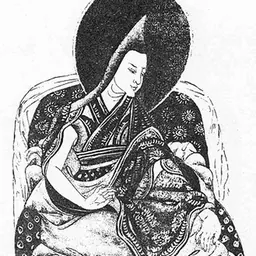
Contemporaries
People whose lives overlapped Rennyo's




Frequently asked questions
Who was Rennyo?
8th Monshu (head-priest) of the Honganji Temple of the Jōdo Shinshū sect of Buddhism
When was Rennyo born?
Rennyo was born on 13 April 1415 in Kyoto.
When did Rennyo die?
Rennyo died on 14 May 1499 in Osaka.
What was Rennyo's occupation?
Rennyo was a buddhist monk.
What nationality was Rennyo?
Rennyo was Japanese.
Sources & further reading
Cite this page
APA: Biography.guide. (2026). Rennyo. https://biography.guide/rennyo/
MLA: "Rennyo." Biography.guide, https://biography.guide/rennyo/.
Chicago: "Rennyo." Biography.guide. https://biography.guide/rennyo/.
Data last updated: 2026-09-20 · Spot an error? Report a correction.
Page generated 2026-09-27 05:30 UTC