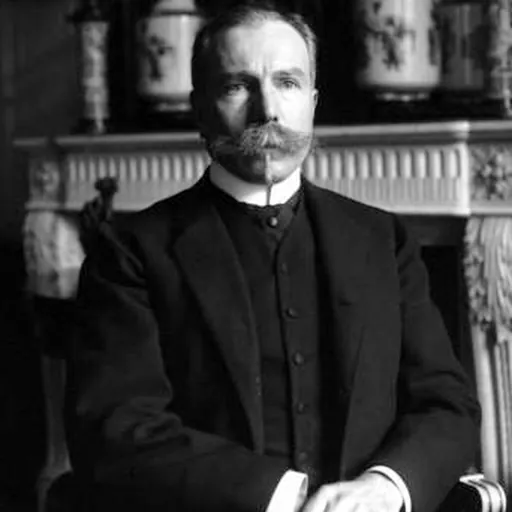
René Quinton
French biologist, invented the treatment Quinton serum, abandoned by modern medicine
About René Quinton
Lived 1866 – 1925 (aged 58). René Quinton was a French biologist.
René Joseph Quinton (; 15 December 1866 – 9 July 1925) was a French biologist, aviation pioneer and decorated World War I soldier.
In his biology career, Quinton developed a treatment based on seawater injections which he called sérum de Quinton. An aviation pioneer, he was vice president of the Ligue aéronautique de France and a proponent of the development of aviation in France.
During World War I, he rose through the ranks to become an Officer of the Legion of Honour at the end the war, with multiple additional awards and decorations from France and its Allies. After the war, he was made a Commander.
Early life
Quinton was born on 15 December 1866, in the town of Chaumes-en-Brie, Seine-et-Marne, France. His father, Paul Édouard Quinton, was a medical doctor, who also served as the local mayor. His mother, Marie Pauline Élisabeth Amyot, had no profession. He attended secondary school at Collège Chaptal, in Paris.
As a young adult, Quinton was interested in literature; he read and wrote poetry and started writing a novel. He was influenced by Flaubert's work and his writing endeavors were described as perfectionist and meticulous by his friends. According to his friend Armand Charpentier, Quinton's wealthy situation allowed him to spend a lot of time in the pursuit of writing perfection, but after 10 years of writing, and not completing any project, his interests turned to biology.
He decided to enter the Collège de France as an assistant at the Laboratoire de Physiologie pathologique. His passion lay in the study of the origins of life: for Quinton, the sea was the matrix of life, a theory on which he would base the remainder of his career in biology. In this Loi, Quinton included the following sub categories: constance marine (marine constancy), constance osmotique (osmotic constancy) and constance thermique (thermal constancy). He reported his findings in the only book he would ever publish: L’eau de mer, milieu organique, in 1904.
The publication provoked disagreements and was met with resistance, nonetheless, it was the basis for therapeutic applications that Quinton would begin in the following years.
Today, Quinton's book is published as part of the French cultural heritage, but its content is considered antiquated and the views it describes not valid.
Sérum de Quinton M. René Quinton and Louis Barthou Issy-les-Moulineaux, September 7th, 1908 Quinton's theories led him to conclude “that Seawater is the "vital liquid" of all living beings and the means of curing all kinds of disease”. He imagined subcutaneous seawater injections as a therapeutic treatment.
In 1907, Quinton patented the sérum de Quinton (Quinton serum). He described it as seawater harvested from the Atlantic, in specific areas where he considered the water “pure” and with special precautions. The harvest was then immediately transported to Paris where it was sterilized without boiling or chemical products, brought to a specific saline concentration, and stored in vials. With this patented technique, the serum was comparable, according to Quinton, to blood. As such, it could be used to treat the following conditions: enteritis, constipation, diarrhea, colitis, newborn gastroenteritis, lactose intolerance, athrepsia, and skin conditions. It was also presented as a prenatal treatment to prevent the future baby(ies) from developing tuberculosis, syphilis or malaria, and to help expecting mothers with nausea.
He proceeded to open and fund Parisian dispensaries, reserved for destitute patients, to treat, at no charge, these conditions.
The dog experiments
Some experiments of René Quinton, to support his theory that seawater can be used as a substitute for blood, are the dog experiments. In his 1897 experiments, Quinton reported the following. He removed the totality of a dog's blood and replaced it with sterilized seawater. The dog developed an infection and fever, but went on to recuperate within 5 days, and was still alive 5 years later. Quinton concluded that his purified seawater formula could be used as a substitute for blood transfusion. Harriett Hall challenges the study: “There is a huge body of established scientific knowledge that would have to be overthrown before we could accept that an animal’s entire blood volume could be replaced with saline without resulting in death. Extraordinary claims require extraordinary evidence, and this century-old report doesn’t even meet the standards of ordinary peer-reviewed published evidence.”
Aviation
Another area of interest for René Quinton was aviation.
In 1908, inspired by other countries offering rewards to creators of aircraft, as well as France's success in ballooning, René Quinton, along with Archdeacon and others, founded the Ligue Nationale Aérienne, of which he was president. His goal was to set up a yearly subscription that would generate enough money to offer a prize to the first French creator to invent an ideal aircraft. The league's role was to encourage and promote enthusiasm for aviation, with the hope that France would become a leader in the field. Quinton also lobbied for the development of aircraft as an important way to spot injured soldiers and bring them to safety for care.
Quinton was president of the league for 4 years after which he left for the war. When he returned, Quinton drew back from this project, focusing on sérum de Quinton instead. He facilitated the fusion of his league with l’Association Genérale Aéronautique and the Comité National de l’Aviation Militaire; these 3 societies combined to form the Ligue Aéronautique de France, with General Bailly as president, and Reymond and Quinton as vice-presidents.
A meeting took place in Biskra, where several aviators presented their creations. A second meeting was planned, but Quinton died unexpectedly before then.
World War I
When World War I broke out, Quinton was not required to go to combat due to his age. Nonetheless, according to Georges Houard, Quinton's strong patriotism and love of France compelled him to go to war.
At the beginning of the war, in 1914, he fought as capitaine d'artillerie de réserve. Throughout the war, his fellows and superiors described him as brave, composed and eager; Foch wrote the following about Quinton: "Officer of the rarest intrepidity, for whom it is impossible to resume the acts of bravery. Continues to show the best example of composure, energy and drive." He rose through the ranks to end the war as Officier de la Légion d'honneur, with multiple decorations.
Battlefronts
René Quinton fought on the following battlefronts during World War I: He was with his cousin Lucien Corpechot when he passed.
Don’t just read it —
keep it.
Full-length biographies made to live with: read them, listen on the way to work, watch them tonight.
- E-book
- Audio
- Video
Instant download · yours to keep · every purchase keeps this site free
Important facts
People in René Quinton's life
Named in this biography and alive at the same time
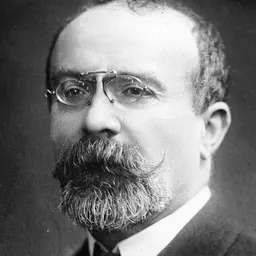

Related people
Same field, nearest in time

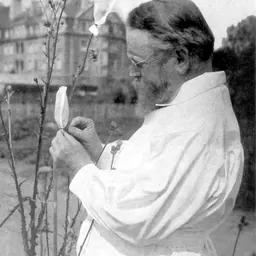


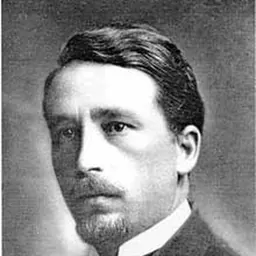
Contemporaries
People whose lives overlapped René Quinton's



Frequently asked questions
Who was René Quinton?
French biologist, invented the treatment Quinton serum, abandoned by modern medicine (1866–1925)
When was René Quinton born?
René Quinton was born on 15 December 1866 in Chaumes-en-Brie.
When did René Quinton die?
René Quinton died on 9 July 1925 in 17th arrondissement of Paris.
What was René Quinton's occupation?
René Quinton was a biologist.
What nationality was René Quinton?
René Quinton was French.
Sources & further reading
Cite this page
APA: Biography.guide. (2026). René Quinton. https://biography.guide/rene-quinton/
MLA: "René Quinton." Biography.guide, https://biography.guide/rene-quinton/.
Chicago: "René Quinton." Biography.guide. https://biography.guide/rene-quinton/.
Data last updated: 2026-09-22 · Spot an error? Report a correction.
Portrait: Wikimedia Commons · author & licence
Page generated 2026-09-27 05:04 UTC