
About René Massigli
Lived 1888 – 1988 (aged 99). René Massigli was a French diplomat and historian.
René Massigli (; 22 March 1888 – 3 February 1988) was a French diplomat who played a leading role as a senior official at the Quai d'Orsay and was regarded as one of the leading French experts on Germany, which he greatly distrusted.
Early career The son of a Protestant law professor, Massigli was born in Montpellier in the southern French department of Hérault. After graduating from the elite École normale supérieure in Paris with an agrégation d'histoire, he attended the French Academy in Rome in 1911-1912, studying history under Louis Duchesne. In 1913-1914, he attended the University of Lille, where he was awarded a maître de conférence.
He joined the French foreign service during the First World War. He served in the Maison de la Presse section of the Quai d'Orsay in Bern, Switzerland, where he analysed German newspapers for the French government. In May 1919, Massigli had a series of secret meetings with various German officials in which he offered on behalf of his government to revise the peace terms of the upcoming treaty in Germany's favour in regards to territorial and economic clauses of the proposed treaty. Massigli suggested "practical, verbal discussions" between French and German officials in the hope of creating "collaboration franco-allemande" (Franco-German collaboration). Speaking on behalf of the French government, Massigli informed the Germans that the French considered the "Anglo-Saxon powers", the United States and the British Empire, to be the real postwar threat to France; argued that both France and Germany had a common interest in opposing "Anglo-Saxon domination" of the world and warned that the "deepening of opposition" between the French and the Germans "would lead to the ruin of both countries, to the advantage of the Anglo-Saxon powers". Other members of the "Protestant clan" included Robert Coulondre, Victor de Lacroix, Albert Kamerer, Jacques Seydoux and his son François Seydoux de Clausonne, all of whom worked closely together. In another series of articles published in June 1920, Massigli articulated what he regarded as the central dilemma of France's German policy: to insist upon a too forceful enforcement of Versailles would undermine German moderates, but at the same time, enemies of democracy were strong in Germany, German democracy might fail even if the treaty were revised and so loosening Versailles would make the task of any potential antidemocratic government in Germany easier.
During his time at the Conference of Ambassadors, Massigli was closely involved in the disputes about Upper Silesia, the Memelland, the Vilnius/Wilno dispute, the borders of Austria and Hungary and the enforcement of Part V of the Treaty of Versailles (which dealt with disarmament). In the early 1920s, Massigli was known for his vigorous efforts to enforce Part V and attempted to thwart German efforts to violate it. In September 1923, during the Ruhr crisis, Massigli was sent to the Rhineland to report to Paris on the viability of the Rhenish separatist movement, and what support, if any, France should offer the separatists. A close friend and associate of Aristide Briand, Massigli worked strongly in the late 1920s for Franco-German détente. However, Massigli never lost any of his concerns about the Reichswehr and felt that Franco-German rapprochement should best take place within the broader framework of European integration and collective security. Massigli was open to revising Versailles within Germany's favour but only within the context of multilateral organisations like the League of Nations. In 1927, the Polish ambassador in Paris, Alfred Chłapowski, submitted a lengthy note complaining that the French were considering an early evacuation of the Rhineland without consulting Warsaw and asking Briand to make an "Eastern Locarno" a precondition of any French evacuation of the Rhineland. Massigli wrote that the French occupation of the Rhineland, "to a certain extent," protected the Poles, as it made impossible for Germany to attack Poland, and he felt France should indeed demand Germany to sign an "Eastern Locarno" as the price for an early evacuation of the Rhineland. Massigli in a report wrote, "The Poles are visibly worried"; the agreement made no mention of an "Eastern Locarno". After talking to the Polish foreign minister, August Zaleski, Massigli concluded that Zaleski was well aware that Poland had a "weak hand" as France was its only great-power ally and that as unhappy as the Poles were, they would stick with the French alliance for the lack of any alternative.
World Disarmament Conference From 1930, Massigli was intimately involved in the preparatory work for the World Disarmament Conference scheduled to open in 1932. The increasing divergence between German demands for Gleichberechtigung ("equality of armaments") (abolishing Part V) and the French demand for sécurité ("security") (maintaining Part V) together with the strains in Franco–German relations imposed by the attempt at an Austrian-German customs project of 1931 left Massigli increasingly disillusioned with the Weimar Republic. In 1931, Massigli advised the Premier Pierre Laval before his summit with the German chancellor, Heinrich Brüning, that France should offer a bailout for the collapsing German bank system only if the Germans were prepared to forgo the demand for Gleichberechtigung at the upcoming World Disarmament Conference. Brüning refused the French conditions at his summit with Laval.
Massigli was a prominent player at the World Disarmament Conference in Geneva and helped to write famous "Barthou note" of 17 April 1934 issued by the foreign minister, Louis Barthou, which helped to terminate the conference. Though the French experts in general preferred to exclude Romania and Yugoslavia from the proposed economic union because of their economic backwardness, Massigli argued for the inclusion of Yugoslavia and Romania as the Little Entente alliance already existed and so had to be "treated with consideration". French Prime Minister André Tardieu embraced Beneš's plan as forming the basis of a fédération danubienne (Danubian federation), which would not only mitigate the effects of the Great Depression but also be a step for peace in Eastern Europe. As a diplomat, Massigli was noted for his efficiency and his crisp, lucid writing style. Unlike his superior, the Secretary-General of the Quai d'Orsay, Alexis Leger, Massigli was more open to enlisting Italy as an ally against Germany. Massigli, who closely followed German affairs, was on a first-name basis with André François-Poncet, the French ambassador in Berlin between 1931 and 1938. Léon Noël, the French ambassador in Warsaw, praised Massigli as being always "candid and insightful" about European affairs. Beneš told him that the existence of the Little Entente was being threatened by Poland, and he accused the Poles of "tending to deflect German expansion towards the Danube basin" and that because of the German-Polish Nonaggression Pact, "Poland was acting contrary if not to the letter, at least the spirit of the Franco-Polish alliance". Barthou agreed to visit Warsaw later that month with the aim of mediating the Teschen dispute, as it was commonly agreed within the Quai d'Orsay that as long as Poland and Czechoslovakia were feuding with each other, only Germany was gaining. During the talks, Barthou, known as one of the "tough guys" of French politics, refused to yield to any of the objections made by the Foreign Secretary, Sir John Simon, and the League of Nations minister, Sir Anthony Eden, to the Eastern Locarno pact. As Simon disliked going to Geneva to attend sessions of the League of Nations, he created a junior foreign minister portfolio to handle relations with the League headed by Eden. As the French delegation refused to yield to the British objections for an "Eastern Locarno" pact with Barthou, and Massigli pointed out that since France was allied to Poland and Czechoslovakia, that having Germany recognise its eastern borders would prevent a world war, both Simon and Eden yielded.
An attempt to tie acceptance of an "Eastern Locarno" pact to a French return to the World Disarmament Conference, on the grounds that it would lead to difficult questions in the House of Commons, led Barthou to retort that he did not care. In September 1934, Barthou decided to open talks with the Soviet Union and Italy for alliances against Germany, and along the same lines, he invited King Alexander of Yugoslavia to visit France for talks about joining the proposed alliance system against the Reich. Massigli later commented that with Barthou's assassination, France lost the only foreign minister tough enough and capable enough to pursue a foreign policy meant to "contain" Germany. Massigli especially hoped to use the Rhineland crisis as a way of securing the British "continental commitment", an unequivocal British commitment to defend France via an expeditionary force of the same size as the British Expeditionary Force of the First World War. After meeting with the British Foreign Secretary, Eden, in London in March 1936, Massigli was angry with what he regarded as the feeble British response to the Rhineland remilitarisation. At least in that respect, there was least some hope of maintaining good Anglo-French relations, which led Massigli to see at least a silver lining in the Rhineland crisis. Throughout the 1938 crisis, the differing views held by the arch-appeaser Foreign Minister Georges Bonnet and anti-appeaser Massigli caused immense tension, and Bonnet constantly disparaged him as a "warmonger". On 29 March 1938, Massigli argued in a memo that French economic support for Czechoslovakia was urgently needed to prevent what he called the "economic strangulation" of Czechoslovakia, as the Anschluss had eliminated Austria, and Romania, Hungary and Yugoslavia were rapidly falling under German economic domination. Massigli warned that with the economies of the countries around Czechoslovakia all coming under German economic control directly or indirectly, the ability of Czechoslovakia to withstand a German assault was weakening by the day. He especially wanted economic support for Czechoslovakia as President Beneš was the Eastern European leader most committed to upholding his country's alliance with France, as Massigli noted he had serious doubts about the commitment of Colonel Józef Beck, the foreign minister of Poland; Milan Stojadinović, the prime minister of Yugoslavia and Carol II, the king of Romania, to upholding their nations' alliances with France.
Massigli feared that if Germany won control of Eastern Europe with its vast natural resources, the French guerre de longue durée (long-lasting war) strategy, based upon the assumption that Germany would be blockaded and cut off from the raw materials necessary for a modern industrial war, would be fatally undermined. He expressed some doubts about the long-term viability of Czechoslovakia and noted that if a plebiscite was held in the Sudetenland, most Sudeten Germans would vote to join Germany, which would likewise lead the Polish, Magyar and maybe even the Slovak minorities to demand plebiscites. After the Munich Agreement, Massigli wrote in a memo, "Far from bringing Germany back to a policy of co-operation, the success of her method can only encourage her to persevere in it. The enormous sacrifice conceded by the Western powers will have no counterpart: once more we will be reduced to an act of faith in the peaceful evolution of the new Pangermanism".
Ambassador to Turkey Relations between Massigli and his superior in 1938, Foreign Minister Georges Bonnet, were very poor, and in his memoirs, Bonnet lambasted Massigli quite severely. For his part, Massigli accused Bonnet of seeking to alter the documentary record in his favour. On 19 October 1938, Massigli was sacked as political director by Bonnet, who exiled him to Turkey as ambassador. An Anglophile, Massigli's removal meant a weakening of those officials in the Quai d'Orsay who favoured closer ties to Britain.
During his time in Ankara, Massigli played an important role in ensuring that the Hatay dispute was resolved in Turkey's favour. Massagli felt that the best way of ensuring a pro-Western tilt in Turkey was to accede to the Turkish demands for the sanjak of Alexandretta (modern İskenderun) in Syria.
Massigli argued to his superiors in Paris that it was Germany, not Turkey, that was the major danger to France and that having a large number of French troops in Syria to guard against a Turkish attack was simply an unneeded distraction. Moreover, Massigli maintained that if France did not return Alexandretta and a Franco-German war broke out, Turkey would probably invade Syria to take back Alexandretta. However, Massigli continued, if France did return Alexandretta, Turkey would maintain a pro-Allied neutrality or perhaps even fight for the Allies. During his talks with the Turks, Massigli was often attacked by les Syriens (the Syrians), an influential Roman Catholic lobbying group that believed strongly in France's mission civilisatrice (civilising mission) in the Middle East and stoutly opposed giving up Alexandretta as a betrayal of France's mission civilisatrice. Most of les Syriens were Anglophobes and saw Britain, rather than Germany, as the main enemy of France. In March 1939, Massigli visited the headquarters of the French High Commission in Beirut and bluntly stated that Turkey was not, as the High Commission was claiming, seeking to annex all of Syria but was seeking only Alexandretta. He stated that fears of an aggressive Turkey, seeking to revive the Ottoman Empire, were not founded in reality. In April 1939, the deputy Soviet Foreign Commissar Vladimir Potemkin during a visit to Turkey told Massigli that the aim of Soviet foreign policy was to bring into line a "peace front" to oppose German expansionism comprising Britain, France, the Soviet Union and Turkey. In 1939, Massigli was heavily preoccupied with competition with the German ambassador, Franz von Papen, in an effort to secure Turkish adherence to the Allied side in the event of war breaking out. As part of the effort to increase French influence on the Turkish government, Massigli arranged for the visit of General Maxime Weygand to Turkey in early May 1939, which was made into a state event. To counter what he called the "oily charm" of Papen, Massigli felt that having a distinguished French general visit Turkey would appeal to the ego of Turkish President İsmet İnönü and guessed correctly that the crusty old soldier Weygand would bond with another crusty old soldier, İnönü. Massigli was most disappointed when the British sent a mere brigadier, instead of an admiral, to offer military aid to the Turks. Massigli remarked sorely, "The Turks respect the Royal Navy; they no longer believe in the British Army." In July 1939 Massigli argued that if the British and French were able to offer a stabilisation fund for the Turkish pound, it would undercut German economic influence in Turkey and tie Turkey to the West. Later in July 1939, Massigli was able to play a major part in arranging for French arms shipments to Turkey. In August 1939, he helped arrange an Anglo-French stabilisation fund created to help with Turkey's economic problems.
Though Massigli was often hampered by his poor relations with Bonnet, the efforts of les Syriens and the stingy attitude of the French Treasury towards supporting Turkey, British historian D.C. Watt argues that Massigli was an outstandingly able ambassador who helped French interests in Turkey in 1939.
Second World War In October 1939, the furious rivalry between Massigli and von Papen finally ended with the conclusion of a mutual security pact between the United Kingdom, France and Turkey. However, as Massigli admitted in his memoir of time as ambassador in Ankara, La Turquie devant la Guerre, his triumph proved to be an ephemeral one as the Turks chose to interpret Clause Two of the Anglo-French-Turkish alliance in such way as justifying remaining neutral. However, Massigli contended that while he failed to bring Turkey into the war on the Allied state, he at least foiled von Papen's efforts to bring Turkey into the war on the Axis side. In February 1940, in a dispatch to the German Foreign Minister, Joachim von Ribbentrop, Papen wrote that based on information he had received from "two friends" in the Turkish government that it was commonly gossiped in Ankara that Massigli is "said to have told his friends repeatedly that Turkey would be in the war by May at the latest".
In the winter of 1939-40, Massigli was involved in the plans for Operation Pike, an Anglo-French plan to bomb the Soviet oil facilities in Baku using air bases in Turkey. After the Ribbentrop-Molotov pact of 26 August 1939, the Soviet Union had become the largest supplier of oil to Germany, which had no oil of its own. On 15 March 1940, Massigli told Sir Hughe Knatchbull-Hugessen that he heard from Paul-Émile Naggiar, the French ambassador to the Soviet Union, that "the Russians are in a great panic about the possible bombardment of Baku from the air and asked for American advice as to what exactly would happen in such an event and how the great the damage would be". Massigli concluded that Naggiar had learned from American oil engineers that "as a result of the manner in which the oil fields have been exploited, the earth is so saturated with oil that fire could spread immediately to the entire neighboring region; it would be months before it could be extinguished and years before work could be resumed again". When Massigli asked the Turkish Foreign Minister, Şükrü Saracoğlu, what would be the Turkish reaction if British and French planes crossed Turkish and/or Iranian air space to bomb Baku, the latter replied, "Alors vous craignez une protestation de l'Iran" (So you fear a protest of Iran). In April 1940, Massigli in a dispatch to Paris recommended that British and French planes based in Syria and Iraq should starting bombing Baku, and at the same time issue a formal apology to Turkey for violating Turkish air place, which would allow the Turks to pretend that they had not given permission for the raids. After the Wehrmacht captured Paris on 14 June 1940, the files of the Quai d'Orsay fell into German hands. In the summer of 1940, the Germans published all of the French documents relating to Operation Pike and so Massigli's dispatches urging the Allies bomb Baku became public, making him briefly the center of international attention.
In August 1940, Massigli was removed by the Vichy government as Ambassador to Turkey. On 5 August 1940, Massigli left the French Embassy in Ankara for the last time with what was described as a "large and very sympathetic" crowd of ordinary Turks to see him off as he was popular in Turkey for his role in helping to resolve the Alexandretta dispute. Knatchbull-Hugessen, who was a close friend of Massigli, was furious with Papen for his sacking, writing in London that it was no secret in Ankara that Papen had asked Ribbentrop (with whom he had served in the Ottoman Empire in 1917-18) to pressure the Vichy government to fire him. Immediately afterwards, Massigli was at the eye of a storm in an Anglo-French crisis when Churchill tried to stop de Gaulle from visiting the Middle East under the grounds that would make trouble for the British. Massigli did his best to persuade de Gaulle not to visit Algeria, but when the general learned that he was confined to Britain, he shouted at Massigli, "Alors, je suis prisonnier!" (So I am a prisoner!) Massigi did his best to defuse the crisis and the British diplomat Charles Peake reported after talking to Massigli: "He [Massigli] thought that... General de Gaulle would himself want to leave for Algiers about the 31st March. Mr. Massigli then asked me whether the Prime Minister would receive the General before the latter left. I said that if Mr. Massigil was making a request for this, I would certainly put it forward, but that I did not think it likely that the Prime Minister would feel able to accede... the reason lay in the record of General de Gaulle's own behavior.Mr. Massigli said he did not contest that General de Gaulle was an unusually difficult and unsatisfactory man with whom to do business, but, speaking to me as a friend, he begged me to use my best endeavors to persuade the Prime Minister to see the General before he left. It was of course true that General de Gaulle had been built up by the British government, but the fact remained that he had been built up, and he thought that, on any objective consideration, it would be agreed that his position in metropolitan France was paramount, and that the tendency was for it to become so elsewhere. He felt it right, speaking personally and very confidentially, to warn me of the dangers which must inevitably lie ahead if General de Gaulle should go to North Africa feeling that the Prime Minister's face was turned against him... and it was surely therefore of real advantage, purely as a matter of policy, that the Prime Minister should say a kind word to him before he left. One of General de Gaulle's limitations, as I would know well, was that he was apt to nurse a grievance and to brood over fancied wrongs. Would it not be wise, in the interests of Anglo-French relations, to remove any pretext for his doing so? The Prime Minister was so great a figure and so magnanimous that he believed that if this appeal were conveyed to him, he would not be deaf to it. Moreover, General de Gaulle cherished a deep-seated admiration for the Prime Minister and, he was sure, would respond to a kind word from him". On 30 March, Churchill agreed to meet de Gaulle, but only to learn that de Gaulle had not requested a meeting as Massigli was acting on his own in trying to set up a Churchill-de Gaulle summit.
Finally in the presence of Massigli and Sir Alexander Cadogan, the Permanent Undersecretary at the Foreign Office, the Prime Minister and the General met on 2 April 1943. Giraud was backed by the United States, which preferred him as the leader of the Free French to de Gaulle, causing much tension with the United States. On 3 June 1943 in Algiers, the French Committee of National Liberation was created with a careful balance between the followers of Giraud and de Gaulle; Massigli was a founding member of the committee who belonged to the Gaullist faction, which led the Giraudists to try unsuccessfully to push out him. In 1943, Massigli opposed the visit of the Prime Minister of Iraq, Nuri as-Said Pasha to Algeria after a summit with the Prime Minister of Egypt, Mustafa el-Nahhas Pasha, on the grounds that such visit would encourage Arab nationalist sentiment in French North Africa, would give the impression that France was aligning itself with the Iraqi fraction centred around as-Said Pasha and might weaken the electoral chances of pro-French Lebanese nationalists in the upcoming Lebanese elections. In November 1943, Massigli was appointed the French delegate to the Allied Control Commission for Italy. In January 1944, at the conference called by General de Gaulle to consider the post-war fate of the French African colonies in Brazzaville in the French Congo, Massigli strongly urged that representatives from the protectorates of Tunisia and Morocco and the government of Algeria not be allowed to attend the conference. Massigli's advice was not ignored. The British were not initially interested in the proposal, while de Gaulle was always cool to the idea of British involvement in the "Third Force" concept, and had only agreed to British participation to allay Belgian concerns about post-war French domination. Eden wanted to recognise de Gaulle's government, but the Americans maintained an "anybody but de Gaulle" attitude, and Churchill was unwilling to antagonise Roosevelt over the issue. In a note to Eden, Massigli wrote that the French view on Britain's unwillingness to extend full diplomatic recognition would change from "bewilderment to one of irritation". In October 1944, Britain finally gave de Gaulle's government full recognition as Massigli argued that the continuing refusal was damaging Britain's image in France, to be followed by the United States a month later. After achieving full recognition, Massigli wanted an Anglo-French alliance as he disapproved of the alliance that de Gaulle was negotiating with the Soviet Union, which he was to sign in Moscow in December 1944. In November 1944, when Churchill visited Paris, he presented to de Gaulle his offer for an Anglo-French pact, which Massigli urged the General to accept, but which de Gaulle refused.
The victory of the Labour Party in the 1945 election and the replacement of Sir Anthony Eden with Ernest Bevin as Foreign Secretary did not presage any great difficulties in Anglo-French relations in Massigli's view. At a conference to decide the future of Germany, French Foreign Minister Georges Bidault advocated severing the Ruhr from the rest of Germany, a request that Bevin rejected. Sir Ivone Kirkpatrick told Massigli that the British felt that the immediate danger was the Soviet Union, not Germany, and that it was necessary for the states of Western Europe to co-ordinate their defense and foreign policies with the United States, even if the American views about rebuilding Germany as a great power were often unpalatable to the French. Bidault, in his instructions to Massigli, stated that France was opposed to any form of German rearmament. Monnet convinced the French Foreign Minister Robert Schuman of the political-economic advantages of this plan, and because the plan first become public when Schuman announced it at a foreign ministers' conference in London, it became known as the "Schuman Plan". Massigli was so opposed to France participating in the Schumann Plan without Britain that he almost resigned in protest.
In the same way Massigli was strongly opposed to West German rearmament, an issue that was first raised in 1950 in response to the Korean War. In 1950, it was widely believed that the North Korean invasion of South Korea was a ploy by Stalin to draw away U.S. forces from Europe to Asia as the prelude for a Soviet invasion of Western Europe. Massigli's vision of a European defense depended on two strands, securing the "continental commitment" from Britain and keeping very strict controls on any military force that West Germany might possess. Massigli was especially opposed to the West German rearmament as the American proposal called for former Wehrmacht officers to lead the West German Army, and because he noted that there was always the possibility that the United States could return to isolationism while there was no undoing West German rearmament. As Massigli noted that as Anglo-French relations continued to be troubled over disagreements over the Schuman and Pleven Plans, that Franco-American relations correspondingly improved with the United States government committing itself in 1951 to pay for all of the costs of French war in Indochina. Massigli suggested several changes to the EDC, such as turning it from being a proto-federation into a military alliance, and having an "enlarged Europe" instead of a "small Europe" dominated by West Germany. Massigli felt if the EDC treaty was tweaked so it did not involve any loss of sovereignty, more western European states, such as Britain, would then be willing to join, and the increase in numbers would more than offset the loss of a unified decision-making body. Massigli advised Eden to seriously consider his proposals and told Strang that the French people would not understand why France was being asked to sacrifice control of their armed forces for the sake of European unity while the British were not. Massigli called the Queen's Coronation a "radiant memory" that would "remain with us a solace for past trials and as an inspiration in the tasks which lie ahead." Massigli praised the appointment of Pierre Mendès France as foreign minister in July 1954, calling him a man of "conviction and patriotism". As an ambassador to the court of St. James, Massigli held considerable prestige within the Quai d’Orsay, and was quite open in his criticism of Monnet, writing in a letter to Mendès France: "Since Jean Monnet has become a supranational personality, he is incapable of interpreting French government thinking." Eden, once again Foreign Secretary for the third time since 1935, promised the French that Britain would always maintain at least four divisions in the British Army of the Rhine as long as there was a Soviet threat in exchange for French acceptance of West German rearmament. He died in Paris on 3 February 1988, at the age of 99.
Honours Massigli was appointed Grand Cross of the Legion of Honour in 1954. He was appointed an honorary Knight Commander of the Order of the British Empire in 1938, honorary Knight Grand Cross of the Royal Victorian Order in 1950, and honorary Member of the Order of the Companions of Honour in 1954.
Works "New Conceptions of French Policy in Tropical Africa" pp. 403–415 from International Affairs, Volume 33, No. 4, October 1957. La Turquie devant la guerre. Mission à Ankara 1939–1940, Paris: Plon, 1964. Une comédie des erreurs. 1943–1956 : souvenirs et réflexions sur une étape de la construction européenne, Paris: Plon, 1978.
Marriage Massigli married Odette Isabelle Boissier in Paris on 21 December 1932.
Don’t just read it —
keep it.
Full-length biographies made to live with: read them, listen on the way to work, watch them tonight.
- E-book
- Audio
- Video
Instant download · yours to keep · every purchase keeps this site free
Important facts
People in René Massigli's life
Named in this biography and alive at the same time
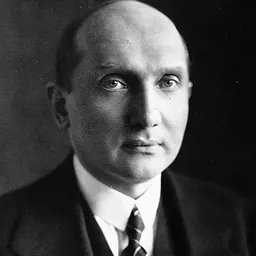


Related people
Same field, nearest in time
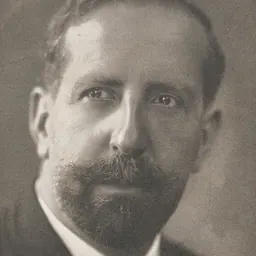
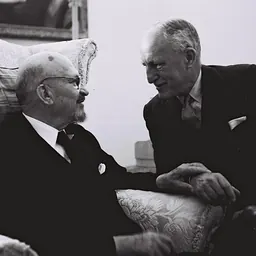

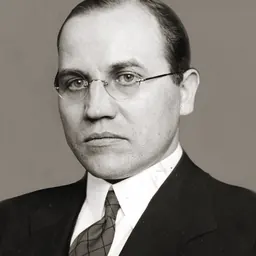
Contemporaries
People whose lives overlapped René Massigli's




Frequently asked questions
Who was René Massigli?
French diplomat (1888-1988)
When was René Massigli born?
René Massigli was born on 22 March 1888 in Montpellier.
When did René Massigli die?
René Massigli died on 3 February 1988 in 7th arrondissement of Paris.
What was René Massigli's occupation?
René Massigli was a diplomat and historian.
What nationality was René Massigli?
René Massigli was French.
Sources & further reading
Cite this page
APA: Biography.guide. (2026). René Massigli. https://biography.guide/rene-massigli/
MLA: "René Massigli." Biography.guide, https://biography.guide/rene-massigli/.
Chicago: "René Massigli." Biography.guide. https://biography.guide/rene-massigli/.
Data last updated: 2026-09-20 · Spot an error? Report a correction.
Page generated 2026-09-27 05:25 UTC