
Renaud Camus
French novelist, conspiracy theorist and writer
About Renaud Camus
Born 1946. Renaud Camus is a French writer, political activist, essayist, local historian and philosopher.
Jean Renaud Gabriel Camus (; ; born 10 August 1946) is a French novelist. He is the originator of the Great Replacement conspiracy theory circulated in the Western far-right which claims a global elite is colluding against the white population of Europe to replace them with non-European peoples.
Camus's writings on the "Great Replacement" have been translated on websites and used to promote the white genocide conspiracy theory. Camus has repeatedly condemned and publicly disavowed violent acts which have been perpetrated by terrorists inspired by his theories.
Early life and education Jean Renaud Gabriel Camus was born on 10 August 1946 in Chamalières, Auvergne, a rural town in central France. he is the son of Léon Camus, an entrepreneur, and Catherine Gourdiat, a lawyer. His parents removed him from their will after he revealed his homosexuality. At 21, then a socialist, he participated in pro-LGBT marches during the May 1968 events in Paris.
In 1963, Camus earned a baccalauréat in philosophy in Clermont-Ferrand, Auvergne. He then spent a year at a non-university college, St Clare's, Oxford (1965–1966). He earned a bachelor in French literature at the University of Paris (1969), a master in philosophy at the Paris Institute of Political Studies (1970), and two Masters of Advanced Studies (DES) in political science (1970) and history of law (1971) at the University Panthéon-Assas. and in 1996 the Prix Amic from the Académie Française for his previous novels and elegies.
Called retrospectively by some English-language media an "edgy gay writer", Tricks and Buena Vista Park, published in 1980, were deemed influential in the LGBT community at that time.
Camus was a member of the Socialist Party during the 1970s and 1980s, and he voted for François Mitterrand in 1981, winner of the French presidential election. the Parti de l'In-nocence ("Party of No-harm"), although it was not publicly launched until the 2012 presidential election. Camus also built on the earlier work of Jean Raspail, who published the dystopian novel The Camp of the Saints in 1973, about immigration and the destruction of Western civilisation.
Political activism (2012–present) He was a candidate in the 2012 French presidential election, with a programme ranging from "serious proposals, such as the repatriation of foreign-born criminals", to unusual themes in French politics, such as "the right to silence, abolishing wind-farms, banning roadside ads, making sanctuaries of remaining unspoiled places, stopping the production of cars that can go faster than the speed limit, and recognising Israel, Palestine and a Greater Lebanon for Christians in the Middle East."
In 2015, Camus headed an initiative to launch Pegida France alongside Pierre Cassen of Riposte Laïque, Jean-Luc Addor of the Swiss People's Party, Pierre Renversez of the Belgian "No to Islam" and Melanie Dittmer of the German Pegida.
In December 2017, he declared: "The presidential election that took place [in 2017] was the last chance for a political solution. I don't believe in a political solution ... because in 2022, this time, it will be the occupants, the invaders [i.e. the immigrants] who will vote, who will be the masters of the elections, so anyway the solution is no longer political". During the campaign, a photograph of a candidate on his ballot kneeling before a giant swastika drawn on a beach re-emerged on social media. Camus decided to withdraw from the election, claiming that the swastika was "the opposite of everything [he had] fought for [his] whole life." During the 2022 French presidential election, he sided with the far-right pundit and presidential candidate Éric Zemmour.
In April 2025, Camus had his ETA for entry into the United Kingdom withdrawn, with the British Home Office stating that his "presence in the UK is not conducive to the public good." This decision was not appealable. This was as Camus planned to visit the Homeland Party's "Big Remigration Conference", which was scheduled to take place on 26 April 2025, and then to speak at the Oxford Union within the same month.
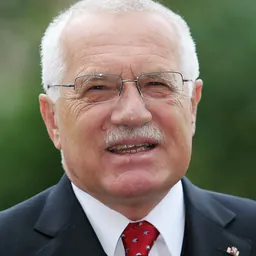
Views Great Replacement Since his 2010 and 2011 books L'Abécédaire de l'in-nocence ("Abecedarium of no-harm") and Le Grand Remplacement ("The Great Replacement")—both unpublished in English—Camus has been warning of the purported danger of the "Great Replacement". The conspiracy theory supposes that "replacist elites" are colluding against the White French and Europeans in order to replace them with non-European peoples—specifically Muslim populations from Africa and the Middle East—through mass immigration, demographic growth and a drop in the European birth rate; a supposed process he labelled "genocide by substitution." To promote his theory, Camus participated in two conferences organised by Bloc Identitaire in December 2010 and November 2012. The pan-European movement—with other members the likes of Jean-Yves Le Gallou, Bernard Lugan, Václav Klaus, Filip Dewinter or Janice Atkinson —seeks to oppose the "Great Replacement", immigration to Europe, and to defeat "replacist totalitarianism". In 2017 the French essayist Alain Finkielkraut caused controversy after he invited Camus to debate the "Great Replacement" on the literary talk show Répliques at the public radio France Culture. Finkielkraut justified his choice by arguing that Camus, who "is heard and seen nowhere, has shaped an expression that we hear everywhere."
After white supremacist protesters at the 2017 Unite The Right Rally in Charlottesville, Virginia, were heard chanting "You will not replace us" and "Jews will not replace us," Camus stated that he did not support Nazis or violence, but that he could understand why white Americans felt angry about being replaced, and that he approved of the sentiment. In November 2018 he published a book directly written in English and intended for an international audience, titled You Will Not Replace Us!
As of February 2023, he continued to defend the "Great Replacement" conspiracy theory on his Twitter account, which had around 54,000 followers at the time of its permanent suspension in October 2021. Camus's account was reactivated in January 2023 thanks to a policy of general amnesty announced by Twitter's new owner, Elon Musk.
White nationalist violence Camus has repeatedly said that he condemns the violent attacks and terrorism committed in echo with his ideas, While he denies stigmatising all Muslims, Camus believes in an unbroken line between petty crime and Islamic terrorism: "all the terrorists are known by the police, not for terrorist acts or for religious extremism, but by petty larceny and bank attacks, or even by very small things like attacking old ladies in suburban trains, or conflicts between neighbours", In April 2014 Camus was fined €4,000 for incitement to racial hatred after he referred to Muslims as "hooligans" and "soldiers" and as "the armed wing of a group intent on conquering French territory and expelling the existing population from certain areas" during a conference organised by Bloc Identitaire and Riposte Laïque in December 2010.
Allegations of antisemitism In his diary of 1994—published in 2000 under the title La campagne de France—Camus commented on the fact that the membership of a regular panel of literary critics on the public radio station France Culture comprised a majority of Jewish members who, in his view, tended to discuss mostly Jewish authors and Jewish-related issues. Additionally, various right-wing and far-right French-speaking Jewish websites, such as Dreuz.info, Europe-Israël or JssNews, have positively received Camus's conspiracy theory and have called their readership to study his books.
The political scientist Jean-Yves Camus and the historian Nicolas Lebourg have noted that, contrary to its parent the white genocide conspiracy theory, Camus's "Great Replacement" does not include an antisemitic Jewish plot, which is, according to them, a reason for its success. The French journalist Yann Moix, who had accused Camus of being an antisemite in 2017, was fined €3,000 by a French Court of Appeal for libel on 13 March 2019. Moix's conviction was overturned in January 2020 by the French Court of Cassation, judging that his comments "were the expression of an opinion and a value judgment on the personality of the plaintiff ... and not the imputation of a specific fact."
Democracy and multiculturalism Camus sees democracy as a degradation of high culture and favours a system whereby the elite are guardians of the culture, thus opposing multiculturalism. In another survey led by Harris Interactive in October 2021, 61 per cent of the French believed that the "Great Replacement" will happen in France; 67 per cent of the respondents were worried about it. The theory has been cited by the Canadian political activist Lauren Southern in a YouTube video of the same name released in July 2017. Southern's video had attracted in 2019 more than 670,000 viewers and is credited with helping to popularize the theory.
The "Great Replacement" theory is a key ideological component of Identitarianism, a strand of white nationalism that originated in France and has since gained popularity in Europe and the rest of the Western world.
Although Camus has repeatedly condemned and publicly disavowed violent acts perpetrated by far-right terrorists,
Payton Gendron, who perpetrated the Buffalo shooting at a Tops supermarket in Buffalo, New York, which killed ten people, all of whom were black, described himself as a white supremacist and voiced support for the Great Replacement conspiracy theory of Camus in his manifesto. About 28 per cent of the document was plagiarised from other sources, especially Tarrant's manifesto.
Camus has condemned the Christchurch massacre and described the shootings as a terrorist attack, adding that Tarrant's manifesto had failed to understand the Great Replacement theory. Camus said that he suspected the attacks to be inspired by acts of Islamic terrorism in France. In a discussion with The Washington Post, he said that while he was against the use of violence, he still supported a sort of "counter-revolt" against non-White immigration and had no issues with the majority of his supporters' beliefs. The scholar Jean-Yves Camus sees Tarrant's ideas as more extreme than Camus' replacement theory, and argues that they are more firmly rooted in Jean Raspail's thinking. and immigrants as a fifth column or an "internal enemy". Camus' use of strong terms like "colonisation" and "Occupiers" to label non-European immigrants and their children (in analogy to the Nazi occupation of France), has been described by the philosopher Alain Finkielkraut as implicit calls to violence.
Don’t just read it —
keep it.
Full-length biographies made to live with: read them, listen on the way to work, watch them tonight.
- E-book
- Audio
- Video
Instant download · yours to keep · every purchase keeps this site free
Important facts
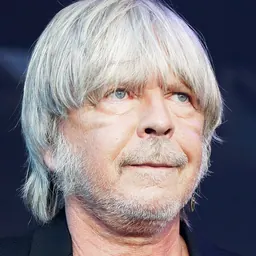
People in Renaud Camus's life
Named in this biography and alive at the same time




Related people
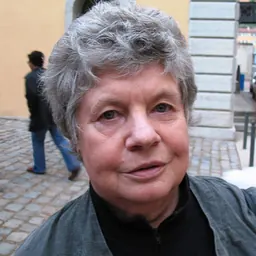
Same field, nearest in time
Contemporaries
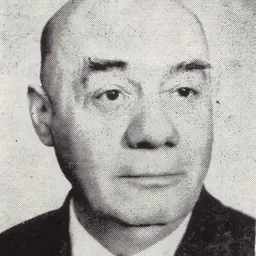
People whose lives overlapped Renaud Camus's





Frequently asked questions
Who is Renaud Camus?
French novelist, conspiracy theorist and writer
When was Renaud Camus born?
Renaud Camus was born on 10 August 1946 in Chamalières.
What is Renaud Camus's occupation?
Renaud Camus is a writer, political activist, essayist, local historian and philosopher.
What nationality is Renaud Camus?
Renaud Camus is French.
Sources & further reading
Cite this page
APA: Biography.guide. (2026). Renaud Camus. https://biography.guide/renaud-camus/
MLA: "Renaud Camus." Biography.guide, https://biography.guide/renaud-camus/.
Chicago: "Renaud Camus." Biography.guide. https://biography.guide/renaud-camus/.
Data last updated: 2026-09-20 · Spot an error? Report a correction.
Page generated 2026-09-27 05:25 UTC