
About Renata Viganò
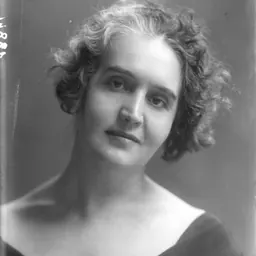
Lived 1900 – 1976 (aged 75). Renata Viganò was an Italian writer and partisan.
Renata Viganò (1900–1976) was an Italian writer best known for her neo-realist novel L'Agnese va a morire, published in 1949. She was an active participant in the Italian Resistance movement during World War II and included fictionalized accounts of her experiences as a partisan in her written work.
Life Viganò was born in Bologna on 17 June 1900. As an adolescent, she published two books of poetry, Ginestra in fiore (1912) and Piccola fiamma (1915).
Viganò was a member of the Italian Communist Party. During World War II, she participated in the resistance as a nurse and courier in Emilia-Romagna region. Together with her husband, Antonio Meluschi, she helped to organize armed resistance activities in the Po Valley.
Viganò published several novels in the postwar period, including L'Agnese va a morire (1949) which tells the story of a washerwoman living in the countryside who joins the Communist resistance. The book became popular among Italian Communists at the time and established Viganò's position as a literary figure in the community. She also worked as a journalist, contributing to L'Unità, Rinascita, Corriere Padano and Noi donne.
In the post-war period, her house in via Mascarella in Bologna was frequented by intellectuals such as Pier Paolo Pasolini, Sibilla Aleramo, and Nella Nobili, former partisans and students.
From 1951 to 1955, she wrote an advice column for Noi donne on topics related to womanhood and motherhood aimed at leftist women. In 1952, she published Mondine, a collection of personal essays about the so-called female mondina workers and the struggle to improve their conditions. In 2018, the city of Bologna in collaboration with the Associazione Nazionale Partigiani d'Italia (ANPI, National Association of Italian Partisans) erected a plaque commemorating the longtime home of Viganò and her husband.
Works Ginestra in fiore, 1913 Piccola flamma, 1916 Il lume spento, 1933 L'Agnese va a morire, 1949 Mondine, 1952 Arriva la cicogna, 1954 Donne della Resistenza, 1955 Ho conosciuto Ciro, 1959 Una storia di ragazze, 1962 Matrimonio in brigata, 1976; English translation published 1999 Rosario, 1984 (posthumous)
Don’t just read it —
keep it.
Full-length biographies made to live with: read them, listen on the way to work, watch them tonight.
- E-book
- Audio
- Video
Instant download · yours to keep · every purchase keeps this site free
Important facts
People in Renata Viganò's life
Named in this biography and alive at the same time


Related people
Same field, nearest in time



Contemporaries
People whose lives overlapped Renata Viganò's





Frequently asked questions
Who was Renata Viganò?
Italian writer (1900–1976)
When was Renata Viganò born?
Renata Viganò was born on 17 June 1900 in Bologna.
When did Renata Viganò die?
Renata Viganò died on 23 April 1976 in Bologna.
What was Renata Viganò's occupation?
Renata Viganò was a writer and partisan.
What nationality was Renata Viganò?
Renata Viganò was Italian.
Sources & further reading
Cite this page
APA: Biography.guide. (2026). Renata Viganò. https://biography.guide/renata-vigano/
MLA: "Renata Viganò." Biography.guide, https://biography.guide/renata-vigano/.
Chicago: "Renata Viganò." Biography.guide. https://biography.guide/renata-vigano/.
Data last updated: 2026-09-20 · Spot an error? Report a correction.
Page generated 2026-09-27 05:09 UTC