
About Reginald Laubin
Lived 1903 – 2000 (aged 96). Reginald Laubin was an American writer, dancer and musician.
Reginald Laubin (December 4, 1903 – April 5, 2000) was an American writer, dancer, and expert on Native American culture and customs. With his wife, Gladys Laubin, he performed theatrical interpretations of Plains Indian dances. A white man, Laubin believed in Native American culture as an antidote to life in the modern world. Through his performances, he sought to preserve what he saw as Indian ways.
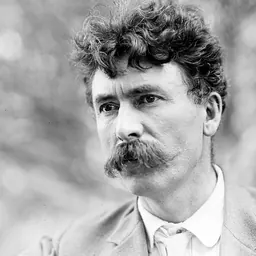
Biography Early life and marriage Laubin grew up in Lima, Ohio. His parents, Karl and Carrie Laubin, were musicians, and they encouraged Reginald to pursue a career in music. Young Laubin had other ideas. He read Ernest Thompson Seton's Two Little Savages: Being the Adventures of Two Boys Who Lived as Indians Do, and What They Learned, and it influenced him to learn everything he could about Native Americans. At the age of eleven, Laubin watched a performance by Indian dancers. Afterward, he introduced himself to the dancers, and they taught him some steps. He decided that he too would become an "Indian dancer."
When Laubin was sixteen years old, his parents died of influenza. Laubin moved to Hartford, Connecticut, to live with his uncle. In 1922, he enrolled in Norwich Art School. There, he met Gladys Tortachel, who was attending the nearby Norwich Free Academy. The two began a partnership based on their mutual fascination with American Indian dance and culture. They married on October 20, 1928.
Dance career By the time they married, the Laubins had already begun to experiment with a career as an Indian dance team. Shortly before their wedding, they quit their jobs and became professional Indian lore performers. The Great Depression made it difficult to earn a living as an artist, but Laubin found a niche by marketing the show as education. The duo appeared on stages for local civic clubs, school groups, museums, Scout troops, and churches. In a typical show, Laubin performed several carefully choreographed interpretations of Plains Indian dances while Gladys accompanied him on the tom-tom and occasionally sang. Most shows also included recorded orchestral music, an array of props and backdrops, and pyrotechnic blasts of smoke and fire. Laubin interspersed his dancing with talks on Plains Indian culture.
They also published three books with the University of Oklahoma, all successful—the books on archery and tipis remained standard through at least 2008. They also published three short educational films with the University of Oklahoma, titled The Old Chief's Dance, Talking Hands, and War Dance.
Retirement and death The Laubins gave their last performance at Jackson Lake Lodge in 1988.
Reception and legacy
Critical reception Critics reviewed Laubin's dancing favorably. John Martin wrote for the New York Times, "Theoretically there is little to be said in defense of dancers who go about doing 'authentic' dances of other races. Why the same indefensibility does not attach itself to the Laubins it would be difficult to say, but it definitely does not."
Although the Laubins were extremely well-received in their time, more recent scholarship has questioned the impact of their work on Indigenous peoples. Historian Clyde Ellis argues that their work suggested that Indigenous people belonged in the past tense and made it difficult for Indigenous people to take their place in the modern world. Their intentions to preserve Indigenous culture were sincere, but their programs were still not as authentic or accurate as they promoted them to be. Additionally, Janet Catherine Berlo remarks on the paternalism in their book Indian Dances of North America--they noted that "the Indians must be encouraged" to preserve their own dancing at a time when a new wave of scholarship that include Native performers was already growing.
Don’t just read it —
keep it.
Full-length biographies made to live with: read them, listen on the way to work, watch them tonight.
- E-book
- Audio
- Video
Instant download · yours to keep · every purchase keeps this site free
Important facts
People in Reginald Laubin's life
Named in this biography and alive at the same time



Related people
Same field, nearest in time





Contemporaries
People whose lives overlapped Reginald Laubin's
Frequently asked questions
Who was Reginald Laubin?
American historian (1903-2000)
When was Reginald Laubin born?
Reginald Laubin was born on 4 December 1903 in Detroit.
When did Reginald Laubin die?
Reginald Laubin died on 5 April 2000 in Urbana.
What was Reginald Laubin's occupation?
Reginald Laubin was a writer, dancer and musician.
What nationality was Reginald Laubin?
Reginald Laubin was American.
Sources & further reading
Cite this page
APA: Biography.guide. (2026). Reginald Laubin. https://biography.guide/reginald-laubin/
MLA: "Reginald Laubin." Biography.guide, https://biography.guide/reginald-laubin/.
Chicago: "Reginald Laubin." Biography.guide. https://biography.guide/reginald-laubin/.
Data last updated: 2026-09-20 · Spot an error? Report a correction.
Page generated 2026-09-27 05:01 UTC