
About Reginald Archibald Cammell
Lived 1886 – 1911 (aged 25). Reginald Archibald Cammell was a British aircraft pilot.
Reginald Archibald Cammell (10 January 1886 – 17 September 1911) was an early British military aviator and the first to be killed on active service. Reginald Cammell's grandfather was the industrialist Charles Cammell (1810–1879) of Brookfield Manor in Hathersage, Derbyshire, whose company later became part of Cammell Laird. In 1891 aged 5 'Reggie' Cammell was living with his parents and younger siblings in Merrow in Surrey. The family had a governess, a nursery nurse, a cook and a parlour maid. His parents divorced in early 1911 as a result of his father's adultery with various women.
Reginald Cammell joined the Royal Engineers and was appointed second lieutenant on 25 July 1906, and promoted lieutenant on 22 November 1908. The test required that he make three separate flights of three miles around a circular course without the aircraft touching the ground. At the end of each flight the engine had to be stopped in the air and the aircraft glided in to land within 150 yards of a location previously decided by the pilot and indicated to the officials. He gained his Royal Aero Club certificate on 7 January 1911 with the low number of 45 (making him the 45th man in Great Britain to qualify for his pilot licence). Cammell inherited Brookfield Manor on the death of his father in March 1911,
In April 1911 he became involved in test flying early aircraft and went to the Bleriot school at Étampes where he met "with commendable success" Cammell was testing the new 50 hp Gnome engine that had been fitted to the monoplane intending to after fly it over to his headquarters at Farnborough. When the breeze that had prevailed all day died down, Cammell took off to make a preliminary circuit. After his first circuit, Cammell took the aircraft up to about and attempted a spiral vol plane (a gliding spiral). Being unfamiliar with the controls, he turned the machine too sharply and losing control of the aircraft it plummeted to the ground. Cammell was thrown clear of the wreckage, but hitting the ground with his head, he suffered a severe concussion of the brain. The first to reach Cammell discovered that he was still alive but dead by the time he reached the Central London Sick Asylum, which adjoined the aviation grounds.
Inquest An inquest into his death held at Hendon gave a verdict of "death by misadventure". Cammell's commanding officer at the Air Battalion, Major Sir Alexander Bannerman, stated that Cammell was "a bold yet careful flyer. He was not reckless, but was a man prepared to take risks if the necessity arose." Knowing that Cammell was going to fly a machine new to him, the Coroner, Dr. George Cohen, asked Bannerman whether Cammell minded flying it. Bannerman replied that "he had not in the least, but that as it was a strange machine to him he would not fly it in a wind, as he would his own machine — a Bleriot". Bannerman added that Cammell "was very fond of trying sharp turns on his own machine" and he conjectured that Cammell "might have tried to do too much."
Burial at Aldershot
Reginald Archibald Cammell was buried with full military honours in Aldershot Military Cemetery, and today his grave is just a few feet from that of aviation pioneer Samuel Franklin Cody. His mother and sister were the chief mourners while practically all the officers of the Air Battalion followed in the funeral procession. The coffin was carried to the graveside by non-commissioned men of the deceased's own battalion, and his brother officers acted as pallbearers. Cammell was unmarried and left his estate valued at £3,412 2s 8d to his recently widowed mother. Unusually, he and his father (who had died in March 1911) have adjoining entries in the Probate Register. His obelisk memorial opposite the Cathedral of St Michael and St George on Queen's Avenue in Aldershot has been a Grade II listed memorial on the Register of Historic England since 2010 owing to its historic significance "as commemorating a pioneer of military aviation, and marking the esteem in which he was held by fellow aviators. The monument is one of the oldest to commemorate the death of a pilot.
Don’t just read it —
keep it.
Full-length biographies made to live with: read them, listen on the way to work, watch them tonight.
- E-book
- Audio
- Video
Instant download · yours to keep · every purchase keeps this site free
Important facts
People in Reginald Archibald Cammell's life
Named in this biography and alive at the same time

Related people
Same field, nearest in time


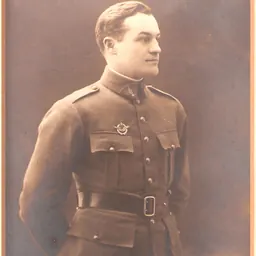
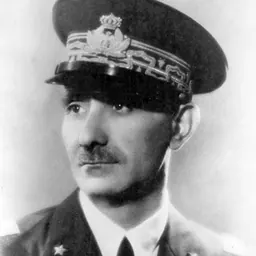
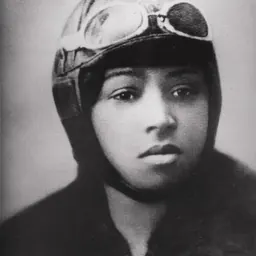
Contemporaries
People whose lives overlapped Reginald Archibald Cammell's
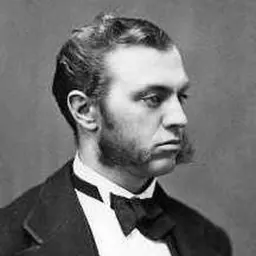





Frequently asked questions
Who was Reginald Archibald Cammell?
Scottish aviator (1886-1911)
When was Reginald Archibald Cammell born?
Reginald Archibald Cammell was born on 10 January 1886 in Inverness.
When did Reginald Archibald Cammell die?
Reginald Archibald Cammell died on 17 November 1911 in Hendon.
What was Reginald Archibald Cammell's occupation?
Reginald Archibald Cammell was an aircraft pilot.
What nationality was Reginald Archibald Cammell?
Reginald Archibald Cammell was British.
Sources & further reading
· Wikipedia: Reginald Archibald Cammell
· DBpedia: Reginald Archibald Cammell
Cite this page
APA: Biography.guide. (2026). Reginald Archibald Cammell. https://biography.guide/reginald-archibald-cammell/
MLA: "Reginald Archibald Cammell." Biography.guide, https://biography.guide/reginald-archibald-cammell/.
Chicago: "Reginald Archibald Cammell." Biography.guide. https://biography.guide/reginald-archibald-cammell/.
Data last updated: 2026-09-20 · Spot an error? Report a correction.
Page generated 2026-09-27 05:26 UTC