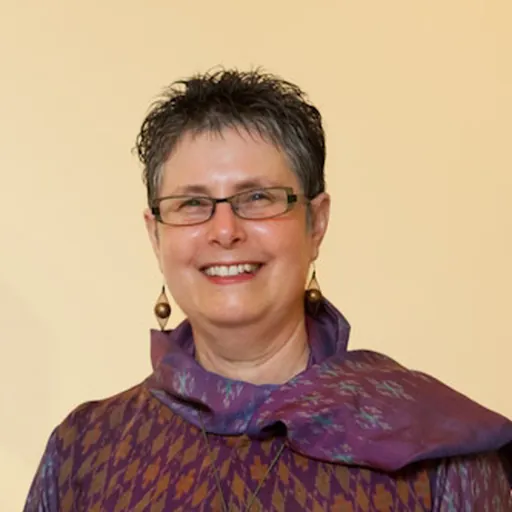
About Rebecca Kamen
Born 1950. Rebecca Kamen is an American sculptor.
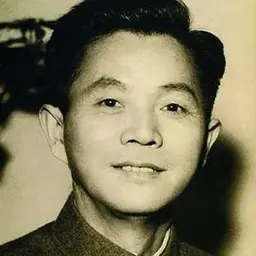
Rebecca Kamen (born 1950) is an American artist. College counselors questioned whether she was intelligent enough to attend college, and she was admitted on probation. She chose to study art education at Pennsylvania State University in part because it did not require classes in math, a subject that is often difficult for dyslexic people. In 1985, Kamen made the first of many trips to China. After meeting noted Chinese sculptor Zhao Shu Tong, Kamen began a six-year collaborative cultural exchange project teaching children about science, art, and American and Chinese culture. Many of her subsequent works have been influenced by Chinese and Japanese art and gardens. She has organized the Aspiring Science Summer Internship Program (ASSIP) at George Mason University, where summer interns work in cross-disciplinary teams doing hands-on scientific research, and interpret their research artistically. The program emphasizes the commonality of creative work in the sciences and the arts. She has been a consultant for the development of online chemistry courses by Harvard University's Science Media Group.
Awards and honors In 2001 Kamen was awarded a President's Sabbatical Award from Northern Virginia Community College. She has been the recipient of a Virginia Museum of Fine Arts Professional Fellowship, a Pollack Krasner Foundation Fellowship, a Strauss Fellowship, an NIH Artist in Residency, VCCS Professional Development Grants, and a Travel Grant from the Chemical Heritage Foundation.
In 2017 she was an Artist-in-Residence at the McColl Center for Art + Innovation.
Artworks Kamen believes that artists and scientists have similar missions, searching for meaningful patterns and attempting to create compelling narratives about invisible worlds. The following are some of her works:
Divining Nature: An Elemental Garden Her work Divining Nature: An Elemental Garden transformed the Periodic Table into a sculptural garden of 3-dimensional mylar flowers, arranged in a Fibonnaci-like spiral. It has since been acquired by George Mason University Department of Science for permanent installation in the atrium of the science building.
The Platonic Solids
The Platonic Solids was inspired by Plato's conception of the five classical elements: earth, air, fire, water, and ether. In Plato's work Timaeus , the five forms of matter are related to elemental solids and shapes (the cube, the octahedron, the -tetrahedron, the icosahedron, and the dodecahedron). In Kamen's work these regular polyhedra, created from fiberglass rods and sheets of mylar, are held against the larger plane of the wall, demonstrating "tension and compression". The work appeared in 2011 as part of the exhibit Elemental Matters: Artists Imagine Chemistry, at the Chemical Heritage Foundation, Philadelphia, PA. It was accompanied by a sound component by bio-musician Susan Alexjander, Elements in Descending Order of Creation from Collapsing Stars. The exhibit also included Kamen's sculpture Hydrogen, Helium, Carbon, Nitrogen, Oxygen, Silicon, Phosphorus, Sulfur.
Butterflies of the Soul In 2012, Kamen was awarded a fellowship from the National Institutes of Health, and spent a summer visiting and talking to scientists in their laboratories in Bethesda, Maryland. That knowledge became the basis for a series of artworks, inspired by the brain, which were shown at the Porter Neuroscience Research Center.
Kamen's work, Butterflies of the Soul was inspired by neuroscientist Santiago Ramon y Cajal, who won the 1906 Nobel Prize, for his examination of the human nervous system. Cajal observed cells under the microscope, a new approach to the study of the brain and its functions. In Kamen's sculpture, threadlike mylar "butterflies" perch on intertwining translucent green mylar and acrylic "branches". The result is reminiscent of neural structures. Kamen's sculpture is inspired by Cajal's drawings of Purkinje cells, which are involved in motor control and cognitive functions. Her first solo exhibition was in 1980, at the University of Richmond, Virginia. Fundamental Forces, an exhibition of sculpture and painting with sound artist Susan Alexjander, focused on the four fundamental forces in physics, is on display at the National Academy of Sciences to July 6, 2015.
In the 2021 multi–media exhibition Creative Resilience: Art by Women in Science, produced by the Gender Section of the United Nations Educational, Scientific and Cultural Organization (UNESCO), Kamen's artwork "Corona and Illumination", an acrylic painting inspired by colorized SARS-CoV-2 electron microscopic images, and biographical information were featured along artworks by more than 50 other women from around the globe working in science and art.
Don’t just read it —
keep it.
Full-length biographies made to live with: read them, listen on the way to work, watch them tonight.
- E-book
- Audio
- Video
Instant download · yours to keep · every purchase keeps this site free
Important facts
People in Rebecca Kamen's life
Named in this biography and alive at the same time

Related people
Same field, nearest in time




Contemporaries
People whose lives overlapped Rebecca Kamen's



Frequently asked questions
Who is Rebecca Kamen?
American artist
When was Rebecca Kamen born?
Rebecca Kamen was born in 1950 in Philadelphia.
What is Rebecca Kamen's occupation?
Rebecca Kamen is a sculptor.
What nationality is Rebecca Kamen?
Rebecca Kamen is American.
Sources & further reading
Cite this page
APA: Biography.guide. (2026). Rebecca Kamen. https://biography.guide/rebecca-kamen/
MLA: "Rebecca Kamen." Biography.guide, https://biography.guide/rebecca-kamen/.
Chicago: "Rebecca Kamen." Biography.guide. https://biography.guide/rebecca-kamen/.
Data last updated: 2026-09-22 · Spot an error? Report a correction.
Page generated 2026-09-27 05:10 UTC