
About Rea Tajiri
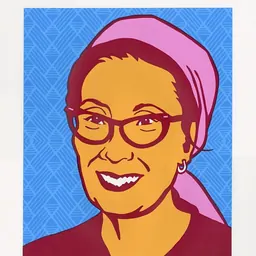
Born 1958. Rea Tajiri is an American film director, screenwriter, television producer, filmmaker, documentary filmmaker and video artist.
Rea Tajiri is a Japanese American video artist, filmmaker, and screenwriter, known for her personal essay film History and Memory: For Akiko and Takashige. She is a 2025 Guggenheim Fellow in Film and Video and a USA Artists Fellowship recipient for 2025
Early life Tajiri was born in Rogers Park, Chicago, Illinois. Tajiri's father, Vincent Tajiri, was the founding photo editor for Playboy Magazine. Her uncle, Shinkichi Tajiri, was a prominent sculptor who resided in the Netherlands.
Tajiri attend the California Institute of the Arts (CalArts) where she earned her BFA and MFA degrees in post-studio art. She moved to New York in 1979, where she interned for experimental theatre director Robert Wilson at his Byrd Hoffman Foundation. Tajiri's 2022 documentary feature entitled Wisdom Gone Wild, details her sixteen-year journey as a caregiver for her mother who had dementia premiered at the Blackstar Film Festival where it won two awards. The film received a national broadcast on Season 36 of the Emmy-Award winning PBS Series POV in 2023. To date Wisdom Gone Wild has won seven awards.
Film characteristics Metanarrative Tajiri is credited as a documentary filmmaker for weaving together different narratives, taking from found footage but also her own history and experiences.
Dramatic Fiction Directed by Rea Tajiri, '"Strawberry Fields" doesn't follow a straight narrative line. Instead, Tajiri opts for graceful and dreamlike forays into the collective memory of war-era Japanese Americans. By showing the audience grainy photos and films of a world that Irene can never know, director Tajiri heightens the sense of quest in this enigmatic film." Lynn Voedisch Chicago Sun Times
Techniques "Tajiri often focuses her inquiry on the representation of Asian-Americans in popular media. In Off Limits (1988), she critiques Hollywood's portrayal of the Vietnam War and Vietnamese people, juxtaposing fragments from Easy Rider with her own text to give voice to a Vietnamese character. In History and Memory (1990), Tajiri examines the construction of history and the manipulation of collective memory through a powerful pastiche of personal reminiscences and mass media images of the internment of Japanese-Americans during World War II." Electronic Art Intermix
History and Memory An experimental film which reflects the memory of Tajiri's mother of the war period which she lived in. The plot is displayed through pieces of memory and known family history. Tajiri presents the film in four different parts: Events that happen in front of the camera, events that are restaged, events that are told through the memory of character conversation, and events that are known to have happened but not shown at all. As the narrator of this documentary, Tajiri uses text and verbal communication with her audience in order to enhance the purpose of the memory or images she gives to her audience. Through this film Tajiri has highlighted the absence of Japanese Americans among filmmaking. By upholding whatever deconstructed history and memory she may have of her family's experience, Tajiri is praised for bringing attention to the culture of her family's past. Tajiri is also known to bring attention to a topic by using absence to declare presence. In History and Memory, absent characters share a significant presence since their memory is so vital to the film's message. This ability to highlight a character, topic, or event that is absent without confusion or misunderstanding is difficult to achieve for a filmmaker, but Tajiri certainly succeeds in doing so (Streamas). This documentary ultimately awarded Tajiri with the Distinguished Achievement Award from the International Documentary association and a Special Jury Award from the San Francisco International Film Festival (Dorsey). Tajiri's way of filming is most recognized in History and Memory where she distorts the camera in order to show the recollection of memory.
Strawberry Fields
Strawberry Fields was produced by Open City Films and ITVS. It was first premiered in Europe at the Venice International Film Festival and the film also was the recipient of the Grand Prix at the Fukuoka Asian Film Festival (Dorsey).
Tajiri focuses on the recognition of the Asian American identity in her films, which is different than the Asian American culture. Tajiri goes against societal norms in Strawberry Fields, where protagonist Irene, a third generation Japanese American woman, publicly flaunts her inner rage. In the majority of Tajiri's filmmaking she is constantly bringing attention to societal issues, like in History and Memory, where she highlights Asian Americans, Latinos, or Black people not being able to immerse themselves within the white American population shank.
Legacy Her work is studied as part of the curriculum in many University's documentary and women's cinema programs. Tajiri brought attention to identity within filmmaking, displaying cultural tensions and curiosities in order to educate her audience through the story she is telling within specific films.
Filmography
Director Hitchcock Trilogy 1987 Off Limits 1988 History and Memory: For Akiko and Takashige 1992 Yuri Kochiyama: Passion for Justice 1993 Strawberry Fields 1997 Little Murders 1999 Aloha 2000 Lordville 2014 "Wisdom Gone Wild" 2022
Producer Strawberry Fields 1997 Yuri Kochiyama: Passion for Justice 1999
Writer Strawberry Fields 1997
Actress Robot Stories 2003
Awards 1989 NEA Visual Arts Fellowship 1990 NEA Production Grant 1992 International Documentary Association, Distinguished Achievement Award – History and Memory 1992 San Francisco International Film Festival, Special Jury Award: New Visions Category -- "History and Memory" 1992 Atlanta Film & Video Festival, Best Experimental Video -- "History and Memory" 1993 NEA Visual Arts Fellowship 1994 NEA Production Grant 1998 Fukuoka Asian Film Festival, Grand Prix – Strawberry Fields 1992 Rockefeller Media Fellowship 1999 Rockefeller Media Fellowship 2000 New York Foundation for the Arts 2001 Smack Mellon Residency 2003 MacDowell Colony Residency 2015 Pew Fellowship in the Arts 2022 MacDowell Colony Residency 2023 Chicken & Egg Award 2025 USA Artist's Fellowship 2025 Guggenheim Fellowship
Don’t just read it —
keep it.
Full-length biographies made to live with: read them, listen on the way to work, watch them tonight.
- E-book
- Audio
- Video
Instant download · yours to keep · every purchase keeps this site free
Important facts
People in Rea Tajiri's life
Named in this biography and alive at the same time



Related people
Same field, nearest in time


Contemporaries
People whose lives overlapped Rea Tajiri's



Frequently asked questions
Who is Rea Tajiri?
American filmmaker (born 1958)
When was Rea Tajiri born?
Rea Tajiri was born in 1958 in Chicago.
What is Rea Tajiri's occupation?
Rea Tajiri is a film director, screenwriter, television producer, filmmaker, documentary filmmaker and video artist.
What nationality is Rea Tajiri?
Rea Tajiri is American.
Sources & further reading
Cite this page
APA: Biography.guide. (2026). Rea Tajiri. https://biography.guide/rea-tajiri/
MLA: "Rea Tajiri." Biography.guide, https://biography.guide/rea-tajiri/.
Chicago: "Rea Tajiri." Biography.guide. https://biography.guide/rea-tajiri/.
Data last updated: 2026-09-20 · Spot an error? Report a correction.
Page generated 2026-09-27 05:33 UTC