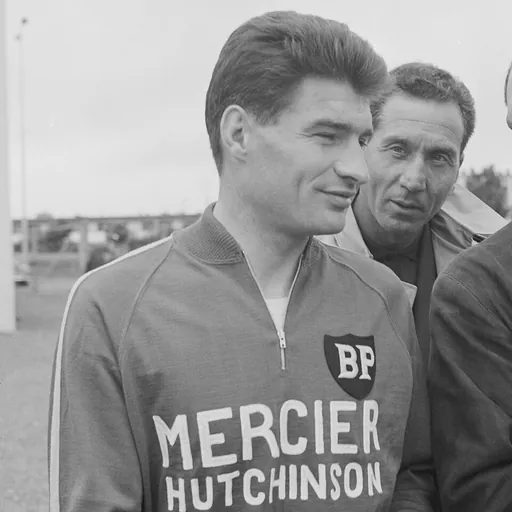
About Raymond Poulidor
Lived 1936 – 2019 (aged 83). Raymond Poulidor was a French sport cyclist and hairdresser.
Raymond Poulidor (; 15 April 1936 – 13 November 2019), nicknamed "Pou-Pou" , was a French professional racing cyclist, who rode for his entire career.
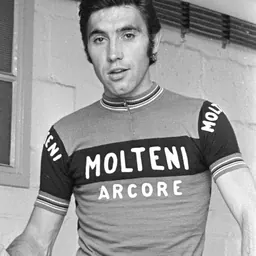
His distinguished career coincided with two other outstanding riders – Jacques Anquetil and Eddy Merckx. This underdog position may have been the reason Poulidor was a favourite of the public. He was known as "The Eternal Second", because he never won the Tour de France despite finishing in second place three times, and in third place five times (including his final Tour at the age of 40). Despite his consistency, he never wore the yellow jersey as leader of the general classification in 14 Tours (of which he completed 12). He did win one Grand Tour, the 1964 Vuelta a España. Of the eighteen Grand Tours that he entered in his career, he finished in the top 10 fifteen times.
Early life and amateur career Raymond Poulidor was the son of Martial and Maria Poulidor, small farmers outside the hamlet of Masbaraud-Mérignat, where the Creuse region east of Limoges meets the département of Haute-Vienne. Poulidor began working on the farm where, he remembered, "the soil was poor and we had to work hard; farming incomes were poor." The need for working hands on the farm meant he left school at 14 even though he wanted to continue his studies. Local entertainment went little further than village fairs, with coconut shies, sack-races, competitions for bottles of home-made jam... and inter-village cycle races.
Poulidor was given his first bike by a local shop owner at the age of 14. He started racing bicycles at the age of 16, picking up the interest from the magazine Miroir-Sprint given to him by one of his school teachers. He initially hid his passion from his mother, who was afraid of the dangers the sport entailed.
The army sent Poulidor to the war then going on in Algeria, where he worked as a driver and put on 12 kg through lack of exercise. In 1960 he dedicated himself to cycling again and lost the weight in a month. He won his first race after army service by six minutes. When he then came second in the GP de Peyrat-le-Château and won 80,000 old francs, he calculated that he had won more in one race than he would have earned in six years on the farm.
In just his second season, Poulidor won Milan–San Remo, one of cycling's "monument classics". from the finish, he was about to abandon after he suffered a puncture and was two minutes behind the leading riders. Magne convinced him to continue and Poulidor bridged the gap. On the climb of the Capo Berta, he attacked, joined by Albertus Geldermans and teammate Jean-Claude Annaert, who set the tempo until they reached the foot of the final climb, the Poggio. Here, Poulidor attacked again and opened a gap. Despite being guided in the wrong direction by a police man in the final corner, he was able to hold off the chasing field by three seconds to take the victory. Also in 1961, he became French road race champion. The Tour organiser, Jacques Goddet, was behind the pair as they turned off the main road and climbed through what police estimated as half a million spectators.
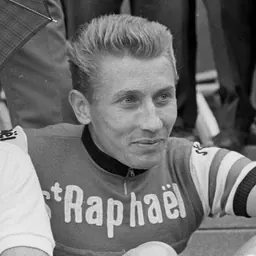
Anquetil rode on the inside by the mountain wall while Poulidor took the outer edge by the precipice. They could sometimes feel the other's hot gasps on their bare arms. At the end, Anquetil cracked, after a battle of wills and legs so intense that at times they banged elbows. Poulidor says he was so tired that he has no memory of the two touching, although a photograph shows that they did. of the daily newspaper L'Humanité who first wrote of Poupou. The name was taken up throughout France, leading to headlines such as "Poupoularité" in L'Équipe. A poupée is a doll and the nickname hints at that and follows the French tradition of repeating the first syllable of a word in childspeak. Poulidor never liked the name but accepted it.
The Merckx years
The end of the Anquetil era presented opportunities for Poulidor to finally win the Tour de France. This was not to be due to injuries in 1967 and 1968, and the arrival of Eddy Merckx in 1969. Poulidor was no match for Merckx, although he offered much resistance.
In the 1973 Tour Poulidor almost lost his life on the descent from the Col de Portet d'Aspet when he plunged into a ravine, taking a serious blow to the head and crawling out with the help of the race director, Jacques Goddet.
Poulidor and Dr Mabuse Antonin Magne remained manager of Poulidor's Mercier team until 1970, when he was replaced by another former rider, Louis Caput. Caput brought with him as deputy directeur sportif a man who described himself as a homeopath, Bernard Sainz. Sainz is known in cycling as Dr Mabuse, after a pulp-fiction character created by Norbert Jacques. Mabuse is a criminal mastermind who becomes rich through hypnotic powers. He plots to take over the world but is foiled by the police. From his cell he masterminds criminal plots by writing endless gibberish. Sainz recognises the nickname and used it in the name of his autobiography.
Sainz is a former velodrome rider of national level who stopped racing after a fall and became involved in horse racing, where he was twice convicted of maltreating horses. It was in horse-racing, where he turned unremarkable animals into champions, that he acquired his nickname. He has been repeatedly investigated by police and has been convicted of illegally practising medicine and incitement to doping. Sainz claims that he only engages in homeopathic treatment, though whatever methods he engages in are effective, casting doubt on this claim.
Louis Caput approached Edmond Mercier, the bicycle-maker behind Poulidor's team, and asked to bring Sainz into the team management. Mercier agreed, said Sainz, because he was already treating Mercier for his own health problems. Mercier had also brought in the insurance company, GAN, as main sponsor. GAN, said Sainz, demanded that Poulidor be in the team photo even if all he did was train with the team at the start of the season. In 1971 Poulidor had decided against riding any more. The tactic, Sainz said, was bluff, to increase his motivation. In Paris–Nice, the first important stage race of the season, Poulidor was 22 seconds behind Eddy Merckx on the morning of the last day. Poulidor attacked from the start, setting a speed record on the Col de la Turbie that stood for more than 10 years and won Paris–Nice by two seconds. Next year he won Paris–Nice again and also the Critérium du Dauphiné Libéré.
Drug testing Raymond Poulidor was the first rider to be tested for drugs in the Tour de France. Testers arrived at the Tour for the first time in 1966, in Bordeaux, although only after word had spread and many riders had left their hotels. The first competitor they found was Poulidor.
On 25 January 1973 Poulidor was made a Chevalier de la Légion d'honneur. In 2003 the President, Jacques Chirac increased the award. Poulidor also has a rose named after him, reflecting his love of gardening in general and roses in particular.
He lived with his wife Gisèle in Saint-Léonard-de-Noblat, east of Limoges, where he made short trips on his mountain bike. Their daughter, Corinne, is married to the former world cyclo-cross champion and Tour of Flanders winner Adri van der Poel. His grandsons David and Mathieu van der Poel are also cyclists: Mathieu became cyclo-cross world champion eight times, road world champion once and won three of the five Monuments as well as a stage in the 2021 Tour de France at which he dedicated his win and yellow jersey to his grandfather.
Poulidor worked in public relations for Crédit Lyonnais, sponsor of the yellow jersey, during the Tour. He had bicycles made under his name by the France-Loire company, and has appeared in television commercials aimed at older people.
When asked about his longevity compared to fellow cyclists, Poulidor said he took things in moderation and did not overstretch himself.
Poulidor has written several biographies, the first of which was Gloire sans le Maillot Jaune, written in 1964. Poulidor Intime was published in May 2007 by Éditions Jacob-Duvernet in France. In 2004 he helped write Poulidor par Raymond Poulidor with the radio reporter Jean-Paul Brouchon. The preface is by Eddy Merckx.
On 13 November 2019, Raymond Poulidor died in Saint-Léonard-de-Noblat. He had been in a hospital for two months prior, having suffered from heart problems. In 2008, the artist Sanfourche created a lithograph in tribute to his sporting achievements
Career achievements Major results Source:
1959 3rd Grand Prix d'Oradour-sur-Vayres 1960 1st Bordeaux–Saintes 2nd Circuit des Boucles de la Seine 3rd Overall Grand Prix de Fourmies 4th Overall Grand Prix du Midi Libre 5th Road race, UCI Road World Championships 6th Overall Tour du Sud-Est 1st Stage 2 7th Paris–Tours 7th Circuit de l'Aulne 8th Grand Prix d'Isbergues 10th Overall Critérium du Dauphiné Libéré 1961
1st Milan–San Remo 1st Mont Faron Hill Climb 2nd Overall Four Days of Dunkirk
3rd Overall Grand Prix du Midi Libre 3rd Genoa–Nice 3rd Grand Prix de Cannes 4th Manx Trophy 7th Bordeaux–Paris 9th Overall Paris–Nice 9th Paris–Brussels 10th Gran Premio di Lugano 1962 2nd Mont Faron Hill Climb 3rd Overall Tour de France 1st Stage 19 3rd Overall Critérium du Dauphiné Libéré 5th Paris–Roubaix 6th Overall Tour du Sud-Est 7th Overall Paris–Nice 8th Overall Grand Prix du Midi Libre 10th Overall Tour du Var 1963 1st La Flèche Wallonne 1st Grand Prix des Nations 1st Gran Premio di Lugano 2nd Overall Critérium National de la Route 1st Stage 1 2nd Overall Tour du Sud-Est 2nd Genoa–Nice 2nd Grand Prix de Cannes 2nd Trofeo Baracchi (with Jacques Anquetil) 3rd Overall Paris–Luxembourg 1st Stage 2 3rd Paris–Tours 5th Road race, UCI Road World Championships 5th Liège–Bastogne–Liège 5th Grand Prix du Parisien (TTT) 6th Paris–Roubaix 8th Overall Tour de France 8th Circuit de l'Aulne 9th Tour of Flanders 10th Critérium des As 1964
1st Stage 15 (ITT)
1st Stage 3 (ITT) 1st Grand Prix de Cannes 1st Stage 7 Paris–Nice 1st Stage 2a Circuit du Provençal 2nd Overall Tour de France 1st Stage 15 2nd Overall Critérium du Dauphiné Libéré 1st Stages 2 & 4a (ITT) 2nd Milan–San Remo
4th Overall Paris–Luxembourg 6th Trofeo Baracchi (with Henry Anglade) 1965
1st Stages 1a & 1b (ITT) 2nd Road race, National Road Championships 2nd Overall Tour de France 1st Stages 5b (ITT) & 14 2nd Overall Vuelta a España 1st Stages 4a (ITT) & 16 (ITT)
2nd Overall Critérium du Dauphiné Libéré 2nd Overall Critérium National de la Route 1st Stage 2 3rd Grand Prix des Nations 4th Overall Paris–Nice 4th Trofeo Baracchi (with Georges Chappe) 6th Overall Circuit du Provençal 1st Stage 3a 6th Giro di Lombardia 10th Circuit de l'Aulne 10th Genoa–Nice 1966
1st Stage 7b (ITT)
1st Stage 3 (ITT) 1st Subida a Arrate 1st Mont Faron Hill Climb 2nd Overall Paris–Nice 1st Stages 6b (ITT) 2nd Trofeo Baracchi (with Georges Chappe)
3rd Overall Tour de France 1st Stage 14b (ITT) 3rd Giro di Lombardia 3rd Grand Prix d'Aix-en-Provence 3rd Critérium des As 5th Genoa–Nice 5th Grand Prix des Nations 6th Overall Escalada a Montjuïc 7th Milan–San Remo 9th Paris–Tours 9th Circuit des Boucles de la Seine 1967
1st Stage 1b (ITT) 1st Circuit de l'Aulne 1st Bol d'Or des Monédières Chaumeil 1st A Travers Lausanne 2nd Critérium National de la Route 3rd Overall Grand Prix du Midi Libre 3rd Giro di Lombardia 3rd Polymultipliée 5th Circuit des Boucles de la Seine 5th Trofeo Baracchi (with Roger Pingeon) 6th GP du canton d'Argovie 7th Paris–Roubaix 7th Coppa Agostoni 7th Gran Premio di Lugano 8th Overall Vuelta a España 1st Stage 15b (ITT) 9th Overall Tour de France 1st Stage 22b (ITT) 1968
1st Stages 1a & 1b (ITT) 1st Critérium National de la Route 1st Subida a Arrate 2nd Circuit de l'Aulne 2nd Critérium des As 3rd Overall Four Days of Dunkirk 1st Stage 3b (ITT) 3rd Overall A Travers Lausanne 3rd Liège–Bastogne–Liège 4th Overall Tour of Belgium 1st Stage 3 5th Milan–San Remo 6th Paris–Roubaix 7th Road race, UCI Road World Championships 8th Overall Tour de Suisse 8th Overall Polymultipliée 1st Stage 2 (ITT) 9th Overall Paris–Luxembourg 1969
1st Stages 1a (ITT) & 5a (ITT) 1st Tour du Haut Var 2nd Overall Paris–Nice 1st Stage 1a (ITT) 2nd Grand Prix d'Aix-en-Provence 2nd Grand Prix des Nations 3rd Overall Tour de France 4th Overall Grand Prix du Midi Libre 4th Overall Escalada a Montjuïc 5th Giro di Lombardia 5th Trofeo Laigueglia 7th Overall Tour of the Basque Country 1st Stage 4b (ITT) 7th Overall Four Days of Dunkirk 7th Polymultipliée 8th Genoa–Nice 9th Critérium National de la Route 1970 2nd Overall Setmana Catalana de Ciclisme 2nd Overall A Travers Lausanne 4th Overall Paris–Nice 4th Polymultipliée 6th Genoa–Nice 7th Overall Tour de France 8th Overall Escalada a Montjuïc 8th Liège–Bastogne–Liège 8th Critérium des As 8th Grand Prix des Nations 10th La Flèche Wallonne 1971
1st Stage 5 (ITT)
1st Critérium National de la Route 2nd Overall Tour of the Basque Country 4th Overall Critérium du Dauphiné Libéré 5th Overall Escalada a Montjuïc 5th GP Union Dortmund 6th Grand Prix des Nations 9th Overall Vuelta a España 1972
1st Stage 7b (ITT) 1st Critérium National de la Route 1st Critérium des As 2nd Overall Setmana Catalana de Ciclisme 1st Stage 1b (ITT) 2nd La Flèche Wallonne 3rd Overall Tour de France 4th Overall Grand Prix du Midi Libre 4th Grand Prix des Nations 5th Bruxelles–Meulebeke 7th Overall Critérium du Dauphiné Libéré 10th Paris–Roubaix 1973
3rd Overall A Travers Lausanne 4th Overall Four Days of Dunkirk 4th Liège–Bastogne–Liège 5th Overall Escalada a Montjuïc 6th Grand Prix de Wallonie 7th Overall Critérium du Dauphiné Libéré 7th Circuit de l'Aulne 9th Grand Prix des Nations 10th Paris–Roubaix 1974
2nd Overall Tour de France 1st Stage 16 2nd Overall Critérium du Dauphiné Libéré
1st Stage 6b (ITT) 4th Critérium National de la Route 5th Overall Paris–Nice 5th Overall Tour de Romandie 1st Prologue 5th Grand Prix de Fourmies 6th Critérium des As 1975 2nd Overall Tour du Limousin 1st Stage 3 3rd Paris–Bourges 4th Overall Critérium du Dauphiné Libéré 7th Overall Grand Prix du Midi Libre 7th Overall Tour de l'Oise 8th Grand Prix de Monaco 10th Critérium des As 1976 2nd Paris–Tours 3rd Overall Tour de France 4th Overall Grand Prix du Midi Libre 5th Giro di Lombardia 7th Overall Tour Méditerranéen 7th Grand Prix des Nations 8th Liège–Bastogne–Liège 1977 4th Overall Circuit de la Sarthe 6th Overall Paris–Nice 7th Overall Tour de l'Aude 7th Critérium des As 9th Overall Tour Cycliste du Tarn
Grand Tour general classification results timeline
Monuments results timeline
Major championships results timeline
+ Legend — Did not compete DNF Did not finish DSQ Disqualified
Don’t just read it —
keep it.
Full-length biographies made to live with: read them, listen on the way to work, watch them tonight.
- E-book
- Audio
- Video
Instant download · yours to keep · every purchase keeps this site free
Important facts
People in Raymond Poulidor's life
Named in this biography and alive at the same time



Related people
Same field, nearest in time


Contemporaries
People whose lives overlapped Raymond Poulidor's





Frequently asked questions
Who was Raymond Poulidor?
French cyclist (1936–2019)
When was Raymond Poulidor born?
Raymond Poulidor was born on 15 April 1936 in Masbaraud-Mérignat.
When did Raymond Poulidor die?
Raymond Poulidor died on 13 November 2019 in Saint-Léonard-de-Noblat.
What was Raymond Poulidor's occupation?
Raymond Poulidor was a sport cyclist and hairdresser.
What nationality was Raymond Poulidor?
Raymond Poulidor was French.
Sources & further reading
Cite this page
APA: Biography.guide. (2026). Raymond Poulidor. https://biography.guide/raymond-poulidor/
MLA: "Raymond Poulidor." Biography.guide, https://biography.guide/raymond-poulidor/.
Chicago: "Raymond Poulidor." Biography.guide. https://biography.guide/raymond-poulidor/.
Data last updated: 2026-09-23 · Spot an error? Report a correction.
Portrait: Wikimedia Commons · author & licence
Page generated 2026-09-27 05:06 UTC