
Raymond McGrath
Australian-born architect and interior designer
About Raymond McGrath
Lived 1903 – 1977 (aged 74). Raymond McGrath was an Australian architect, designer, graphic artist and illustrator.
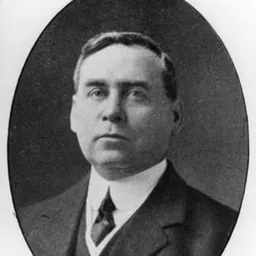
Raymond McGrath (7 March 1903 – 23 December 1977) was an Australian-born architect, illustrator, printmaker and interior designer who for the greater part of his career was Principal Architect for the Office of Public Works in Ireland.
Biography Early life McGrath, the only surviving son of Herbert Edgar McGrath (1876-1963) and Edith May Sorrell (d 1946), was born in Gladesville, New South Wales. An elder brother, Ivor, died in infancy, and his sister Eileen (who became a notable sculptor and graphic designer ) was born in 1907. The house was built for stockbroker Gerald L. Schlesinger and his partner the landscape architect Christopher Tunnard.
He illustrated Anthony Bertram's 1937 pamphlet, Design in Everyday Things, published by the BBC to tie in with Bertram's radio series of the same title.
World War Two
At the beginning of World War Two, McGrath wrote to the War Artists' Advisory Committee, WAAC, with a proposal to produce an illustrated book on war-time aircraft production. As a result McGrath was commissioned to produce twelve drawings on the subject, for which he visited several aircraft factories. In all WAAC accepted 16 pieces from McGrath before he left England to take up the post of Senior Architect in the Office of Public Works in Dublin. McGrath also submitted some drawings of bomb damage in London which WAAC declined to accept. A number of McGrath's aircraft paintings were included in the Britain at War exhibition held at the Museum of Modern Art in New York during 1941.
Later life In 1940 McGrath moved to Dublin where he was appointed Senior Architect at the Office of Public Works. In 1948 he was appointed Principal Architect, a post he held until 1968. He quickly took command of the resources which were available to give a recognizable "look" to Ireland's state buildings. These included specially designed woolen carpets, Waterford glass chandeliers, Irish silk poplin hangings and, in terms of fittings, 18th-century chimney-pieces and ornamental plasterwork. He acted as supervisor and co-ordinator of the decor as well as the architecture, using his extensive knowledge of Irish architecture of the Georgian period.
In the early 1950s McGrath embarked on the series of specially-woven carpets which are the particular hallmark of his government work. These were installed in public buildings in Ireland and in Irish embassies all over the world. The projects at the Irish Embassy in Paris were particularly pleasing to him. The embassy was an impressive 19th-century building, and the task of furnishing it fell to the Ambassador, William P. Fay and his wife Lillian. The Fays worked closely with McGrath, who among other things designed the carpets and chose the furniture; McGrath was assisted by Noel de Chenu. When the Fays were later appointed to Washington, they again called on McGrath to fit out a new embassy building.
Throughout his 25-year programme of designing carpets for State building, McGrath relied on the traditional skills of hand-knotted carpet manufacture in pure wool which were available at Donegal Carpets in Killybegs. Through his support this company was enabled to keep up production even in the most difficult times in the 1960s and after.
In Dublin, McGrath's principal concern was the restoration of Dublin Castle, which started in the late 1950s and continued for decades. Among the buildings he designed was the Royal Hibernian Academy, RHA, building in Ely Place, Dublin. He had been appointed an associate member of the RHA in 1949 and became a full member in 1967. The following year he became the academy's professor of architecture. For many years, starting in 1946, McGrath championed and worked on the design for a National Concert Hall for Ireland which was to be built at Raheny. However the project was always dogged by political complications and was eventually cancelled in 1973. McGrath died in Dublin a few years later in 1977, at the age of 74.
Publications The Seven Songs of Meadow Lane (1924), Glass in Architecture and Decoration (1937), Raymond McGrath, Albert Childerstone Frost and Harold Edward Beckett, Architectural Press, London. Twentieth Century Houses (1934), Faber and Faber London.
Don’t just read it —
keep it.
Full-length biographies made to live with: read them, listen on the way to work, watch them tonight.
- E-book
- Audio
- Video
Instant download · yours to keep · every purchase keeps this site free
Important facts
People in Raymond McGrath's life
Named in this biography and alive at the same time

Related people
Same field, nearest in time


Contemporaries
People whose lives overlapped Raymond McGrath's

Frequently asked questions
Who was Raymond McGrath?
Australian-born architect and interior designer
When was Raymond McGrath born?
Raymond McGrath was born on 7 March 1903 in Sydney.
When did Raymond McGrath die?
Raymond McGrath died on 23 December 1977 in Dublin.
What was Raymond McGrath's occupation?
Raymond McGrath was an architect, designer, graphic artist and illustrator.
What nationality was Raymond McGrath?
Raymond McGrath was Australian.
Sources & further reading
Cite this page
APA: Biography.guide. (2026). Raymond McGrath. https://biography.guide/raymond-mcgrath/
MLA: "Raymond McGrath." Biography.guide, https://biography.guide/raymond-mcgrath/.
Chicago: "Raymond McGrath." Biography.guide. https://biography.guide/raymond-mcgrath/.
Data last updated: 2026-09-20 · Spot an error? Report a correction.
Page generated 2026-09-27 05:19 UTC