
About Raymond Chiao
Born 1940. Raymond Chiao is an American physicist and university teacher, known for Tunneling time.
Raymond Y. Chiao is an American physicist best known for his experimental work in quantum optics. He is currently an emeritus faculty member at the University of California, Merced physics department, where he is conducting research on gravitational radiation in collaboration with Prof. Jay Sharping.
Biography
Raymond Chiao was born in Hong Kong on October 9, 1940, and moved as a child to the United States in 1947. He grew up in New York City, where he attended Collegiate School. It was there that he first got interested in science through reading Gamow’s book One Two Three... Infinity.
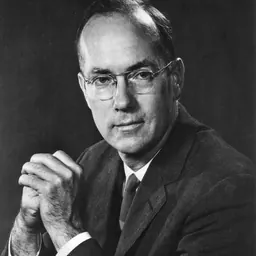
He was admitted to Princeton University in 1957 as an electrical engineer, but then switched to the physics department, where he worked on a senior thesis project given to him by John Archibald Wheeler on the quantization of general relativity. He then switched from theoretical physics to experimental physics in graduate studies at MIT under the supervision of Charles Hard Townes, shortly after the experimental realization of the ruby laser. His thesis topic was on the first observation of stimulated Brillouin scattering.
After obtaining his Ph.D. in 1965 from MIT, he taught as an assistant professor there until 1967. He moved to UC Berkeley in 1967, and remained there until 2006, where he advised at least 11 PhD students. After which he took a position at the UC's newly opened campus UC Merced.
Discoveries Chiao has become well known in the field of quantum optics due to several important experiments. Based on former experiments carried out by Günter Nimtz in 1992 he measured the quantum tunnelling time, which was found to be between 1.5 and 1.7 times the speed of light. Interpretation of these results is open to question (see references below pertaining to tunneling time). He also was the first to measure the topological Berry's Phase (Geometric phase).
Current work As of 2006, he accepted a faculty position at UC Merced and turned his full energy on the project of detecting gravitational waves through the use of superconductors. As of 2010 he became emeritus faculty but he continues to advise several PhD Students.
Don’t just read it —
keep it.
Full-length biographies made to live with: read them, listen on the way to work, watch them tonight.
- E-book
- Audio
- Video
Instant download · yours to keep · every purchase keeps this site free
Important facts
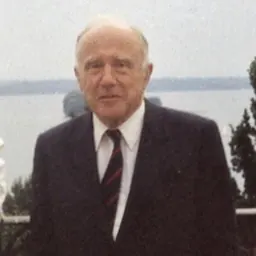
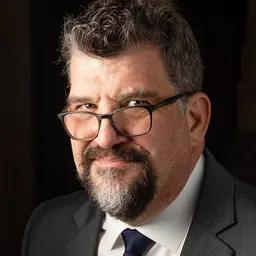
People in Raymond Chiao's life
Named in this biography and alive at the same time


Related people
Same field, nearest in time

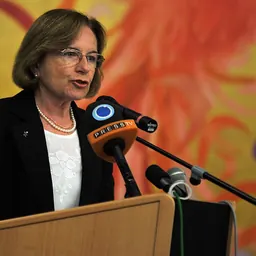


Contemporaries
People whose lives overlapped Raymond Chiao's


Frequently asked questions
Who is Raymond Chiao?
American physicist
When was Raymond Chiao born?
Raymond Chiao was born on 9 October 1940 in British Hong Kong.
What is Raymond Chiao's occupation?
Raymond Chiao is a physicist and university teacher.
What is Raymond Chiao known for?
Raymond Chiao is known for Tunneling time.
What nationality is Raymond Chiao?
Raymond Chiao is American.
Sources & further reading
Cite this page
APA: Biography.guide. (2026). Raymond Chiao. https://biography.guide/raymond-chiao/
MLA: "Raymond Chiao." Biography.guide, https://biography.guide/raymond-chiao/.
Chicago: "Raymond Chiao." Biography.guide. https://biography.guide/raymond-chiao/.
Data last updated: 2026-09-20 · Spot an error? Report a correction.
Page generated 2026-09-27 05:22 UTC