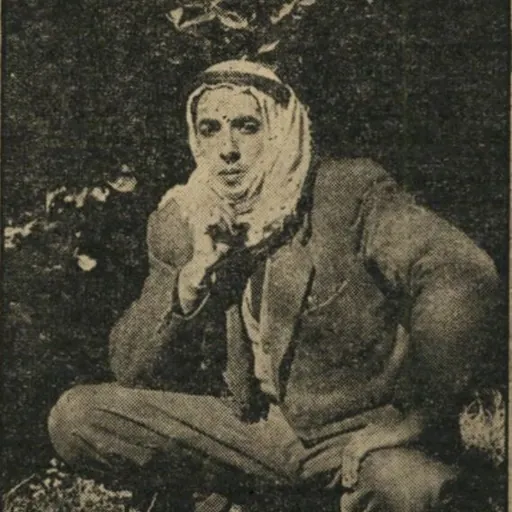
About Rashid Hussein
Lived 1936 – 1977 (aged 40–41). Rashid Hussein was a journalist, translator and poet.
Rashid Hussein Mahmoud (, ; 28 December 1936 – 2 February 1977) was a Palestinian poet, orator, journalist and Arabic-Hebrew translator. He was born in Musmus, Mandatory Palestine. He published his first collection in 1957. He was the first prominent poet to appear on the Israeli Arab stage. Palestinian poet Mahmoud Darwish called him "the star", who wrote about "human things" like bread, hunger and anger.
Biography
Early life and teaching career Hussein was born to a Muslim Fellah family in Musmus in 1936, during British Mandatory rule in Palestine. He attended elementary school in Umm al-Fahm, a town near his home village.
In 1955 he worked as a teacher in Nazareth, He taught poor, rural Arabs in dilapidated schoolrooms lacking sufficient textbooks. During his teaching career, he had ongoing struggles with the Zionist supervisors of Arab education in Israel and with the Arab section of the national teachers' union. In 1958, he became the literary editor of Al Fajr, a monthly Arabic-language newspaper of the Histadrut labor union and Al Musawwar, a weekly newspaper. Al Fajr and Al Musawwar were both discontinued for lack of funds in 1962, but the former circulated again in 1964. In the foreword of Palms and Dates, published soon after the 1967 Six-Day War, they noted the difference between the nostalgia of past "days of greater liberalism and empathy" with the present "days of hatred and violence". At the same time, he made appeals to his "Jewish compatriots", particularly those in the workers' parties to adhere to the universal principles of their progressive movements and to fight against Arab inequality in Israel. He accused the Voice of Israel radio's Arabic-language service of being strongly biased against Nasser, while positive towards Nasser's Arab rivals, including Abd al-Karim Qasim of Iraq, Habib Bourguiba of Tunisia and the Saudi royal family. Hussein's articles in Al Fajr at the time condemned Qasim and praised Nasser, so much so that one of his articles appeared in the Egyptian weekly Akher Sa'a. However, he did not blame this perceived submissiveness and aimlessness solely on the Arab youth themselves, but to the environment in which they grew up, with many having lived through the 1948 Arab-Israeli War and the 1948 Palestinian expulsion and flight. Hussein died in a fire at his New York apartment. writing: He came to us a blade of wine And left, a prayer's end He flung out poems At Christo's Restaurant And all of Acre would rise from sleep To walk upon the sea — Mahmoud Darwish, On Fifth Avenue he greeted me (1986) The track was published on her album Sprinting Gazelle – Palestinian Songs from the Motherland and the Diaspora. According to Kelani, the title of Husain’s poem translates literally as 'Thoughts and Echoes', but she 'chose the English title to reflect my own yearning, and probably that of Husain, for freedom from our personal and collective sense of siege.'
The sky cried in rain, giving solace to the burnt-out man; It made him more impassioned.
Can one drowning in the open sea ask for a helping hand from the sky? Does he want rain to freeze his body and add to his torments?
No! I ask the sky. Stop your tears!
This broken-hearted man is at the end of his tether… This broken-hearted man is at the end of his tether.
Poetry and influences Hussein's poetry was influenced by the 11th-century Arab skeptic al-Ma'arri and the early 20th-century Lebanese American poet Elia Abu Madi.
His earlier works were of an austere, classical Arabic variety, but gradually Hussein introduced more freedom to his use of the classical metres and his poetry became more satirical. In his prose, Hussein used the traditional gallows humor of German Jews and Syrian Arabs from the Ottoman era as introductions to his rhetorical descriptions of Arab suffering in Israel.
Don’t just read it —
keep it.
Full-length biographies made to live with: read them, listen on the way to work, watch them tonight.
- E-book
- Audio
- Video
Instant download · yours to keep · every purchase keeps this site free
Important facts
People in Rashid Hussein's life
Named in this biography and alive at the same time


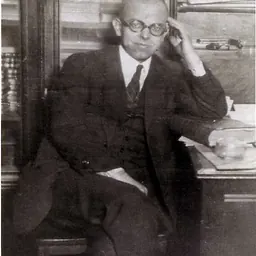
Related people
Same field, nearest in time



Contemporaries
People whose lives overlapped Rashid Hussein's





Frequently asked questions
Who was Rashid Hussein?
Palestinian poet (1936–1977)
When was Rashid Hussein born?
Rashid Hussein was born in 1936 in Musmus.
When did Rashid Hussein die?
Rashid Hussein died on 2 February 1977 in New York City.
What was Rashid Hussein's occupation?
Rashid Hussein was a journalist, translator and poet.
What nationality was Rashid Hussein?
Rashid Hussein's recorded nationality: Palestine, Palestinians.
Sources & further reading
Cite this page
APA: Biography.guide. (2026). Rashid Hussein. https://biography.guide/rashid-hussein/
MLA: "Rashid Hussein." Biography.guide, https://biography.guide/rashid-hussein/.
Chicago: "Rashid Hussein." Biography.guide. https://biography.guide/rashid-hussein/.
Data last updated: 2026-09-21 · Spot an error? Report a correction.
Portrait: Wikimedia Commons · author & licence
Page generated 2026-09-27 04:59 UTC