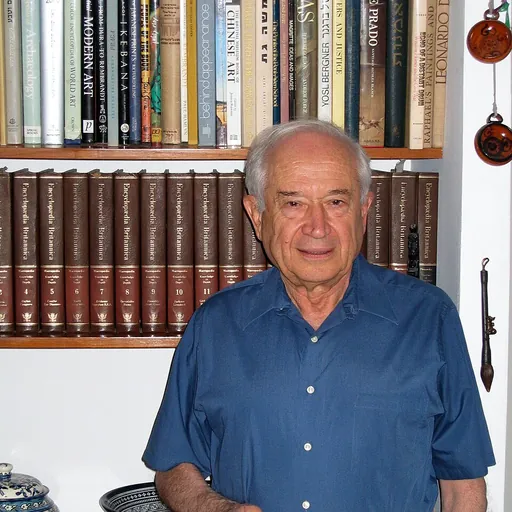
About Raphael Mechoulam
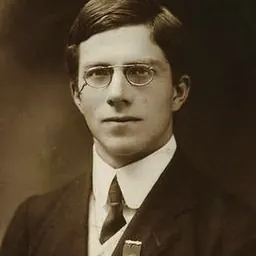
Lived 1930 – 2023 (aged 92). Raphael Mechoulam was an Israeli chemist, physician and university teacher, known for Cannabinoid, Endocannabinoid and Tetrahydrocannabinol.
Biography Mechoulam was born in Sofia, Bulgaria on 5 November 1930, to a Sephardic Jewish family. Both parents were well-educated: his father was a physician and head of a local hospital and his mother had studied in Berlin. He attended an "American grade school" in Sofia until the enactment of antisemitic laws and the beginning of World War II.
In 1949 his family immigrated to Israel where he later studied chemistry.
In 1966, Mechoulam joined the faculty of the Hebrew University in Jerusalem. In 1968, he was appointed an associate professor, In 1982, he was a visiting professor at Ohio University, and in 1993–1994 he was a visiting professor in the Department of Pharmacology at the Richmond College of Medicine.
Mechoulam was a founding member of the International Association for Cannabinoid Medicines (IACM) and the International Cannabinoid Research Society. and Chairman of the Board of the International Association for Cannabinoid Medicines (2003–2005).
Mechoulam died on 9 March 2023, at the age of 92.
Research Raphael Mechoulam's major scientific interest was the chemistry and pharmacology of cannabinoids. In 1963 Mechoulam began working on the components of the cannabis plant, from which hashish and marijuana are produced. Although cannabis had been the most widely used illegal drug in many parts of the world for centuries, its chemistry and biology were unknown, in contrast to morphine and cocaine, the two other common illegal drugs, which had been isolated as early as the 19th century. While some research had been done, the psychoactive components of cannabis had not been isolated in their pure form, and their chemical structure had not been explained.
With other members of his research group including Yehiel Gaoni, Mechoulam elaborated the structures and stereochemistry of the major plant cannabinoids cannabidiol (CBD, 1963) and Δ9-tetrahydrocannabinol (THC, 1964) and succeeded in their total synthesis in 1965. They also isolated, characterized and synthesized cannabigerol (CBG, 1964), and showed that it was not psychoactive. In 1970, Mechoulam's doctoral student Zvi Ben-Zvi reported the first isolation of an active THC metabolite in the human body.
During the 1980s, Mechoulam continued to study the active structure of the cannabinoids and began to work with clinicians on clinical trials with THC and CBD in animal models. In 1987, Mechoulam and A. Abrahamov initiated a clinical trial with Δ8-THC (a more stable isomer of Δ9-THC) in children who were undergoing chemotherapy treatments against cancer. The substance prevented nausea and vomiting and has since been used clinically against nausea and vomiting in chemotherapy patients. This distinction is one of the factors that has led to the discovery (by other groups) of a specific cannabinoid receptor known as CB1. It was isolated and characterized by postdoctoral researchers William Devane and Lumír Ondřej Hanuš. Another endogenous cannabinoid, 2-arachidonoylglycerol (2-AG), was discovered in 1995 by Shimon Ben-Shabat, one of his PhD students. In 2006, Mechoulam's group identified another endocannabinoid, arachidonoyl L-serine. It is not related to the known cannabinoid receptors, but is probably an endogenous ligand of a novel cannabinoid receptor, which causes vasodilation.
In 1998, Mechoulam and Ben-Shabat posited the “entourage effect”, the idea that a variety of metabolites working together can result in increased activity compared to individual endogenous cannabinoids.
The endocannabinoid system is a relatively newly discovered neurotransmission system, which influences a variety of functions and systems in the human body. The discovery of the endocannabinoid system and the study of its functions in the body has helped to open a new field in biochemistry and brain research. The research in Mechoulam's laboratory, in collaboration with other groups in Israel and abroad, has helped to clarify the importance of the plant's cannabinoids and endocannabinoids in many physiological processes and has furthered research into their possible use in the treatment of pathological conditions. He is listed as a co-founder of the company 180 life sciences. In 2020, he appeared in the documentary CBD Nation, discussing the medical value of cannabis.
Honours and awards 2019–2020: Harvey Prize of the Technion 2019: Doctor of Philosophy, Honoris causa, Weizmann Institute of Science 2014: IACM Special Award, International Association for Cannabinoid Medicines (IACM) 2012: EMET Prize in Exact Sciences—Chemistry 2011: NIDA Discovery Award 2006: ECNP Lifetime Achievement Award in Neuropsychopharmacology 2006: Degree Honoris causa, Complutense University of Madrid 2003–2005: Chairman of the Board, International Association for Cannabinoid Medicines (IACM) 2002: Honorary Member of the Israel Society for Physiology and Pharmacology 2001: Honorary doctorate from Ohio State University 2000: Israel Prize in Exact Sciences - Chemistry 1999–2002: President, International Cannabinoid Research Society (ICRS) 1994: Member of the Israel Academy of Sciences and Humanities
Don’t just read it —
keep it.
Full-length biographies made to live with: read them, listen on the way to work, watch them tonight.
- E-book
- Audio
- Video
Instant download · yours to keep · every purchase keeps this site free
Important facts
People in Raphael Mechoulam's life
Named in this biography and alive at the same time


Related people
Same field, nearest in time




Contemporaries
People whose lives overlapped Raphael Mechoulam's

Frequently asked questions
Who was Raphael Mechoulam?
Israeli chemist
When was Raphael Mechoulam born?
Raphael Mechoulam was born on 5 November 1930 in Sofia.
When did Raphael Mechoulam die?
Raphael Mechoulam died on 9 March 2023 in Jerusalem.
What was Raphael Mechoulam's occupation?
Raphael Mechoulam was a chemist, physician and university teacher.
What was Raphael Mechoulam known for?
Raphael Mechoulam was known for Cannabinoid, Endocannabinoid and Tetrahydrocannabinol.
What nationality was Raphael Mechoulam?
Raphael Mechoulam was Israeli.
Sources & further reading
· Wikipedia: Raphael Mechoulam
Cite this page
APA: Biography.guide. (2026). Raphael Mechoulam. https://biography.guide/raphael-mechoulam/
MLA: "Raphael Mechoulam." Biography.guide, https://biography.guide/raphael-mechoulam/.
Chicago: "Raphael Mechoulam." Biography.guide. https://biography.guide/raphael-mechoulam/.
Data last updated: 2026-09-22 · Spot an error? Report a correction.
Portrait: Wikimedia Commons · author & licence
Page generated 2026-09-27 05:01 UTC