
About Ranjit Sinha
Lived 1953 – 2021 (aged 68). Ranjit Sinha was an Indian civil servant.
Ranjit Sinha (27 March 1953 – 16 April 2021) was an Indian police officer and was the former director of the Central Bureau of Investigation (CBI). He was the director general of police of the Indo-Tibetan Border Police (ITBP) and the director general of the Railway Protection Force before joining as the CBI director in December 2012 for a two-year tenure. He has also served in senior positions in the CBI in Patna and Delhi.
Sinha had also worked in Central Reserve Police Force as IG (Operations) in Srinagar and IG (Personnel) in Delhi. He had earlier held positions in CBI including the post of joint director and deputy inspector general. He has been associated with the investigations of a number of sensitive and important cases of national and international ramifications. He was selected based on the procedure laid down by CVC Act 2003 and had a tenure of two years. He was selected by the Appointments Committee of the Cabinet.
In addition to his main responsibility of administering the CBI, Sinha also coordinated between different anti-corruption bureaus, the Income Tax Department, and the Central Vigilance Commission (CVC) in fighting corruption. When his appointment was announced, the Bharatiya Janata Party questioned the manner in which Sinha was appointed to head the Central Bureau of Investigation by the Indian National Congress-led government.
Early life Sinha was born on 27 March 1953 in Jamshedpur in a Kayastha family to Madhuri and N.S. Sinha. He was one among four children with the eldest sister Sarojini Sinha married to 1968 batch Indian Revenue Service (IRS) officer P. K. Sinha.
Career Sinha started his career with the police forces in Ranchi, Madhubani and Saharsa districts of Bihar where he became the superintendent of police. In this position, he dealt with communal strife, law and order issues and crime related to international border. He was also involved in counter terror operations as the Inspector General (Operations) in the Kashmir Valley when the bus service between India and Pakistan was started in 2005, and the additional director-general of the Indo-Tibetan Border Force. He worked as the director general of the Railway Protection Force from 14 November 2008 to 19 May 2011, where he set up commando units, bomb disposal squads, quick reaction teams to protect railway stations from terror strikes after the 2008 Mumbai attacks. After having served as the heads of the Railway Protection Force and the ITBP, he was selected as the director of the Central Bureau of Investigation (CBI) in November 2012.
Appointment as CBI chief The prime minister of India chose Ranjit Sinha as the CBI chief over Sharad Sinha, the director, National Investigation Agency and Atul, director general, Uttar Pradesh who were recommended by the CVC as he was senior to the other two. However, the Bhartiya Janata Party objected to his appointment, protesting that the Government had not followed the collegium system that it had approved and that was part of the Lokpal Bill which was waiting to be passed by the Parliament. The director general of Delhi Police, Neeraj Kumar, who had brilliantly cracked important cases during his 9 years in the CBI, went to court against the non inclusion of his name in the panel prepared by the CVC, but later withdrew his case.
Controversies and allegations The Fodder Scam case In 1996, as a DIG in the CBI under the Joint Director (East), UN Biswas, he was accused of scuttling the investigation to help protect the accused, Lalu Prasad Yadav in the Fodder Scam case. UN Biswas was the chief investigator into the case, whose progress was being monitored by the Patna High Court, and was asked by the court to file a report on the case. The original harsh report by Biswas was swapped with a toned down one authored by Sinha by the then Director CBI, Joginder Singh and submitted to the court. When the court asked why the submitted report did not carry details of the original charges, Biswas admitted before the court that the report had been changed by the CBI Director and that the original report was more damaging. The court indicted the CBI and ordered that Sinha be removed from the case. Later, Sinha, Biswas and other CBI officers apologized to the Privilege Committee Council of the Bihar Legislative Assembly, which decided to drop privilege proceedings against them for lodging a complaint against them to the High Court. Earlier, his father-in-law as the Director General Vigilance was accused of scuttling initial investigations into the Fodder Scam but the accusations could not be substantiated. Sinha was then posted to Bihar Bhawan in New Delhi against a specially created post by Lalu Yadav.
After taking over as the CBI Director, he transferred out four crucial officers investigating the Fodder Scam after obtaining consent of the Jharkhand High Court, but the orders were later cancelled by the Supreme Court of India following filing of a PIL.
Problems with Mamata Banerjee As the head of the Railway Protection Force (RPF), Sinha objected to Mamata Banerjee continuing to be provided protection by the RPF commandos, even after she quit as the Railway minister and became the Chief Minister of West Bengal. Banerjee did not take to these objections kindly and got Sinha replaced as the RPF head in May 2011. He was posted in September 2011 as the director general of the ITBP. There was widespread outrage in India on this issue as it undermined the autonomy of the CBI. Observing this the Supreme Court scathingly criticized the UPA government, for its meddling with the report, and the CBI, for behaving like a caged parrot that speaks in its master's voice. Sinha has confirmed the comments of the Supreme Court as being correct.
As a fallout, Ashwani Kumar was sacked as the Minister of Law and Justice. On 6 May 2013, the Supreme Court asked the government to bring a law before 10 July 2013 to "insulate the CBI from external influence and intrusion". Hurriedly, the government set up a Group of Ministers (GoM) under the Finance minister P. Chidambaram to work on the details for implementing the court's order. Sinha appreciated the court's order and stated that he had become a "catalyst of sorts" in making CBI autonomous. He also said that it is a lifetime opportunity for him to try to improve the working of the CBI.
The Rail bribery case In 2013, the CBI busted a cash-for-posts scandal in the Indian Railways that led to the resignation of Pawan Kumar Bansal. However, it was also reported that Sinha had held a grudge against Mahesh Kumar, and ordered his phone to be tapped that led to the case being busted.
Sinha appreciated the work by his sleuths stating that they just had the slightest of leads and were able to crack the case. Later, Sinha declared that there was no evidence linking the minister to the scam, which was protested against by the BJP. Sinha ordered a fresh review of all high-level appointments and high-value contracts during the tenures of railway ministers from Mamata Banerjee to Pawan Kumar Bansal.
The railway police association accused Sinha of having a grudge against all railway officials who had complained against him to the Central Vigilance Commission regarding his corrupt ways when he was the director general of the Railway Protection Force. This was however, refuted by the CBI.
Talking about the charges by the railway police association, he has defended himself by stating:
centered I had taken on vested interest in the RPF. They came up with a booklet leveling all sorts of allegations against me but the union home ministry didn’t find anything against me. I raised objections on retired officials serving in the association. One of my subordinates also became part of the problem and circulated lots of rubbish about me.
Don’t just read it —
keep it.
Full-length biographies made to live with: read them, listen on the way to work, watch them tonight.
- E-book
- Audio
- Video
Instant download · yours to keep · every purchase keeps this site free
Important facts
People in Ranjit Sinha's life
Named in this biography and alive at the same time



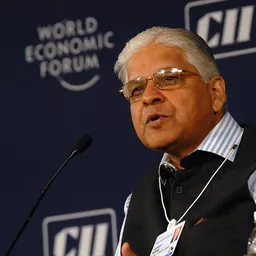
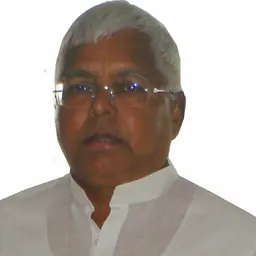


Related people
Same field, nearest in time
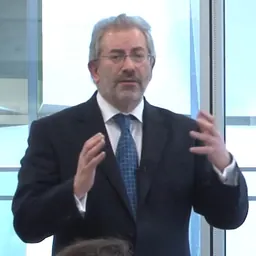


Contemporaries
People whose lives overlapped Ranjit Sinha's



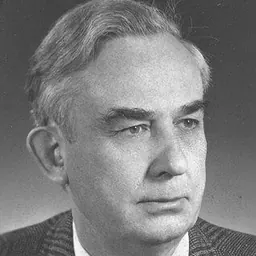
Frequently asked questions
Who was Ranjit Sinha?
Indian law enforcement official
When was Ranjit Sinha born?
Ranjit Sinha was born on 27 March 1953 in Jamshedpur.
When did Ranjit Sinha die?
Ranjit Sinha died on 16 April 2021.
What was Ranjit Sinha's occupation?
Ranjit Sinha was a civil servant.
What nationality was Ranjit Sinha?
Ranjit Sinha was Indian.
Sources & further reading
Cite this page
APA: Biography.guide. (2026). Ranjit Sinha. https://biography.guide/ranjit-sinha/
MLA: "Ranjit Sinha." Biography.guide, https://biography.guide/ranjit-sinha/.
Chicago: "Ranjit Sinha." Biography.guide. https://biography.guide/ranjit-sinha/.
Data last updated: 2026-09-20 · Spot an error? Report a correction.
Page generated 2026-09-27 05:26 UTC