
About Ran Ronen-Pekker
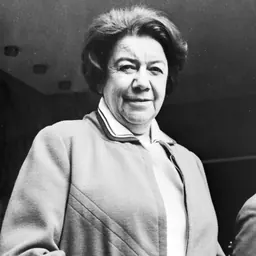
Lived 1936 – 2016 (aged 80). Ran Ronen-Pekker was an Israeli aircraft pilot, military officer, diplomat and israel Aerospace Industries.
Ran Ronen (; originally Ran Pekker, ; 19 July 1936 – 3 December 2016) was an Israeli Air Force (IAF) brigadier general and fighter ace credited with eight victories. He commanded various fighter squadrons, the IAF flight academy, and Tel Nof Airbase, retiring from the IAF with the rank of brigadier general. One of his pilots later described him as "the greatest squadron commander ever".
Biography and early military service Ran Ronen was born on 19 July 1936 in Kfar Vitkin, to Leah (née Sturman) and David Pekker, founding members of Kfar Vitkin.
In March 1954 he enlisted in the IAF. He began flying Spitfire aircraft and later served in the 117th Squadron flying Meteors. He later joined the new 113th Squadron, flying Ouragans. During the Sinai Campaign, he flew the new French Mystère. After the war, he spent a year in a French Air Force squadron as part of a training mission for IAF pilots,
After a period at the IAF Officer School he was appointed deputy commander of a combat squadron at Hatzor Airbase, and in the summer of 1965 was appointed the commander of the 119 "bat" Mirage Squadron.
On 16 August 1966, Ronen escorted Iraqi pilot Munir Redfa, who defected together with his MiG-21 in Operation Diamond.
On 13 November 1966, during Operation Shredder, he achieved his first air to air kill, shooting down a Jordanian Hawker Hunter after an eight-minute dogfight – the longest dogfight in IAF history. On 7 April 1967, he downed a Syrian MiG-21. He shot down three Egyptian MiG-21s, making him Israel's second jet ace with a total of seven kills.
In the summer of 1970, after Shmuel Hetz, commander of Phantom Squadron 201 was shot down, Ronen was appointed the commander of the squadron, despite having never flown the F-4 Phantom before. Ronen led the squadron in assaults against the Egyptian SAM system and is credited with restoring the fighting spirit of the squadron. Several investigations cleared Ronen of this accusation, but the Military Advocate General recommended to the chief of staff to reconsider Ronen's promotion. This, as well as a personal feud between Ronen and IAF commander General David Ivry, resulted in Ronen being denied promotion.
Air-to-air victories
After his retirement from the IDF Ronen worked as deputy director of the advertising agency Dahaf.
In 1989 he was appointed Consul General of Israel in Los Angeles and Hebraized his surname to Ronen. He served for three years. The project was adopted by the Ministry of Education, and defined by Education Minister Zevulun Hammer as a "national project". For his work with Zahala, Ronen (along with Ruth Dayan) was awarded the . His mentor and former commander Ezer Weizman was honored with giving him the award.
In 2008 he won the Moskowitz Prize for Zionism. The award committee explained the decision to honor Ronen "The prize is awarded for being an exemplary example of courage, sacrifice and leadership, for his exceptional handling of the educational and ethical challenges facing Zionism, and for his success in establishing the Zahala project, by recruiting former officers and commanders to the forefront of social action for Israeli youth."
Ronen was the sole owner of Pekker Enterprises, an advisory firm.
From 2009 to 2012 he was a member of the Board of Directors of Israel Aerospace Industries.
In 2013 his book Diary of Operations was published by Yedioth Ahronoth. It is based on his previous book, but focuses on the operational issues.
Academic achievements He held a master's degree in Public Administration from Harvard University and served as a Research Fellow at the Brookings Institution and at the RAND Corporation.
Personal life
At the age of 21, Ronen married Herutah, whom he met at the age of eight, and the couple had three children. After thirty years of marriage, the couple divorced. His second wife was singer Mali Bronstein, whom he later divorced.
Ran Ronen died of blood cancer on 3 December 2016 in Tel Aviv.
Don’t just read it —
keep it.
Full-length biographies made to live with: read them, listen on the way to work, watch them tonight.
- E-book
- Audio
- Video
Instant download · yours to keep · every purchase keeps this site free
Important facts
People in Ran Ronen-Pekker's life
Named in this biography and alive at the same time





Related people
Same field, nearest in time



Contemporaries
People whose lives overlapped Ran Ronen-Pekker's




Frequently asked questions
Who was Ran Ronen-Pekker?
Israeli Air Force general
When was Ran Ronen-Pekker born?
Ran Ronen-Pekker was born on 19 July 1936 in Kfar Vitkin.
When did Ran Ronen-Pekker die?
Ran Ronen-Pekker died on 3 December 2016.
What was Ran Ronen-Pekker's occupation?
Ran Ronen-Pekker was an aircraft pilot, military officer, diplomat and israel Aerospace Industries.
What nationality was Ran Ronen-Pekker?
Ran Ronen-Pekker was Israeli.
Sources & further reading
Cite this page
APA: Biography.guide. (2026). Ran Ronen-Pekker. https://biography.guide/ran-ronen-pekker/
MLA: "Ran Ronen-Pekker." Biography.guide, https://biography.guide/ran-ronen-pekker/.
Chicago: "Ran Ronen-Pekker." Biography.guide. https://biography.guide/ran-ronen-pekker/.
Data last updated: 2026-09-25 · Spot an error? Report a correction.
Page generated 2026-09-27 05:11 UTC