
About Rambhadracharya
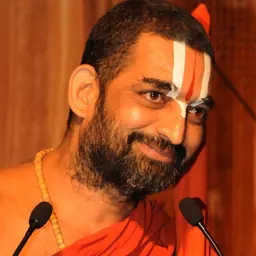
Born 1950. Rambhadracharya is an Indian guru, musician, poet, philosopher, composer and academic.
Jagadguru Ramanandacharya Swami Rambhadracharya (born Giridhar Mishra on 14 January 1950) and has held this title since 1988.
Rambhadracharya is the founder and head of Tulsi Peeth, a religious and social service institution in Chitrakoot named after Tulsidas.
Rambhadracharya can speak 22 languages and is a spontaneous poet and writer in Bhojpuri, Sanskrit, Hindi, and several other languages. He has authored more than 240 books and 50 papers, including four epic poems, Hindi commentaries on Tulsidas' Ramcharitmanas and Hanuman Chalisa, a Sanskrit commentary in verse on the Ashtadhyayi, and Sanskrit commentaries on the Prasthanatrayi scriptures. He is acknowledged for his knowledge in diverse fields including Sanskrit grammar, Nyaya and Vedanta. He is a Katha artist for the Ramayana and the Bhagavata. His Katha programmes are held regularly in different cities in India and other countries, and are telecast on television channels like Shubh TV, Sanskar TV and Sanatan TV. He was born on Makara Sankranti day, 14 January 1950. He was named Giridhar by his great-aunt, a paternal cousin of his paternal grandfather, Suryabali Mishra. The great-aunt was a devotee of Mirabai, a female saint of the Bhakti era in medieval India, who used the name Giridhar to address the god Krishna in her compositions.
Loss of eyesight Giridhar lost his eyesight at the age of two months. On 24 March 1950, his eyes were infected by trachoma. There were no advanced facilities for treatment in the village, so he was taken to an elderly woman in a nearby village who was known to cure trachoma boils to provide relief. The woman applied a paste of myrobalan to Giridhar's eyes to burst the lumps, but his eyes started bleeding, resulting in the loss of his eyesight.
यह चरित जे गावहिं हरिपद पावहिं ते न परहिं भवकूपा ॥ yaha carita je gāvahı̐ haripada pāvahı̐ te na parahı̐ bhavakūpā ॥
Even after he fell into the well, Giridhar was confident that Rama will somehow rescue him from this "kupa" (well). Thereafter, Giridhar's grandfather asked him to recite the verse always, and from then on, Giridhar has followed the practice of reciting it every time he takes water or food.
Formal education Schooling
Although Giridhar did not have any formal schooling until the age of seventeen years, he had learned many literary works as a child by listening to them. His family wished him to become a Kathavachak (Narrator of Hindu literature, Epics and stories) but Giridhar wanted to pursue his studies. His father explored possibilities for his education in Varanasi and thought of sending him to a special school for blind students. Giridhar's mother refused to send him there, saying that blind children were not treated well at the school. In his autobiography he recalls this day as the day when the "Golden Journey" of his life began. With an ability to memorise material by listening to it just once, Giridhar has not used Braille or other aids to study. degree in 1974, and then enrolled for the Acharya (Master of Arts) Devanagari किं दृष्टव्यं पतितजगति व्याप्तदोषेऽप्यसत्ये मायाचाराव्रततनुभृतां पापराजद्विचारे । दृष्टव्योऽसौ चिकुरनिकुरैः पूर्णवक्त्रारविन्दः पूर्णानन्दो धृतशिशुतनुः रामचन्द्रो मुकुन्दः ॥IAST kiṃ dṛṣṭavyaṃ patitajagati vyāptadoṣe'pyasatye māyācārāvratatanubhṛtāṃ pāparājadvicāre । dṛṣṭavyo'sau cikuranikuraiḥ pūrṇavaktrāravindaḥ pūrṇānando dhṛtaśiśutanuḥ rāmacandro mukundaḥ ॥
In 1976 Giridhar topped the final Acharya examinations in Vyakarana, winning seven gold medals and the Chancellor's gold medal. degree at the same institute, under Ramprasad Tripathi. The thesis was authored in only thirteen days in 1981. In this work, Rambhadracharya explained each aphorism of the grammar of Panini in Sanskrit verses. Giridhar took vairagi (renouncer) initiation or Virakta Diksha in the Ramananda Sampradaya on the Kartika full-moon day of 19 November 1983 from Shri Ramcharandas Maharaj Phalahari. He now came to be known as Rambhadradas. He continues to observe Payovratas, the latest (2010–2011) being his ninth. On 1 August 1995 he was ritually anointed as the Jagadguru Ramanandacharya in Ayodhya by the Digambar Akhara.
Deposition in the Ayodhya case In July 2003 Rambhadracharya deposed as an expert witness for religious matters (OPW 16) in Other Original Suit Number 5 of the Ram Janmabhoomi Babri Masjid dispute case in the Allahabad High Court. In his affidavit, he cited the ancient Hindu scriptures including the Ramayana, Rāmatāpanīya Upaniṣad, Skanda Purana, Yajurveda, Atharvaveda, and others describing Ayodhya as a city holy to Hindus and the birthplace of Rama. He cited verses from two works composed by Tulsidas which, in his opinion, are relevant to the dispute. The first citation consisted of eight verses from a work called Dohā Śataka, which describe the destruction of a temple and construction of a mosque at the disputed site in 1528 CE by Mughal ruler Babur, who had ordered General Mir Baqui to destroy the Rama temple, considered a symbol of worship by sanatana dharmi. The act appointed Swami Rambhadracharya as the lifelong chancellor of the university. The university offers graduate, post-graduate, and doctorate degrees in various subjects, including Sanskrit, Hindi, English, Sociology, Psychology, Music, Drawing and Painting, Fine Arts, Special Education, Education, History, Culture and Archeology, Computer and Information Sciences, Vocational Education, Law, Economics, and Prosthetics and Orthotics. Police superintendent Kamal Singh Rathore said that this letter had been sent from Haridwar, that Rambhadracharya's security arrangements had been increased and that an intensive investigation of the letter had been carried out.
Participation in 84-kosi yatra On 25 August 2013, Rambhadracharya arrived at the Chaudhary Charan Singh Airport in Lucknow along with VHP leader Ashok Singhal. He was going to Ayodhya to take part in the 84-kosi yatra, a 12-day religious yatra which was banned by the state government citing law and order reasons. It is alleged that the ban was due to opposition from Muslim organisations or vote-bank politics. Rambhadracharya's participation in the yatra was kept secret. Rambhadracharya was put under house arrest at the home of R C Mishra, his disciple and friend.
On 26 August 2013, a local lawyer Ranjana Agnihotri filed a habeas corpus petition in the Allahabad High Court's Lucknow bench, on which judges Imtiyaz Murtaza and D K Upadhayaya passed the release order for Rambhadracharya, along with Singhal and Praveen Togadia.
Two days after the incident, Rambhadracharya was given Y-category security cover by the Uttar Pradesh government since he had reported security threats. Rambhadracharya was disappointed that Yadav could not "come for even 15 minutes for disabled children," and said that he will have atone for this.
Poetry and plays (1) Kākā Vidura (काका विदुर) – Hindi minor poem. (1982) Mā̐ Śabarī (मा̐ शबरी) – Hindi minor poem. (1991) Rāghavagītaguñjana (राघवगीतगुञ्जन) – Hindi lyrical poem. (1993) Bhaktigītasudhā (भक्तिगीतसुधा) – Hindi lyrical poem. (1994) Arundhatī (अरुन्धती) – Hindi epic poem. (1996) Ājādacandraśekharacaritam (आजादचन्द्रशेखरचरितम्) – Sanskrit minor poem. (1996) Āryāśatakam (आर्याशतकम्) – Sanskrit hymn of praise. (2011) Avadha Kai Ajoriyā (अवध कै अजोरिया) – Awadhi lyrical poem. Rambhadracharya composed Śrīrāghavakṛpābhāṣyam on Narada Bhakti Sutra in 1991. Rambhadracharya's commentary in Sanskrit on the Prasthanatrayi was the first written in almost 500 years. (2001) Bhajana Yamunā (भजन यमुना) – Audio CD with seven bhajans in Hindi devoted to Krishna. Composed, set to music, and sung by Rambhadracharya. Released by Yuki Cassettes, Delhi. (2009) Śrī Hanumat Bhakti (श्री हनुमत् भक्ति) – Audio CD with six bhajans in Hindi devoted to Hanuman, and composed by Tulsidas. Set to music and sung by Rambhadracharya. Released by Kuber Music, New Delhi. (2009) Śrīsītārāmasuprabhātam (श्रीसीतारामसुप्रभातम्) – Audio CD of Śrīsītārāmasuprabhātam, a Sanskrit Suprabhata poem. Composed, set to music, and sung in the Vairagi Raga by Rambhadracharya. Released by Yuki Cassettes, Delhi. (2009) Sundara Kāṇḍa (सुन्दर काण्ड) – DVD with a musical rendition of and commentary on the Sundar Kand of Ramcharitmanas. Spoken, set to music, and sung by Rambhadracharya. Released by Yuki Cassettes, Delhi.
Literary style
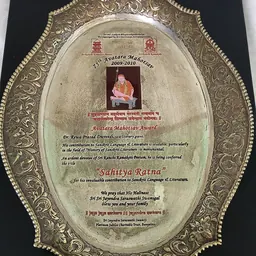
Rewa Prasad Dwivedi writes in his Sanskrit poem dedicated to Rambhadracharya that he is an encyclopaedia of learning whose literature is like numerous Narmadā rivers flowing out simultaneously, and in whose literary works Shiva and Parvati delight while performing Tandava and Lasya.
Devarshi Kala Nath Shastry writes in his review of Rambhadracharya's works that Rambhadracharya is an accomplished and eloquent poet who is the foremost among scholars and is also well-versed in all scriptures, and who even talks in extemporaneously composed poetry with Sanskrit scholars, usually in Upajāti metre. Rambhadracharya uses with great effect the Daṇḍaka style with Sanskrit adjectives in his speeches. Shastry recounts a use of a long sentence in the Daṇḍaka style at a speech in Jaipur in July 2003 by Rambhadracharya, in which one sentence with multiple adjectives lasted around seven minutes and was "replete with poetic beauty". Shastry writes that among Sanskrit poets, only Śrīharṣa (poet of Naiṣadhīyacaritam) has been described as having such wonderful command over Sanskrit as Rambhadracharya has.
Shastry critiqued the work Śrībhārgavarāghavīyam in the January 2003 issue of the Sanskrit monthly Bhāratī. Shastry writes that the work has poetic excellence, variety of meters and dexterity of language which has not been seen hitherto in Sanskrit epics. Shastry finds the twentieth canto of the epic to be an excellent illustration of Sanskrit poetry in Prakrit verses, a style which was pioneered by Shastry's father.
Shastry also critiqued the work Bhṛṅgadūtam, about which he says that it has many new usages (Prayogas) not seen earlier in Sanskrit poetry. As per Shastry, new dimensions in Sanskrit literature are seen in the play Śrīrāghavābhyudayam where there are songs in the Gīti style, and Gītarāmāyaṇam which is an epic poem in the Gīti style of Gītagovindam by Jayadeva.
Overview Rewa Prasad Dwivedi writes in his Sanskrit poem dedicated to Rambhadracharya that he is an encyclopedia of learning whose literature is like numerous Narmada rivers flowing out simultaneously, and in whose literary works Shiva and Parvati delight while performing Tandava and Lasya.
Devarshi Kala Nath Shastry writes in his review of Rambhadracharya's works that Rambhadracharya is an accomplished and eloquent poet who is the foremost among scholars and is also well-versed in all scriptures. Shastry writes that among Sanskrit poets, only Śrīharṣa (poet of Naiṣadhīyacaritam) has been described as having such wonderful command over Sanskrit as Rambhadracharya has. Like the 10th canto of Śrīmad Bhāgavatam and Bālakāṇḍa of the Rāmacaritamānasa, twelve verses in the seventeenth canto (17.42–17.53) of Śrībhārgavarāghavīyam have all the twelve Rasas used in the same context. While the pure Śṛngāra Rasa is the dominant Rasa in Bhṛṅgadūtam, Śrīsītārāmakelikaumudī is a work primarily of Vātsalya Rasa mixed with Śṛngāra Rasa. Rāghavagītaguñjana and Bhaktigītasudhā are works full of the Bhakti Rasa. An example is the following verse (20.13) in the Ghanākṣarī metre, which consists of 32 syllables in every foot. Dr. Brajesh Dikshit, Sanskrit scholar from Jabalpur, says that Śrībhārgavarāghavīyam combines the styles of three previous Sanskrit epics - it has two leading characters like in Bhāravi's Kirātārjunīyam, the poetic excellence and variety of prosodic metres is like in Śrīharṣa's Naiṣadhīyacaritam, while the length and extent of the work is like the Śiśupālavadham of Māgha.
Śrīrāghavakṛpābhāṣyam Dr. Shivram Sharma, Sanskrit scholar from Varanasi, writes in his review of Śrīrāghavakṛpābhāṣyam on the eleven Upanishads that it is replete with novel thoughts and Sanskrit derivations, and that Rambhadracharya has shown Rama as the Pratipādya of the all Upanishads by the wonderful dexterity of Vyutpattis of Sanskrit words. Sharma adds that the style of interspersed Sanskrit translations of the works of Tulsidas further enhances the literary merit of the work. Dr. Vishnu Dutt Rakesh, Hindi professor and author from Haridwar, says that the Śrīrāghavakṛpābhāṣyam on Bhagavad Gita has the broadest coverage of all Sanskrit commentaries on Gita with "convincing discussion, propounding of theories with evidence, contradiction of others, creative genius and an independent style of composition". Dikshit says that the Śrīrāghavakṛpābhāṣyam on the Prasthānatrayī is formidable and adorns the Ramananda tradition with greatness. He adds that the Śrīrāghavakṛpābhāṣyam on Narada Bhakti Sutra and Śrīrāmastavarājastotram are successful in establishing the five Prasthānas in place of the three Prasthānas of Prasthānatrayī. Kalanath Shastry also critiqued the work Bhṛṅgadūtam, about which he says that it has many new usages (Prayogas) not seen earlier in Sanskrit poetry. As per Shastry, new dimensions in Sanskrit literature are seen in the play Śrīrāghavābhyudayam where there are songs in the Gīti style, and Gītarāmāyaṇam which is an epic poem in the Gīti style of Gītagovindam by Jayadeva.
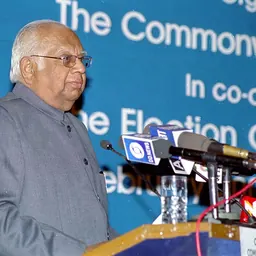
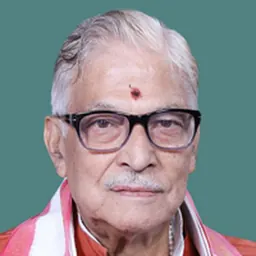
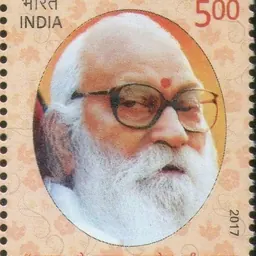
Dikshit says that the nationalistic play Śrīrāghavābhyudayam establishes Rambhadracharya as a successful playwright at a young age. Dikshit praises the aesthetics of the work Śrīsītārāmakelikaumudī saying that it represents all the six Sampradāyas of Indian literature (Rīti, Rasa, Alaṅkāra, Dhvani, Vakrokti and Aucitya), and that it is a unique work of Rambhadracharya when it comes to figures of speech. Dikshit says that this work places Rambhadracharya in the league of Ritikavya poets like Raskhan, Keshavdas, Ghananand and Padmakar; but observes the distinction that while the works of all these poets are primarily in the Śṛngāra Rasa, Śrīsītārāmakelikaumudī is a work which has Vātsalya Rasa as the primary emotion, which is augmented by Śṛngāra Rasa. Dr. Murli Manohar Joshi said of Rambhadracharya that the "intense knowledge of the most revered is indeed adorable". Nanaji Deshmukh called Rambhadracharya "an astonishing gem of the country". Swami Kalyandev considered Rambhadracharya to be "an unprecedented intellectual and speaker, and an Acharya with great devotion". Somnath Chatterjee called him a "celebrated Sanskrit scholar and educationist of great merit and achievement". Ram Prakash Gupta and Keshari Nath Tripathi have stated that Rambhadracharya has enriched society with his contributions and will continue to do so. Rambhadracharya was a member of a delegation of saints and Dharmacharyas which met the then president A.P.J. Abdul Kalam and the then union Home Minister Shivraj Patil in July 2005 to hand over a memorandum urging to strengthen the security arrangements for important religious places in the country. Abhiraj Rajendra Mishra said that Rambhadracharya is of a high-mind, has a stupendous grip on the Indian literature, and "his soul feels the true pleasure in serving oppressed disabled people". Mata Prasad Pandey, the Speaker of Uttar Pradesh Legislative Assembly, said that Rambhadracharya has opened a door of development for those with disabilities in India, and that he has achieved what eminent industrialists and the government cannot do. Energy Minister of State (Independent Charge) of Uttar Pradesh Vijay Mishra termed Rambhadracharya as "most revered", whereas Uttar Pradesh's Secondary Education Minister of State Vijay Bahadur Pal called him the "chancellor of the utterly unique handicapped university." Rambhadracharya is also a member of the 51-members Akhil Bharatiya Sant Ucchadhikar Samiti (Empowered Committee of the All India Saints). In November 2014, Rambhadracharya was one of the nine people nominated by the Indian Prime Minister Narendra Modi for the Clean India Campaign. In September 2014, Rambhadracharya adopted five villages of Chitrakoot, with an aim to construct toilets in all the households. Rambhadracharya was one of the guests in the inaugural International Yoga Day event in New Delhi.
International recognition In 1992 Rambhadracharya led the Indian delegation at the Ninth World Conference on Ramayana, held in Indonesia. He has travelled to several countries, including England, Mauritius, Singapore, and the United States to deliver discourses on Hindu religion and peace. He was also one of the key figures of the Dharma Prachar Yatra at Detroit.
Address at Millennium World Peace Summit
Rambhadracharya was one of the spiritual and religious Gurus from India at the Millennium World Peace Summit, organised by the United Nations in New York City from 28 to 31 August 2000. While addressing the gathering, he gave Sanskrit definitions for the words Bharata (the ancient name of India) and Hindu, and touched upon the Nirguna and Saguna aspects of God. In his speech on Peace, he called for developed and developing nations to come together to strive for the eradication of poverty, the fight against terrorism, and nuclear disarmament. At the end of his speech, he recited the Shanti Mantra. Rambhadracharya has been honoured by several leaders and politicians, including A. P. J. Abdul Kalam, Somnath Chatterjee, Shilendra Kumar Singh, and Indira Gandhi. On 17 February 2024 Rambhadracharya was named a recipient (along with Gulzar) of the 58th Jnanpith Award (for 2023).
Don’t just read it —
keep it.
Full-length biographies made to live with: read them, listen on the way to work, watch them tonight.
- E-book
- Audio
- Video
Instant download · yours to keep · every purchase keeps this site free
Important facts
People in Rambhadracharya's life
Named in this biography and alive at the same time


Related people
Same field, nearest in time


Contemporaries
People whose lives overlapped Rambhadracharya's




Frequently asked questions
Who is Rambhadracharya?
Hindu religious leader
When was Rambhadracharya born?
Rambhadracharya was born on 14 January 1950 in Jaunpur district.
What is Rambhadracharya's occupation?
Rambhadracharya is a guru, musician, poet, philosopher, composer and academic.
What nationality is Rambhadracharya?
Rambhadracharya is Indian.
Sources & further reading
Cite this page
APA: Biography.guide. (2026). Rambhadracharya. https://biography.guide/rambhadracharya/
MLA: "Rambhadracharya." Biography.guide, https://biography.guide/rambhadracharya/.
Chicago: "Rambhadracharya." Biography.guide. https://biography.guide/rambhadracharya/.
Data last updated: 2026-09-20 · Spot an error? Report a correction.
Page generated 2026-09-27 05:21 UTC