
Ramasesha Sastri
Sanskrit Scholar, Grammarian, Impromptu Poet, Translator, Teacher and Priest
About Ramasesha Sastri
Lived 1867 – 1934 (aged 66–67). Ramasesha Sastri was an Indian writer.
Ramasesha Sastri (24 September 1867 – 19 February 1934)(known by his title, Asthan Mahavidwan Motaganahalli Ramasesha Sastri) was an Indian playwright, translator, impromptu Sanskrit & Kannada poet and grammarian who authored such works as ‘Sri Bhagavata’, 'Baalikageethavali', ‘Prabhoda Chandrodaya’ and ‘Vamana Vijaya’. His Kannada translations of 'Hitopadesham’, ‘Mudrarakshasa’ (Karnataka Mudrarakshasa Natakam) and 'Bhagavata Mahapurana' remain popular among Kannada and Sanskrit scholars today. Ramasesha Sastri was the chief priest at the Mysore Palace, where he conducted prince Jayachamarajendra Wadiyar's Upanayana (sacred thread investiture) and Aksharabhyasa ceremonies. He was known to compose Sanskrit compositions extempore. Ramasesha Sastri and his brothers Shankara Sastri & Mahadeva Sastri Ramasesha Sastri is a maternal relative of Indian historian, epigraphist and Indologist S. Srikanta Sastri.
Ancestry Ramasesha Sastri belongs to the Mulukanadu sect of Telugu speaking Brahmins. Ramasesha Sastri was born on September 24, 1867, in Motaganahalli village, Magadi Taluk (rural Bangalore), to parents Samba Sastri and Bhagyamma. Ramasesha Sastri's brothers Shankara Sastri and Mahadeva Sastri were in turn related to the Indian historian and polyglot S. Srikanta Sastri through maternal descent. Ramasesha Sastri is a descendant of the famous Sanskrit and Kannada poet of yore Abhinava Kalidasa, the renowned author of 'Bhagavata Champu'. Ramasesha Sastri, was the chief priest involved in conducting the Aksharabhyasa (Hindu initiation ceremony before receiving formal education) and Upanayana ceremonies (sacred thread investiture) of Prince Jayachamarajendra Wadiyar, at the Mysore Palace.
Among his earliest works, was a collection of Sanskrit and Kannada songs usually sung by young girls while playing, titled 'Bālikāgītāvaḷi'. Similarly, Ramasesha Sastri translated Vishakadutta's 'Mudrarakshasa' from Sanskrit into Kannada. Mahimna stōtraṃ (1911) Dharma Gītāvaḷi (1894) Gitika Tarangini (1889) Vicharasagara (1930) Mukundananda Bhana
Recognition Ramasesha Sastri was conferred with the title of ' Asthan Vidwan ' in June 1918, by the Mysore Palace. In 1920, Nalwadi Krishna Raja Wadiyar honoured Ramasesha Sastri with the ' Maha Vidwan ' title, during the annual Navaratri celebrations. The senior pontiff at the Siddaganga Math, Tumkur invited Ramasesha Sastri to be the Chief Editor of their monthly periodical 'Shri Sharada' in 1915. Ramasesha Sastri was declared the best 'Ashukavi' in an impromptu Sanskrit poetry composition event, held at the Mysore Palace in 1924. Ramasesha Sastri was invited to the 39th session of the Indian National Congress (INC) held at Belgaum, in December 1924 - the only session to be officially chaired by Mahatma Gandhi himself. He received due honours from then Maharaja of Mysore, the Queen Regent Kempananjammanni Devi, Sri Nrusimha Bharathi Mahaswamiji, Sri Chandrashekhara Bharathi Mahaswamiji, Sri Shivaganga Swamiji, Sri Kanchi Kamakoti Swamiji and the Kudli Math Swamiji. Mahadeva Sastri and Ramasesha Sastri The Quarterly Journal of the Mythic Society, Volume 95 by Mythic Society (Bangalore, India) · 2004 Parishat Patrike - Obituary of Ramasesha Sastri by S. Srikanta Sastri (in Kannada) - July 1934 Issue. 'Deevatigegalu ' by S. R. Ramaswamy 'Mulakas - Origins of the Mulakanadu Sect ' by S. Srikanta Sastri - Published in the Quarterly Journal of the Mythic Society (QJMS) - Vol XXI - No. 1 'A Tapestry of Pen Portraits ' by S. R. Ramaswamy 'Dīptimantaru : vyakticitragaḷu = Deeptimantaru ' by S. R. Ramaswamy 'Saṃśōdhana lēkhanagaḷu ' by S. Srikanta Sastri 'Sāhitya śilpigaḷu ' by T. V. Venkatachala Sastry
Don’t just read it —
keep it.
Full-length biographies made to live with: read them, listen on the way to work, watch them tonight.
- E-book
- Audio
- Video
Instant download · yours to keep · every purchase keeps this site free
Important facts
People in Ramasesha Sastri's life
Named in this biography and alive at the same time
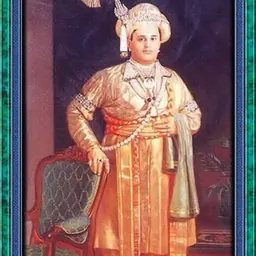
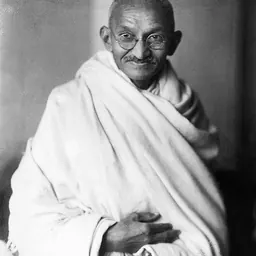
Related people
Same field, nearest in time


Contemporaries
People whose lives overlapped Ramasesha Sastri's



Frequently asked questions
Who was Ramasesha Sastri?
Sanskrit Scholar, Grammarian, Impromptu Poet, Translator, Teacher and Priest
When was Ramasesha Sastri born?
Ramasesha Sastri was born in 1867 in Magadi.
When did Ramasesha Sastri die?
Ramasesha Sastri died in 1934.
What was Ramasesha Sastri's occupation?
Ramasesha Sastri was a writer.
What nationality was Ramasesha Sastri?
Ramasesha Sastri was Indian.
Sources & further reading
Cite this page
APA: Biography.guide. (2026). Ramasesha Sastri. https://biography.guide/ramasesha-sastri/
MLA: "Ramasesha Sastri." Biography.guide, https://biography.guide/ramasesha-sastri/.
Chicago: "Ramasesha Sastri." Biography.guide. https://biography.guide/ramasesha-sastri/.
Data last updated: 2026-09-20 · Spot an error? Report a correction.
Page generated 2026-09-27 05:28 UTC