
About Ralph Lane
Lived 1530 – 1603 (aged 72–73). Ralph Lane was a British explorer, politician and exploration.
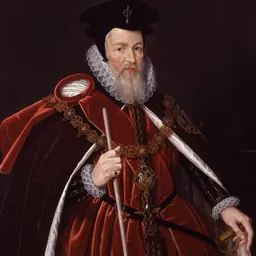
Sir Ralph Lane (c. 1532 – October 1603) was an English explorer of the Elizabethan era. He helped colonise the Kingdom of Ireland in 1583 and was sheriff of County Kerry, Ireland, from 1583 to 1585. He was part of the unsuccessful attempt in 1585 to colonise Roanoke Island, North Carolina. He was knighted by the Queen in 1593.
Early life and education According to the Oxford Dictionary of National Biography, his parents were Sir Ralph Lane of Orlingbury, Hogshaw and Horton, and Maud Lane, a cousin of Catherine Parr, the last Queen Consort of Henry VIII.
He was the brother of Robert Lane.
Career Lane was made Member of Parliament for Higham Ferrers in 1556. The choice was surprising, though it may be explained by the connections Lane had in the area, including with the Sheriff of Northamptonshire as well as his London residence, intended to be less costly than if he had served from Higham Ferrers itself.
Lane began serving the Crown in 1563 as an equerry under Queen Elizabeth I. His duties as an officer of the Royal Household included law enforcement and collection of customs duties. He served against the northern rebels in 1569, was commissioner of piracy in 1571 and a captain in the Netherlands in 1572–3. He was elected Member of Parliament for Higham Ferrers in 1558 and for Northampton in 1563.
Roanoke colony
Lane is best remembered for his attempt to establish a settlement on Roanoke Island at the request of Sir Walter Raleigh. Queen Elizabeth was looking for places to colonise and the Americas appeared ripe for English expansion. The voyage began on 9 April 1585, when Lane set sail from Plymouth with Raleigh's cousin, Sir Richard Grenville, a sailor who upon return to England wrote a book about his findings in the Chesapeake. The fleet comprised the Tiger (Grenville's), the Roebuck, the Red Lion, the Elizabeth, and the Dorothy. The voyage on the Tiger proved difficult, as Lane quarrelled with the aggressive leadership of Grenville, whom he found a person of "intolerable pride and insatiable ambition". Unfortunately, during a severe storm off the coast of Portugal, the Tiger was separated from the rest of the fleet. The Tiger arrived on 11 May to Baye's Muskito (Guayanilla, Puerto Rico). While waiting for the other ships, Grenville established relations with the Spanish (whilst at the same time participating in privateering against their ships)
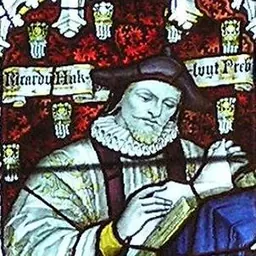
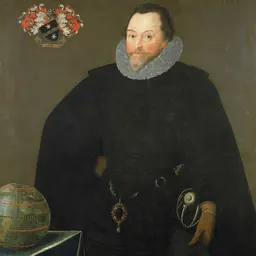
Finally, Grenville grew tired of waiting for the remaining ships and departed on 7 June. The fort was abandoned and its location is now unknown. When the Tiger sailed through the Ocracoke Inlet on 26 June, she ran aground on a sand bank, ruining most of the food supply. Almost immediately, Grenville and his crew set sail for England, promising to return in April 1586 with more men and fresh supplies. Contact was quickly made with the local Native Americans. The English treated them with suspicious harshness; on several occasions the colonists kidnapped Indians to extort supplies or extract information. Lane's military background led him to rely more upon arms than diplomacy, and that approach soured his dealings with the natives from the start. Also in June, Sir Francis Drake arrived at Roanoke and offered Lane and his men a return voyage to England, which Lane readily accepted because of a weakened food supply and increased tensions with local tribes. Drake's fleet reached Portsmouth on 28 July, at which the settlers of Roanoke introduced snuff, corn, to England. The Account of Ralph Lane first appeared in Richard Hakluyt's Principall Navigations, Voyages, Traffiques and Discoveries of the English Nation in 1589.
The Grenville relief fleet arrived shortly after Drake's departure with the settlers. Finding the colony abandoned, Grenville returned to England with the bulk of his force, leaving behind a small detachment to maintain a British presence and protect Raleigh's claim to Virginia.
Lane later participated in other expeditions. In January 1592 he was appointed muster-master general of Ireland and was knighted the following year by Sir William FitzWilliam, the Lord Deputy of Ireland.
Death In 1594, Lane was severely wounded during the Nine Years' War in Ireland. He never fully recovered and died in 1603 at Dublin, where he was buried in St. Patrick's Cathedral.
Don’t just read it —
keep it.
Full-length biographies made to live with: read them, listen on the way to work, watch them tonight.
- E-book
- Audio
- Video
Instant download · yours to keep · every purchase keeps this site free
Important facts
People in Ralph Lane's life
Named in this biography and alive at the same time




Related people
Same field, nearest in time


Contemporaries
People whose lives overlapped Ralph Lane's





Frequently asked questions
Who was Ralph Lane?
English politician (1530-1603)
When was Ralph Lane born?
Ralph Lane was born in 1530 in Lympstone.
When did Ralph Lane die?
Ralph Lane died in 1603.
What was Ralph Lane's occupation?
Ralph Lane was an explorer, politician and exploration.
What nationality was Ralph Lane?
Ralph Lane was British.
Sources & further reading
Cite this page
APA: Biography.guide. (2026). Ralph Lane. https://biography.guide/ralph-lane/
MLA: "Ralph Lane." Biography.guide, https://biography.guide/ralph-lane/.
Chicago: "Ralph Lane." Biography.guide. https://biography.guide/ralph-lane/.
Data last updated: 2026-09-20 · Spot an error? Report a correction.
Page generated 2026-09-27 05:17 UTC