
About Ralph Curtis
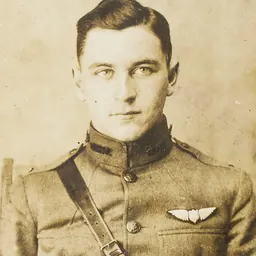
Lived 1898 – 1917 (aged 19). Ralph Curtis was a British flying ace.
Second Lieutenant Ralph Luxmore Curtis (19 March 1898 – 21 September 1917) was a World War I British flying ace credited with fifteen aerial victories. He died from wounds sustained when he engaged in aerial combat with Hermann Göring, commander of Jasta 27. The aviator was interred twice in Belgian cemeteries, and was also commemorated on the Rainham War Memorial.
Background Ralph Luxmore Curtis, son of William Curtis and his wife Amy Augusta (May) Curtis, was born on 19 March 1898 in Rainham, Essex, England. His father was a farmer, and the family lived at Berwick Pond/Berwick Manor in Rainham. Curtis attended Chigwell School in Essex.
Military career Ralph Curtis received his aviator's certificate on 17 February 1917 at the London and Provincial School in Hendon, Greater London, England. However, he did so by falsifying his date of birth, claiming to have been born on 19 March 1896 and, therefore, two years older than his actual age of eighteen.
Ralph Luxmore Curtis is credited with fifteen aerial victories. All of them occurred while he piloted a Bristol F.2b (also known as a Bristol Fighter). In addition, most of them (thirteen) were in conjunction with one observer, Second Lieutenant Desmond Percival Fitzgerald Uniacke.
On 5 September 1917, it appears that Curtis had two victories, with two different observers. One was with his usual teammate Uniacke, from Bristol F.2b (A7170). They sent a DFW C out of control over Middelkerke, West Flanders.
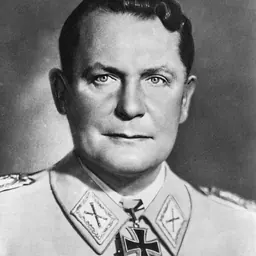
Death Hermann Göring shot down aces Ralph Curtis and Desmond Uniacke.
On 21 September 1917, pilot Second Lieutenant Ralph Curtis and his observer Second Lieutenant Desmond Uniacke engaged in aerial combat with pilot Hermann Göring, commander of Jasta 27, over Sleyhage, near Roeselare, West Flanders, also known as Roulers. Curtis was piloting Bristol F.2b (A7224). At 09:05, their Bristol Fighter was shot down by Göring. Uniacke was captured and became a prisoner of war, and Curtis died that day in a German dressing station from the wounds that he had sustained in the combat. In 1924, his remains were transferred to Harlebeke New British Cemetery in Harelbeke, West Flanders, Belgium. He is also represented on the Rainham War Memorial, a clock tower monument in the center of the town of Rainham, which commemorates the fallen of World War I.
Gallery of planes
Don’t just read it —
keep it.
Full-length biographies made to live with: read them, listen on the way to work, watch them tonight.
- E-book
- Audio
- Video
Instant download · yours to keep · every purchase keeps this site free
Important facts
People in Ralph Curtis's life
Named in this biography and alive at the same time


Related people
Same field, nearest in time



Frequently asked questions
Who was Ralph Curtis?
English aviator (1898-1917)
When was Ralph Curtis born?
Ralph Curtis was born on 19 March 1898 in Rainham.
When did Ralph Curtis die?
Ralph Curtis died on 21 September 1917 in West Flanders.
What was Ralph Curtis's occupation?
Ralph Curtis was a flying ace.
What nationality was Ralph Curtis?
Ralph Curtis was British.
Sources & further reading
Cite this page
APA: Biography.guide. (2026). Ralph Curtis. https://biography.guide/ralph-curtis/
MLA: "Ralph Curtis." Biography.guide, https://biography.guide/ralph-curtis/.
Chicago: "Ralph Curtis." Biography.guide. https://biography.guide/ralph-curtis/.
Data last updated: 2026-09-20 · Spot an error? Report a correction.
Page generated 2026-09-27 05:30 UTC