
About Rajanikanta Sen
Lived 1865 – 1910 (aged 45). Rajanikanta Sen was an Indian singer, composer, lyricist, songwriter, lawyer and poet.
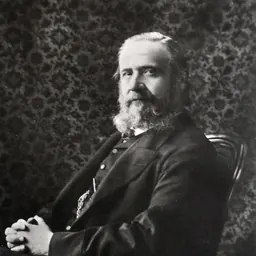
Rajanikanta Sen, also known as Kantakobi, (26 July 1865 – 13 September 1910) was a Bengali poet and composer, known for his devotional (bhakti) compositions, as well as his patriotic songs.
Early life, education and profession
Rajanikanta was born in a Vaidya family in the Bhanga Bari village, Belkuchi, Sirajganj, Bangladesh (then greater Pabna District, Bengal Province, British India). He was the third child of Guruprasad Sen and Manomohini Debi. Rajanikanta's sister Ambuja Sundari Dasgupta was a renowned poet too.
Rajanikanta started his schooling at Boalia Zilla School (now Rajshahi Collegiate School). He learned Sanskrit from Rajnath Tarkaratna, a neighbour in his village Bhangakuthi during school vacations. He got Gopal Chandra Lahiri as his academic mentor. In 1882 he passed Entrance Examination from Coochbihar Jenkins School. Other claims such as he was from Koochbihar are of no substance. Then he came to Calcutta and passed FA in 1885 with second division. He completed BA degree in 1889 and BL degree in 1891 from Kolkata City College.
One such song is stated below, which Rajanikanta composed within a very short period of one hour for such an assembly in Rajshahi library: তব, চরণ নিম্নে, উৎসবময়ী শ্যাম-ধরনী সরসা; উর্দ্ধে চাহ অগণিত-মনি-রঞ্জিত নভো-নীলাঞ্চলা সৌম্য-মধুর-দিব্যাঙ্গনা শান্ত-কুশল-দরশা ৷Beneath your feet lies the prosperous and bountiful earth Behold the blue sky engraved with countless gems above She is like a sweet and graceful angel
Personal life
After the voluntary retirement of his father the family of Rajanikanta became financially dependent on Guruprasad's elder brother's sons Barada Gobinda and Kali Kumar. Both of them died suddenly in quick succession in 1878. Rajani's younger brother Janakikanta had also just died of hydrophobia. Suddenly the prosperous family plunged into a financial crisis. Rajanikanta had to study and practice law to support the family. However, he expressed his dislikes towards the profession in a letter written to Sri Sarat Kumar Ray. He married Hiranmayee Devi in 1883, who used to discuss with and encouraged Rajanikanta regarding his poetry and sometimes suggested themes for the poems. They had four sons – Shachindra, Gnanendra, Bhupendra, Kshitindra; and two daughters - Shatadalbasini and Shantibala. Bhupendra died at a young age. Rajani's firm belief in God is reflected in the following song composed on the next day: তোমারি দেওয়া প্রাণে তোমারি দেওয়া দুখ, তোমারি দেওয়া বুকে, তোমারি অনুভব ৷ তোমারি দুনয়নে তোমারি শোক-বারি, তোমারি ব্যাকুলতা তোমারি হা হা রব ৷You (God) gifted life but filled it with sorrow You filled our hearts with faith in you You gave us eyes and filled them with tears You make me perplexed so I cry helplessly
Contribution to Bengali music and literature Rajanikanta's songs may be classified into four categories: Devotional (ভক্তি মূলক), Patriotic (দেশাত্মবোধক), Humanitarian (মানবধর্মী) and Satire (হাস্যরসাত্মক). published in 1905, mentioned about Rajanikanta Sen:
After his demise five compilations of his creations were published, they were Avoya (অভয়া) (1910), Anandamayi (আনন্দময়ী) (1910), Bishram (বিশ্রাম) (1910), Sadbhabkusum (সদ্ভাবকুসুম) (1913) and Shesdan ( শেষদান) (1916). Vani and Kalyani are collections of his songs. Rajanikanta was very close to Jaladhar Sen. One of such many incidences was cited by Jaladhar Sen himself:
Last days
In 1909, Rajanikanta started suffering from throat problems. On 10 September, he was forced to move to Calcutta along with some family members. A British doctor examined him and diagnosed it as Larynx cancer. He consulted various doctors in Calcutta but his condition did not improve. As a last resort, he spent a couple of months in Varanasi with the hope of divine intervention. He had to sell off copyrights of his published books Vani and Kalyani to arrange for the trip. He had to return to Calcutta as his condition had worsened much. He underwent Tracheotomy operation by Captain Denham White on 10 February 1910 in Calcutta Medical College. He survived the operation but lost his voice forever. He spent the remaining days of his life in the cottage ward of the hospital (Cottage no. 12). It is noteworthy to mention that Hemendranath Bakshi and Bijitendra Nath Basu, students of 4th year, took personal initiative to attend and impart all medical assistance to the poet till his last breath. Rajanikanta Sen (1902). Bani (বাণী) Pandit, Nalini Ranjan (1921). Kanta Kabi Rajanikanta,Bengal Book Company, Calcutta
Don’t just read it —
keep it.
Full-length biographies made to live with: read them, listen on the way to work, watch them tonight.
- E-book
- Audio
- Video
Instant download · yours to keep · every purchase keeps this site free
Important facts
People in Rajanikanta Sen's life
Named in this biography and alive at the same time
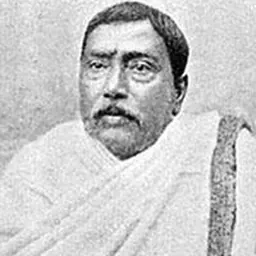

Related people
Same field, nearest in time




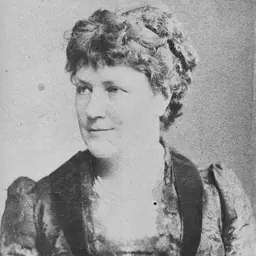
Contemporaries
People whose lives overlapped Rajanikanta Sen's
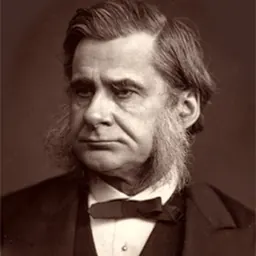

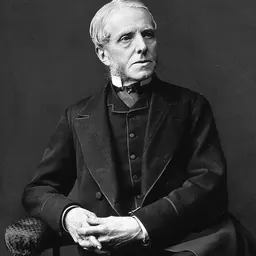


Frequently asked questions
Who was Rajanikanta Sen?
Bengali poet and composer (1865-1910)
When was Rajanikanta Sen born?
Rajanikanta Sen was born on 26 July 1865 in Bhangabari, British India, Sirajganj District.
When did Rajanikanta Sen die?
Rajanikanta Sen died on 13 September 1910 in Kolkata.
What was Rajanikanta Sen's occupation?
Rajanikanta Sen was a singer, composer, lyricist, songwriter, lawyer and poet.
What nationality was Rajanikanta Sen?
Rajanikanta Sen was Indian.
Sources & further reading
Cite this page
APA: Biography.guide. (2026). Rajanikanta Sen. https://biography.guide/rajanikanta-sen/
MLA: "Rajanikanta Sen." Biography.guide, https://biography.guide/rajanikanta-sen/.
Chicago: "Rajanikanta Sen." Biography.guide. https://biography.guide/rajanikanta-sen/.
Data last updated: 2026-09-24 · Spot an error? Report a correction.
Page generated 2026-09-27 05:03 UTC