
Raj Reddy
Indian-American computer scientist
About Raj Reddy
Born 1937. Raj Reddy is an Indian and American computer scientist, university teacher and artificial intelligence researcher.
Career
Reddy is the University Professor of Computer Science and Robotics and Moza Bint Nasser Chair at the School of Computer Science at Carnegie Mellon University. From 1960, he worked for IBM in Australia. He was an Assistant Professor of Computer Science at Stanford University from 1966 to 1969. He joined the Carnegie Mellon faculty as an associate professor of Computer Science in 1969. He became a full professor in 1973 and a university professor, in 1984.
Reddy was the founding director of the Robotics Institute from 1979 to 1991 and the Dean of School of Computer Science from 1991 to 1999. As a dean of SCS, he helped create the Language Technologies Institute, Human Computer Interaction Institute, Center for Automated Learning and Discovery (since renamed as the Machine Learning Department), and the Institute for Software Research. He is the chairman of Governing Council of IIIT Hyderabad. He was the founding Chancellor (2008-2019) of Rajiv Gandhi University of Knowledge Technologies (RGUKT).
Reddy was a co-chair of the President's Information Technology Advisory Committee (PITAC) from 1999 to 2001. He was one of the founders of the American Association for Artificial Intelligence and was its president from 1987 to 1989. He served on the International board of governors of Peres Center for Peace in Israel. He served as a member of the governing councils of EMRI and HMRI which use technology-enabled solutions to provide cost-effective health care coverage to rural population in India.
AI research Reddy's early research was conducted at the AI labs at Stanford, first as a graduate student and later as an assistant professor, and at CMU since 1969. His AI research concentrated on perceptual and motor aspect of intelligence such as speech, language, vision and robotics. Over a span of five decades, Reddy and his colleagues created several demonstrations of spoken language systems, e.g., voice control of a robot, large vocabulary connected speech recognition, speaker independent speech recognition, and unrestricted vocabulary dictation. Reddy and his colleagues have made seminal contributions to Task Oriented Computer Architectures, Analysis of Natural Scenes, Universal Access to Information, and Autonomous Robotic Systems. Hearsay I was one of the first systems capable of continuous speech recognition. Subsequent systems like Hearsay II, Dragon, Harpy, and Sphinx I/II developed many of the ideas underlying modern commercial speech recognition technology as summarized in his recent historical review of speech recognition with Xuedong Huang and James K. Baker. Some of these ideas—most notably the "blackboard model" for coordinating multiple knowledge sources—have been adopted across the spectrum of applied artificial intelligence.
Universal Digital Library Project was started by Raj Reddy, Robert Thibadeau, Jaime Carbonell, Michael Shamos, and Gloriana S. Clair in the 1990s, to scan books and other media such as music, videos, paintings, and newspapers and to provide online access to all creative works to anyone, anywhere at any time. A larger Million Book Project was started in 2001 as a collaborative effort with China (Professors Pan Yunhe, Yuting Zhuang, Gao Wen) and India (Prof N. Balakrishnan).
Marks of a student are a result of several factors such as the quality of the teachers, the education level of the parents, the ability to pay for coaching classes and the time spent on the task of learning the subject. Rural students tend to be at a serious disadvantage along each of these dimensions. Rajiv Gandhi University of Knowledge Technologies (RGUKT) was created for educating gifted rural youth in Andhra Pradesh in 2008, by Drs. Y. S. Rajasekhara Reddy, K. C. Reddy, and Raj Reddy, based on the premise that the current nationwide merit-based admissions, such as SAT tests, are flawed and do not provide a level playing field for gifted youth from rural areas.
Reddy proposed that a fully connected population makes it possible to think of a KG-to-PG-Online-College in every village providing personalized instruction. Assuming that all students are provided digital literacy and learning-to-learn training as part of primary education before they dropout, anyone can learn any subject at any age even if there are no qualified teachers on the subject.
AI can be used to empower the people at the bottom-of-the-pyramid, who have not benefited from the IT revolution so far. Reddy proposed that recent technological advances in AI will ultimately enable anyone to watch any movie, read any textbook, and talk to anyone independent of the language of the producer or consumer. He also proposed that the use of Smart Sensor Watches can be used to eliminate COVID lockdowns by monitoring the sensor data to identify and isolate people with symptoms.
Awards and honors He is a fellow of the AAAI, ACM, Acoustical Society of America, IEEE and Computer History Museum. Reddy is a member Jawaharlal Nehru Technological University, University of Massachusetts, University of Warwick, Anna University, IIIT (Prayagraj), Andhra University, IIT Kharagpur, Hong Kong University of Science and Technology, Rajiv Gandhi University of Knowledge Technologies, and Carnegie Mellon University.
In 1994 he and Edward Feigenbaum received the Turing Award, "for pioneering the design and construction of large scale artificial intelligence systems, demonstrating the practical importance and potential commercial impact of artificial intelligence technology." In 1984, Reddy was awarded the French Legion of Honour by French President François Mitterrand. the Okawa Prize in 2004, the Honda Prize in 2005, and the Vannevar Bush Award in 2006.
Contributions Machine Intelligence and Robotics: Report of the NASA Study Group – Executive Summary, Final Report Carl Sagan (chair), Raj Reddy (vice chair) and others, NASA JPL, September 1979. Foundations and Grand Challenges of Artificial Intelligence, AAAI Presidential Address, 1988.
Don’t just read it —
keep it.
Full-length biographies made to live with: read them, listen on the way to work, watch them tonight.
- E-book
- Audio
- Video
Instant download · yours to keep · every purchase keeps this site free
Important facts
People in Raj Reddy's life
Named in this biography and alive at the same time




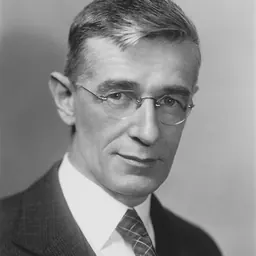



Related people
Same field, nearest in time
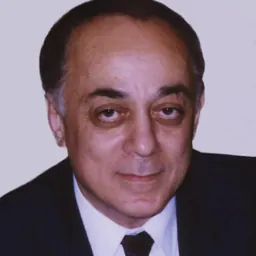
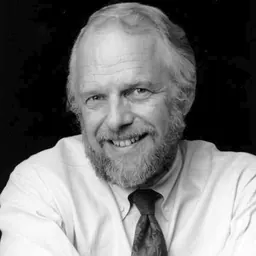


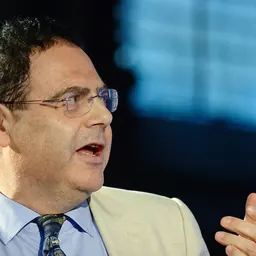
Contemporaries
People whose lives overlapped Raj Reddy's


Frequently asked questions
Who is Raj Reddy?
Indian-American computer scientist
When was Raj Reddy born?
Raj Reddy was born on 13 June 1937 in Katur.
What is Raj Reddy's occupation?
Raj Reddy is a computer scientist, university teacher and artificial intelligence researcher.
What nationality is Raj Reddy?
Raj Reddy is Indian and American.
Sources & further reading
Cite this page
APA: Biography.guide. (2026). Raj Reddy. https://biography.guide/raj-reddy/
MLA: "Raj Reddy." Biography.guide, https://biography.guide/raj-reddy/.
Chicago: "Raj Reddy." Biography.guide. https://biography.guide/raj-reddy/.
Data last updated: 2026-09-25 · Spot an error? Report a correction.
Page generated 2026-09-27 05:11 UTC