
About Raissa Calza
Lived 1894 – 1979 (aged 84). Raissa Calza was a Russian, Italian and Ukrainian archaeologist, ballet dancer, actor, art historian, dancer and historian.
Raissa Samojlovna Calza (née Gourevitch; 15 December 189424 January 1979) was a Ukrainian dancer who became a prominent classical archaeologist of Roman portraiture. When she was young, she fled to Italy and France following the Russian Revolution.
After studying archaeology at the École du Louvre, she returned to Italy and began working at the Ostia Antica excavation site, where she met her third husband Guido Calza. She published many books on the archaeological sites in Ostia and was recognized for her efforts with a gold Italian Medal of Merit for Culture and Art on 2 June 1967. She died in 1979 and was buried at the Church of Sant'Ercolano near Ostia Antica.
Early life Raissa Samojlovna Gourevitch was born in Odessa on 15 December 1894, to a wealthy Ukrainian Jewish family. Her parents, Samuil and Berta, owned estates in Poland and Finland, but Gourevitch grew up in Saint Petersburg until 1918. After studying and at the suggestion of her father, Raissa became a dancer and actress. In the Russian theater scene, she met her first husband Georgy Krol' (1893–1932), a Russian Jewish director.
Following the Russian Revolution, Gourevitch and Krol' were forced to flee Ukraine and they immigrated to Turin, Italy, in 1919. As a couple, they traveled often to produce or act in theater productions—they lived in Rome from 1920 to 1921 and then in Berlin from 1921 to 1922.
In 1923, in Rome, Gourevitch was offered the opportunity to be the lead ballerina for a production of L'Histoire du soldat directed by Hermann Scherchen at the Teatro degli Undici. Gourevitch accepted the lead and performed under the pseudonym "Raissa Lork" on 14 May 1925; her husband designed the set and de Chirico the costumes (Raissa was dressed as Pierrot). Gourevitch and Krol' traveled together with a theatre troupe at the end of 1924, but at the end of the trip, Gourevitch left Krol' and moved to Paris. She married De Chirico shortly after in 1925.
In Paris, Gourevitch studied archaeology at the École du Louvre, taking classes taught by Charles Picard, although she never received a formal degree. but their marriage ended in 1930 when de Chirico eloped with Isabella Pakszwer Far. Gourevitch divorced de Chirico in 1931, and then returned to Rome.
Career Because of her lack of formal qualifications, Gourevitch couldn't find work as an archaeologist, but became a photographer and assistant at the Ostia Antica site near Rome in 1937. There she worked under the superintendent of the excavations, Guido Calza. They married in 1945, but Guido Calza died only a year later in April 1946. Raissa Calza was active at the Ostia archaeological site from 1935 to 1968. By 1950, through her work at the site and her many publications, Calza became known as an expert in Roman portraiture and sculpture, particularly funerary sculpture.
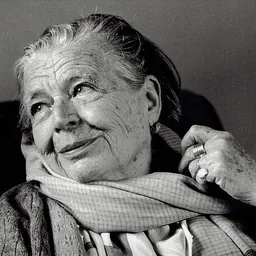
Marguerite Yourcenar visited Calza in Ostia while she was preparing a new illustrated edition of Memoirs of Hadrian between the end of 1951 and the spring of 1952, and the two kept up their correspondence after the visit. From 1 January 1956 to 3 January 1957, Calza helped the Gabinetto fotografico nazionale archive to organize and categorize its photographic collection of Roman statuary In 1958 to 1959, she was the first scientific collaborator with the Fototeca di Architettura e Topografia dell’Italia Antica. She was also known for discerning details in stereotypical classical sculpture, although the archaeologist Margaret L. Laird has criticized her work on sculptures in the Ostian "Sede degli Augustali" as "fraught with iconographic difficulties" for her misidentification of statues on the site as imperial cult portraits.
To recognize her contribution to Italian archaeology, Calza was conferred the gold Italian Medal of Merit for Culture and Art on 2 June 1967.
Death Calza died in Rome on 24 January 1979 in a nursing home run by the Sisters of Charity.
Archive Calza left her photographs of Ostia and her personal library and letters to a foundation that divided her archive between the Ostia and the humanities library of the University of Siena. Most of the photographs of Ostia come from a period of extensive excavation undertaken at the direction of the government of Benito Mussolini from 1939 and 1942.
Don’t just read it —
keep it.
Full-length biographies made to live with: read them, listen on the way to work, watch them tonight.
- E-book
- Audio
- Video
Instant download · yours to keep · every purchase keeps this site free
Important facts
Family & relationships
People in Raissa Calza's life
Named in this biography and alive at the same time



Related people
Same field, nearest in time

Contemporaries
People whose lives overlapped Raissa Calza's


Frequently asked questions
Who was Raissa Calza?
Ukrainian dancer and archaeologist (1894–1979)
When was Raissa Calza born?
Raissa Calza was born on 28 December 1894 in Odesa.
When did Raissa Calza die?
Raissa Calza died on 24 January 1979 in Rome.
What was Raissa Calza's occupation?
Raissa Calza was an archaeologist, ballet dancer, actor, art historian, dancer and historian.
What nationality was Raissa Calza?
Raissa Calza was Russian, Italian and Ukrainian.
Sources & further reading
Cite this page
APA: Biography.guide. (2026). Raissa Calza. https://biography.guide/raissa-calza/
MLA: "Raissa Calza." Biography.guide, https://biography.guide/raissa-calza/.
Chicago: "Raissa Calza." Biography.guide. https://biography.guide/raissa-calza/.
Data last updated: 2026-09-20 · Spot an error? Report a correction.
Page generated 2026-09-27 04:58 UTC