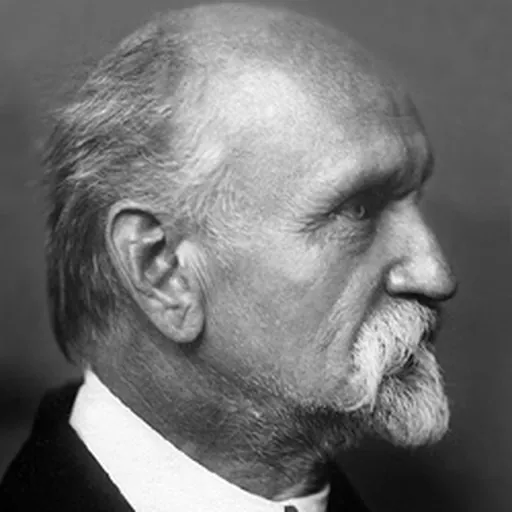
About Rainis
Lived 1865 – 1929 (aged 64). Rainis was a Russian and Latvian poet, playwright, politician, writer, translator and journalist.
Jānis Pliekšāns (11 September 1865 – 11 September 1929), known by his pseudonym Rainis, was a Latvian poet, playwright, translator, and politician. Rainis' works include the classic plays Uguns un nakts (Fire and Night, 1905) and Indulis un Ārija (Indulis and Ārija, 1911), and a highly regarded translation of Goethe's Faust. His works had a profound influence on the literary Latvian language, and the ethnic symbolism he employed in his major works has been central to Latvian nationalism.
Early life
Rainis was born on "Varslavāni" farm, Dunava parish in Jēkabpils Municipality. His father, Krišjānis Pliekšāns (ca. 1828–1891), was a tenant farmer. His mother was Dārta, née Grikovska (ca. 1828–1899), and he had two sisters, Līze (1854–1897) and Dora (1870–1950). During his education at the Riga City Gymnasium he met and befriended Pēteris Stučka, Dora Pliekšāne's future husband, who later become a prominent Latvian communist.
Early career Rainis studied law at the University of St. Petersburg, where he shared a room with Pēteris Stučka. While still a student, Rainis was already collecting folk songs, writing satirical and lyric poetry, and translating literature. Together with Stučka he edited a collection of epigrams and satire, Mazie dunduri (The Small Gadflies) and published Apdziedāšanas dziesmas (Mocking Songs) about the third All-Latvian Song Festival. The two men, however, would later split because of the differences between socialist and communist ideologies.
After completing his studies, he worked at the Vilnius regional courtrooms and with Andrejs Stērsts in Jelgava. Rainis wrote for Dienas Lapa (The Daily Page), Tēvija (Fatherland) and the Latvian Conversational Dictionary.
From 1891 to 1895 Rainis was editor in chief of Dienas Lapa (Daily Page). The Dienas Lapa scene was mostly a group of young Latvian liberal and socialist intellectuals who came to be known as the New Current. After attending the congress of the Second International in 1893, Rainis began to emphasize socialist ideology and news of socialist events in "Dienas Lapa." He is recognized as the father of Latvian socialism. It was during this period that he met Aspazija (pseudonym of Elza Pliekšāne, born Rozenberga), another Latvian poet and playwright active in the New Current. According to Encyclopedia Britannica, it was while editing the paper that Rainis developed "his own philosophy [which] showed no trace of Marxist materialism—he regarded life as an incessant series of mutations of energy."
Because of their social criticism and calls for various reforms, the New Current was viewed as a seditious movement and was the subject of a Tsarist crackdown. In 1897 Rainis was arrested and deported first to Pskov, and later to Vyatka guberniya (now Kirov Oblast). It was during this period of internal exile that Rainis translated Faust and other works from classical literature. Here he also produced his first collection of poems, Tālas noskaņas zilā vakarā (Far-Off Moods on a Blue Evening, 1903).
During his exile, Rainis published several more works, such as Gals un sākums (or "End and Beginning" in English, published 1912). These works used political and revolutionary symbolism and also borrowed ideas from Hegelian philosophy. He also penned plays which linked Latvian folklore to the country's modern, political struggles.
Return to Latvia
Rainis and Aspazija returned to Latvia on 4 April 1920 and received a hero's welcome. They had served as the spiritual leaders in the fight for Latvian independence. Rainis, as a member of the Central Committee of the Latvian Social Democratic Workers' Party, resumed his political activities and was a member of the Constitutional Assembly of Latvia (Satversmes sapulce) and Saeima (Parliament) and of the Ministry of Education Arts Department, founder and director of the Dailes Theater, and director of the Latvian National Theatre from 1921 to 1925, Minister of Education from December 1926 to January 1928, and a member of the Cultural Fund and (Military) Order of Lāčplēsis Council. During this period he wrote:
plays — Iļja Muromietis (Ilya Muromets), Mīla stiprāka par nāvi (A Love Stronger Than Death), Rīgas ragana (The Witch of Riga); poetry — Treji loki, Sudrabota gaisma (A Silvery Light), Mēness meitiņa (Moon Girl), Zelta sietiņš (The Gold Strainer), and others; memoirs — Kastaņjola (Castagnola).
He died in Majori in 1929.
Legacy and commemoration
A number of Rainis' poetry collections were published posthumously: Sirds devējs, Dvēseles Dziesma, Lielās līnijas, and Aizas ziedi.
Rainis' statue at the Esplanāde in Riga is a gathering place that highlights the complex way his multi-faceted career and works are interpreted. It is the focal point for the national poetry festival, always held on his birthday, as well as a focus for the left wing, from the Social Democrats to the radical opposition to Latvia's education reform (in part because of Rainis' support for minority schools; he was instrumental to the founding of Belarusian schools in Latvia). Similarly, criticism of his work has often been strongly affected by politics; while the Soviets emphasized his socialism (his image even appeared on a commemorative Soviet rouble coin; being buried next to Rainis' grave in Rainis' Cemetery in Riga was an honour reserved for senior Soviet military), Daugava and other patriotic works were omitted from editions of Rainis' texts prior to the Third Latvian National Awakening.
Works
Plays Pusideālists (Semi-Idealist, 1901) Uguns un nakts (Fire and Night, 1905) Zelta zirgs (The Golden Horse, 1909) Indulis un Ārija (Indulis and Ārija, 1911) Pūt, vējiņi! (Blow, Wind!, 1913) Spēlēju, dancoju (I Played and Danced, 1915) Krauklītis (The Little Raven, 1917) Jāzeps un viņa brāļi (Joseph and His Brothers, 1919) Ilja Muromietis (Ilya Muromets, 1923) Mīla stiprāka par nāvi (Love is Stronger than Death, 1927) Rīgas ragana (The Witch of Riga, 1928)
Poems Ave sol! (Ave Sol!, 1910) Daugava (1919) Saules gadi (Years of the Sun, 1925)
Collections of poetry Tālas noskaņas zilā vakarā (Distant Echoes on a Blue Evening, 1903) Vētras sēja (The Strewing of the Storm, 1905) Klusā grāmata (The Silent Book, 1909) Tie, kas neaizmirst (Those Who Do Not Forget, 1911) Gals un sākums (The End and the Beginning, 1912) Dagdas piecas skiču burtnīcas (Five Sketch-books of Dagda, 1920-1925): Addio bella! (Addio Bella!, 1920) Čūsku vārdi (Serpent Incantation, 1920) Uz mājām (Going Home, 1920) Sudrabota gaisma (A Silvery Light, 1921) Mēness meitiņa (Little Girl of the Moon, 1925)
Collections of children's poetry Zelta sietiņš (The Golden Sieve, 1920) Puķu lodziņš (A Flower Window, 1924) Vasaras princīši un princesītes (Summer Princes and Princesses, 1924) Lellīte Lolīte (A Dolly Named Lolly, 1924) Putniņš uz zara (Bird on a Branch, 1925) Saulīte slimnīcā (Sun at the Hospital, 1927)
Children's plays Mušu ķēniņš (The Sovereign of Flies, 1923) Suns un kaķe (The Dog and the She-Cat, 1928)
Short stories Novelas (Novellas, 1925)
Memories Kastaņola (Castagnola, 1928)
Don’t just read it —
keep it.
Full-length biographies made to live with: read them, listen on the way to work, watch them tonight.
- E-book
- Audio
- Video
Instant download · yours to keep · every purchase keeps this site free
Important facts
Family & relationships
People in Rainis's life
Named in this biography and alive at the same time


Related people
Same field, nearest in time

Contemporaries
People whose lives overlapped Rainis's



Frequently asked questions
Who was Rainis?
Latvian poet (1865–1929)
When was Rainis born?
Rainis was born on 30 August 1865 in Varslavani, Dunava Parish.
When did Rainis die?
Rainis died on 12 September 1929 in Jūrmala.
What was Rainis's occupation?
Rainis was a poet, playwright, politician, writer, translator and journalist.
What nationality was Rainis?
Rainis was Russian and Latvian.
Sources & further reading
Cite this page
APA: Biography.guide. (2026). Rainis. https://biography.guide/rainis/
MLA: "Rainis." Biography.guide, https://biography.guide/rainis/.
Chicago: "Rainis." Biography.guide. https://biography.guide/rainis/.
Data last updated: 2026-09-23 · Spot an error? Report a correction.
Portrait: Wikimedia Commons · author & licence
Page generated 2026-09-27 05:06 UTC