
About Raimon Vidal
Lived 1196 – 1252 (aged 55–56). Raimon Vidal was a Spanish troubadour, poet and composer.
Raimon Vidal de Bezaudu(n) (Catalan: Ramon Vidal de Besalú) (flourished early 13th century) was a Catalan troubadour from Besalú. He is notable for authoring the first tract in a Romance language (Occitan) on the subject of grammar and poetry, the Razós de trobar (c. 1210), a title which translates as "Reasons (or Guidelines) of troubadour composition". He began his career as a joglar and he spent his formative years at the court of Hug de Mataplana, which he often recalls fondly in his poems and songs.
In the Razós, Raimon distinguishes the "parladura francesa" (French) from the "cella de Lemosin" (Occitan). He also discusses the art of the listener (li auzidor) and his responsibility to understand the troubadour works. Raimon's insistence that the audience understand what is sung and that they keep silent during its singing has been regarded as seminal in the history of classical music. To him, listeners have a responsibility to enquire about what they do not understand (which is "one of the wisest things in the world") and to be true to the quality of the work, praising greatness and condemning poor form. Vidal also took pains to argue for the superiority of lemosí (or Lemozi, i.e., Occitan) over other vernaculars, prompting the Florentine poet Dante Alighieri to write a De Vulgari Eloquentia justifying the use of the Tuscan vernacular as opposed to the Occitan. The Razós ends with an Occitan-Italian glossary. Late in the 13th century, Terramagnino of Pisa wrote a condensed verse form of the Razós. Jofre de Foixà wrote an expanded version, the Regles de trobar, for James II of Sicily.
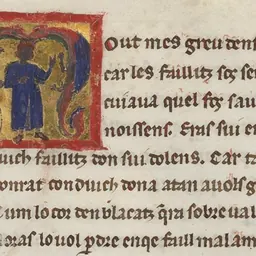
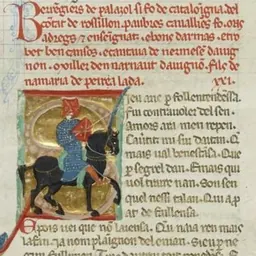
In addition to the aforementioned tract, there are preserved several fragments of song lyrics and three narrative romans. Among his most famous is So fo e·l temps qu'om era gais, which is fawning in its treatment of Raimon de Miraval, an earlier troubadour. In the nova, Raimon presents two ladies as fighting over one knight. The nova or ensenhamen called Abril issi'e mays intrava, which also refers to Miraval (and to the three sons of Henry II of England: Enricx, Richartz, and Jofrés), is an assessment of contemporary literature and one of the best descriptions of the joglar that we possess. Finally, the Castiagilós is much like a fable, which narrates the story of a jealous husband who is eventually convinced that his suspicions are baseless.
Vidal wrote at the height of the troubadours' popularity and as he himself said: "all people wish to listen to troubadour songs and to compose (trobar) them, including Christians, Saracens, Jews, emperors, princes, kings, dukes, counts, viscounts, vavassours, knights, clerics, townsmen, and villeins." Tota gens Crestiana, Juzeus e Sarazís, emperador, princeps, rei, duc, conte, vesconte, contor, valvasor e tuit autre cavailler e clergues borgés e vilanz.
Don’t just read it —
keep it.
Full-length biographies made to live with: read them, listen on the way to work, watch them tonight.
- E-book
- Audio
- Video
Instant download · yours to keep · every purchase keeps this site free
Important facts
People in Raimon Vidal's life
Named in this biography and alive at the same time

Related people
Same field, nearest in time


Contemporaries
People whose lives overlapped Raimon Vidal's



Frequently asked questions
Who was Raimon Vidal?
Catalan troubadour
When was Raimon Vidal born?
Raimon Vidal was born in 1196.
When did Raimon Vidal die?
Raimon Vidal died in 1252.
What was Raimon Vidal's occupation?
Raimon Vidal was a troubadour, poet and composer.
What nationality was Raimon Vidal?
Raimon Vidal was Spanish.
Sources & further reading
· DBpedia: Raimon Vidal de Bezaudun
Cite this page
APA: Biography.guide. (2026). Raimon Vidal. https://biography.guide/raimon-vidal/
MLA: "Raimon Vidal." Biography.guide, https://biography.guide/raimon-vidal/.
Chicago: "Raimon Vidal." Biography.guide. https://biography.guide/raimon-vidal/.
Data last updated: 2026-09-20 · Spot an error? Report a correction.
Page generated 2026-09-27 05:25 UTC