
About Rafiq Tağı
Lived 1950 – 2011 (aged 61). Rafiq Tağı was an Azerbaijani and Russian journalist, writer and cardiologist.
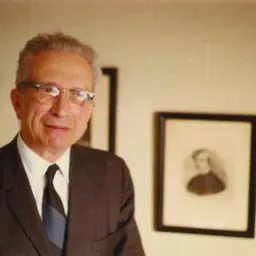
Rafiq Tağı, born Rafig Nazir oglu Taghiyev (5 August 1950, Khoshchobanly, Masally District, Azerbaijan — 23 November 2011, Baku, Azerbaijan) was an Azerbaijani short story writer and a journalist who worked for Sanat newspaper until police arrested him and Sanat editor Samir Sadagatoglu for writing "Europe and Us", an article that was deemed to be critical of Islam and the Islamic prophet Muhammad. He was considered to be inciting racial hatred and sentenced to three years in prison. Released on a presidential pardon some months later he was assassinated in a car park.
Biography
Rafig Nazir oglu Taghiyev was born in the village of Khoshchobanly, Masally District, Azerbaijan. He graduated from the Azerbaijan State Medical University and worked as a physician in rural parts of Azerbaijan. He later received a degree in cardiology from the I.M. Sechenov First Moscow State Medical University. Beginning in 1990, he worked at the Emergency Medical Services Hospital in Baku.
A journalist whose works had been published in both Azerbaijani and foreign media, Tağı over his career became particularly known as an author of six collected prose books and a number of controversial articles. His membership at the Writers' Union of Azerbaijan of which he had been a member for 16 years was revoked after he wrote a critical essay analysing social and political views of the renowned Soviet-era Azerbaijani poet Samad Vurghun.
In 2006, some residents of the village of Nardaran, "a stronghold for Shia Islamists" in Azerbaijan, during their demonstrations demanded severe punishment for Tağı. Protesters carried placards saying "Death to Israel!" and all speeches were met with a loud "Allahu Akbar!" Hajiagha Nuriyev, chairman of Azerbaijan's unregistered Islamic Party, said that Tağı was "acting on behalf of international Zionism and Armenia".
In 2007 the Azerbaijan Court of Appeals in absentia of the culprits rejected the appeals request filed by Tağı and editor Sadagatoglu. He was accused of promoting religious hatred and was sentenced to four years in jail for instigating religious hostility. After 8 months of imprisonment with a presidential pardon, he was released.
He was a member of the Free Writers Union, and regular writer of Alatoran literary magazine.
Death Rafiq Tağı died on 23 November 2011 after being stabbing on 19 November in a car park near his home. In an interview he gave from the hospital just one day prior to his death, Rafiq Tağı stated his stabbing could be an act of retaliation for the article Iran and the Inevitability of Globalization he had published on 10 November 2011 and in which he criticised Iranian president Mahmoud Ahmadinejad for "discrediting Islam."
Tağı's family voiced concerns that no one had been held liable for the murder a week after the event and informed of their intention to sue the Ministry of Health and the chief physician of the clinic where Tağı had died for negligence causing death. In addition, they announced their plans to seek political asylum in a Western country.
On 15 December 2011, the European Parliament passed a resolution in which it condemned the murder of Rafiq Tağı.
Reaction
In Azerbaijan Investigative journalist and Tağı's fellow columnist Khadija Ismayilova blames the assassination on radical Islamists who are working closely with Iran's secret intelligence.
Whistleblower Elshad Abdullayev believes Ministry of National Security general Akif Chovdarov is responsible for the assassination.
In Iran The Iranian embassy in Baku denied all allegations that Iran was somehow linked to the assassination and called them "ungrounded."
On his website, ayatollah Mohammad Javad Lankarani, the son of the fatwa-issuing ayatollah Mohammad Fazel Lankarani who himself died in 2007, published a statement in which he praised the killers for "sending the reprobate who insulted the prophet to hell" and was assured that Muslim youths would not let "the intrigues of global imperialism and Zionism be carried on."
In this case, the dissident jurist, Mohsen Kadivar, engaged in a heated moral and legal debate over the legitimacy of the Fatwa with the son of the recently deceased Ayatollah. He argued that the Fatwa's extraterritorial enforcement was inhumane, sacrilegious, and unconstitutional.
Don’t just read it —
keep it.
Full-length biographies made to live with: read them, listen on the way to work, watch them tonight.
- E-book
- Audio
- Video
Instant download · yours to keep · every purchase keeps this site free
Important facts
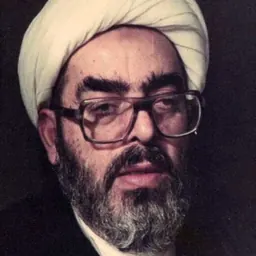
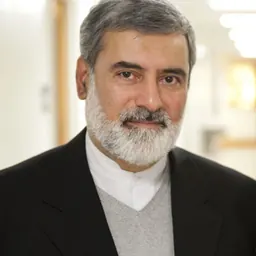
People in Rafiq Tağı's life
Named in this biography and alive at the same time


Related people
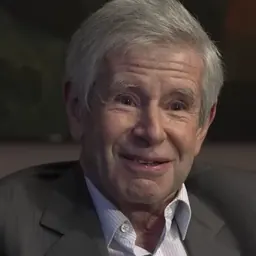
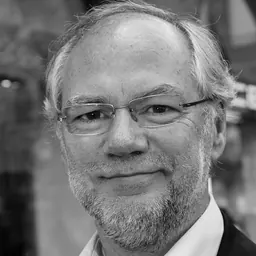
Same field, nearest in time


Contemporaries
People whose lives overlapped Rafiq Tağı's


Frequently asked questions
Who was Rafiq Tağı?
Azerbaijani journalist (1950–2011)
When was Rafiq Tağı born?
Rafiq Tağı was born on 5 August 1950 in Xoşçobanlı.
When did Rafiq Tağı die?
Rafiq Tağı died on 23 November 2011 in Baku.
What was Rafiq Tağı's occupation?
Rafiq Tağı was a journalist, writer and cardiologist.
What nationality was Rafiq Tağı?
Rafiq Tağı was Azerbaijani and Russian.
Sources & further reading
Cite this page
APA: Biography.guide. (2026). Rafiq Tağı. https://biography.guide/rafiq-tagi/
MLA: "Rafiq Tağı." Biography.guide, https://biography.guide/rafiq-tagi/.
Chicago: "Rafiq Tağı." Biography.guide. https://biography.guide/rafiq-tagi/.
Data last updated: 2026-09-20 · Spot an error? Report a correction.
Page generated 2026-09-27 05:03 UTC