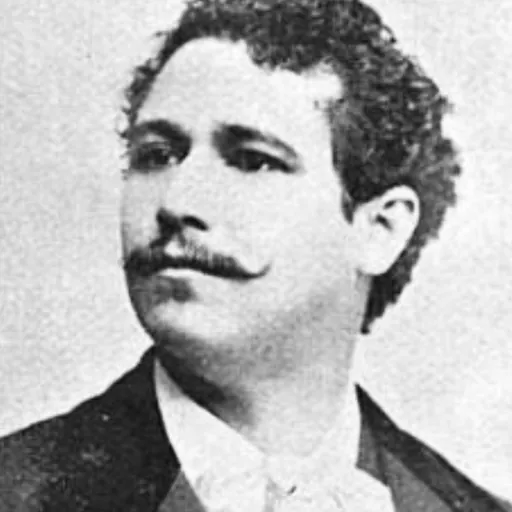
About Rafael Spínola
Lived 1866 – 1901 (aged 34–35). Rafael Spínola was a Guatemalan writer, politician, orator, physician and journalist.
Rafael Spínola (1866 – 4 October 1901 in Guatemala City) was a writer, journalist, politician and public speaker from Guatemala. Director of the well known cultura magazine La Ilustración Guatemalteca in 1896 and 1897, was Secretary of Infrastructure in Manuel Estrada Cabrera first presidential term. He also created the "Fiestas Minervalias", which were a celebration to the studious youth and the president Estrada Cabrera rule. He was also the one that signed the treaty granting the American company "The Central American Improvement Co. Inc." to finish the Northern Railroad, which had been left unfinished after president José María Reina Barrios assassination on 8 February 1898- which would be the stepping stone for the operations of the United Fruit Company in Guatemala. He was the father of Guatemalan poetesse Magdalena Spínola (1896–1991).
Biography
Ancestors
Cavalry lieutenant colonel José María Espínola Baeza y Bravo arrived to Guatemala on 12 June 1822, in charge of six hundred men of the Mexican Army and under the command of Vicente Filísola. After Filísola returned to México the next year, colonel Espínola stayed in Guatemala because he met miss Mariana del Águila Escobar, whom he married and had three children with: José Vicente, Guadalupe and Mercedes Spínola del Águila. In Guatemala he changed his last name from Espínola to Spínola, which is the original spelling.
Rafael Spínola was son of José Vicente Spínola del Águila and Isabel Orellana Corzo, who in turn was the granddaughter of Venezuelan doctor Narciso Esparragoza y Gallardo, who graduated from the Real y Pontificia Universidad de San Carlos in 1794 and who became the first anatomy doctor in Guatemala by royal decree of King Charles IV. In those years, he was known for his smart and sharp replies and jokes to his teachers, which made his classmates laugh without making the faculty angry. Strong and tall, he was also a vivacious and curious individual. In his first issue, Cabezas point out that opposition is the stand stone for a republican government and that, provided his newspaper reach its tenth issue, Barillas would have demonstrated he was worthy of having the Constitution modified to allow him run as president, even though he was the interim. Spínola had to work in whichever job he could find, including a third category municipal clerk in Orizaba, Veracruz. Among his most famous speeches were the one that he gave in the name of the National Assembly during the seventy second anniversary of the Independence of Central America on 15 September 1893, the one about general Miguel García Granados when the remains of the former president were moved to the newly built Guatemala City General Cemetery on 30 June 1894, and the one we pronounced in Nicaragua celebrating the expulsion of William Walker on 15 September 1895. La Ilustración Guatemalteca included extended articles about the Exposición Centroamericana of 1897 –in which Spínola pronounced the inaugural speech– the demarcation of the international border with Mexico in 1897 and the economical crisis that resulted in the September 1897 revolts and the eventual assassination of president Reina Barrios on 8 February 1898.
Exposición Centroamericana
Spínola, as director of La Ilustración Guatemalteca and professional speaker, pronounced the inaugural speech of the Exposition on 15 March 1897. His speech gives a complete idea of the large efforts that the Guatemalan government had to make in order to make the Exposition and the hopes that Reina Barrios had in its success. Summarizing it, Spínola welcomed the Central America nations that joined the event, and the other countries that presented their products and services: Germany, Belgium, Chile, Spain, the United States, France, England, Italy, Mexico, Peru and Russia. - and all kinds of artistic work. although he acknowledged that the Exposition by itself was not going to be able to solve such a complex problem, he pointed out that it was going to help to start solving it. only because we broke the superstition bond and love Freedom, we also have our God, but so pure, that we are unable to find any symbol that represents Him accurately, so we adore him in His pure essence, which is Knowledge.|Rafael SpínolaFirst "Fiesta de Minerva" inaugural speech 1899
By decree 604 of 29 October 1899, written by Estrada Cabrera himself, the celebration of "Fiestas Minervalias" was established, in order to close the school year; celebrations were to occur on the last Sunday of October, each year. Over the years, these celebrations had children and military parades, military exercises, and award ceremonies in the Temple of Minerva. After the official speeches, and the ceremonies, there was a lunch given by the elite ladies and, after the children celebrations, there were adult dancing and partying at night.
In 1900, Spínola published the first edition of Moral razonada y lecturas escogidas . The book, about morality and manners, had a fantastic reception and a second edition was published in 1928 and a third in 1961. About how that book came to be, Nicaraguan lawyer and write Juan M. Mendoza explained that they had several chats among the staff of the La Idea Liberal newspaper; among the staff were Enrique Gómez Carrillo, Spínola, Ramón A. Salazar, Máximo Soto Hall and other Guatemalan intellectuals, who frequently discussed literary topics. Here is where Spínola had the idea to write his book; furthermore, from their discussions he wrote the book almost in its entirety.
Death Secretariat of Infrastructure in Guatemala City, where Spinola's office was and where his wake took place in 1901.
Spínola died when he was 45 years old, on 4 October 1901, and therefore he did not see what the "Fiestas Minervalias" became nor the strong influence and political power that the United Fruit Company had in Guatemala, along with its subsidiary, International Railways of Central America.
Spínola's wake took place in the Ministry that he was in charge of, presided by Manuel Estrada Cabrera; cabinet members, national representatives and diplomats were in attendance . After the ceremony, the funeral left for the Guatemala City General Cemetery where there were more official speeches before he was finally buried.
Since Spínola's wife had died a year earlier, his daughters -Magdalena and Stella, were split up: Stella went to live with her paternal grandparents and Magdalena was sent to live with her maternal grandparents. Magdalena's neighbor was Miguel Ángel Asturias, who became her childhood friend and with whom she discussed their awakening love of literature. Asturias would later dedicate his first book to her.
Don’t just read it —
keep it.
Full-length biographies made to live with: read them, listen on the way to work, watch them tonight.
- E-book
- Audio
- Video
Instant download · yours to keep · every purchase keeps this site free
Important facts
Family & relationships
People in Rafael Spínola's life
Named in this biography and alive at the same time

Related people
Same field, nearest in time




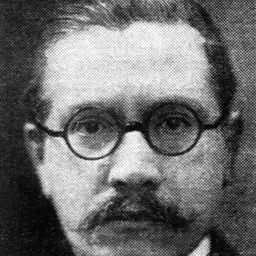
Contemporaries
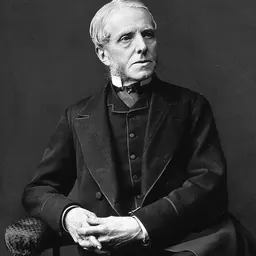
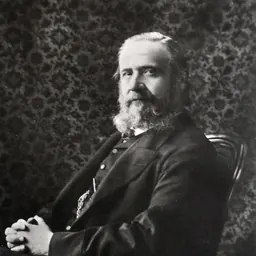
People whose lives overlapped Rafael Spínola's



Frequently asked questions
Who was Rafael Spínola?
Guatemalan politician, writer and public speaker
When was Rafael Spínola born?
Rafael Spínola was born in 1866 in Guatemala City.
When did Rafael Spínola die?
Rafael Spínola died on 4 October 1901 in Guatemala City.
What was Rafael Spínola's occupation?
Rafael Spínola was a writer, politician, orator, physician and journalist.
What nationality was Rafael Spínola?
Rafael Spínola was Guatemalan.
Sources & further reading
Cite this page
APA: Biography.guide. (2026). Rafael Spínola. https://biography.guide/rafael-spinola/
MLA: "Rafael Spínola." Biography.guide, https://biography.guide/rafael-spinola/.
Chicago: "Rafael Spínola." Biography.guide. https://biography.guide/rafael-spinola/.
Data last updated: 2026-09-22 · Spot an error? Report a correction.
Portrait: Wikimedia Commons · author & licence
Page generated 2026-09-27 05:02 UTC