
About Radhanath Swami
Born 1950. Radhanath Swami is an American writer and yogi.
Radhanath Swami (born 7 December 1950) is a Gaudiya Vaishnava guru and author. He has been a Bhakti Yoga practitioner and a spiritual teacher for more than 50 years. He is the inspiration behind ISKCON's free midday meal for 1.2 million school kids across India, and he has been instrumental in founding the Bhaktivedanta Hospital in Mumbai. In the International Society for Krishna Consciousness (ISKCON), he serves as a member of the Governing Body Commission. Steven J. Rosen described Radhanath Swami as a "saintly person respected by the mass of ISKCON devotees today."
Biography
1950-1970: The Early Years Richard Slavin (Yiddish: ריטשארד סלאווין) was born on 7 December 1950 in Chicago to Idelle and Gerald Slavin, children of Jewish immigrants from Russia, Lithuania, Poland, and Romania. He is of Ashkenazi Jewish descent. In 1955, he and his family moved to a suburb of Chicago – Highland Park. In 1958, his father opened a dealership selling Edsel cars, which did not succeed; however, the car repair shop launched thereafter was quite successful. Despite being well off, at age 15 Richard chose to work, hoping to contribute to his family.
As a child, Richard showed a tendency that he later called "the traces of my past lives". He did not prefer eating at the table, but seated on the floor, as is customary in India. When his parents forbade him to do so, he began to eat at the table standing. He hated the sight of meat and eggs, nauseated at their sight, and often vomited after eating meat, something that took him several years to get accustomed to. From an early age, Richard realized that the materialistic way of life would never satisfy him, and was attracted by poverty and simplicity.
Although his parents were not religious, Richard developed an interest in religion and spiritual themes from his early years. At age 13, he passed the rite of bar mitzvah (a Jewish coming of age ritual) and received instructions from the local rabbi about how to pray. On his 13th birthday, his elder brother Marty gifted him the debut album of folk-singing trio Peter, Paul and Mary. who in their compositions opposed war and social injustice, but Richard was particularly impressed by their compositions about God.
In 1965, Richard entered Deerfield High School, where he excelled in his studies and made many friends. He was passionate about wrestling, ending up on his school's team and won majority of fights. However, on dislocating his shoulder in a major competition, he decided to quit the sport. In his spare time, along with a couple of friends, he washed cars. Dissatisfied with the conditions of African Americans and opposing the Vietnam War, he embraced the ideologies of Martin Luther King.
The death of one of his close friends (aged 16) in a car accident made Richard think seriously about the meaning of life. At the same time, following the example of some of his peers, he plunged into the hippie counterculture. Keen to understand the meaning of life, he grew his hair and started smoking. In the summer of 1968, a sense of adventure led him to hitchhike journey to California., where he spent the nights on the beaches and visited the then-hippie mecca of Haight-Ashbury district in San Francisco.
In 1969, Richard enrolled in Miami Dade College, where, in search of spiritual experience, he resorted to books on religion and philosophy. Disillusioned with the materialistic values of Americans, Richard studied hard in college. He questioned the "goodness of American life" in which he'd been taught to believe. After reading several books on Eastern spirituality, he began to practice meditation. On listening to a lecture on transcendental meditation, he chanted the sacred syllable "Om" with greater conviction. While this practice did not satisfy him, it helped him realize the need to find a bona fide guru.
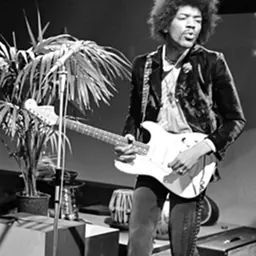
In the summer of 1970, after the end of his first year in college, Richard attended a rock festival on Randalls Island that included performances by Jimi Hendrix and other famous musicians and bands of the time. There, Richard met the Hare Krishnas, who gave him a pamphlet with photos of A. C. Bhaktivedanta Swami Prabhupada. That summer, Richard dropped out of college and along with a couple of friends, embarked on a trip to Europe.
1970: From Europe to India Richard travelled to Europe with his childhood friend Gary Liss. Penniless, they stayed with anyone who would take them in, and often survived on just bread and cheese. To cover basic expenses, Richard played the harmonica on the street and collected alms. In Amsterdam, Richard met Hare Krishnas once again and spent some time in a commune. In England, he attended the rock festival Isle of Wight on the Isle of Wight on 30 August 1970, witnessing one of Jimi Hendrix's last performances.
During his travels, Richard read books on Eastern spirituality and the Bible that he had brought from America. He loved to visit churches and monasteries, and never missed an opportunity to talk with the priests and monks. In Rome, Richard met with Franciscan friars, with whom he had a long conversation about Jesus and the relationship between Christianity and Judaism. Richard and Gary also attended the speech of the pope in the Vatican. They saw the Catholic monks meditating in the catacombs of the monastery, among the skeletons of their predecessors and heard from one of them of the frailty of the material body. After parting from Gary for a while, Richard made a pilgrimage to Assisi, visiting places associated with the life of the great Catholic saint Francis of Assisi.
In Athens, Richard and Gary first made their living by donating blood, and then, together with a Swiss violinist and French guitarist, playing music and collecting alms on the street. After the police forbade them to do so and confiscated their earnings, Richard and Gary went to Crete, where Richard lived in a cave by the sea. By that time, Richard had little interest in the carefree way of life and ideals of the hippies; he was increasingly drawn to spiritual life.
One morning, while meditating and praying on top of a rock, Richard heard an inner voice that urged him to go to India. To Richard, this boy seemed the happiest person he had ever met. The following year all members of the community who remained faithful to Kirtanananda Swami – which included Radhanath Swami – were also expelled from ISKCON. In the 1990s, Kirtanananda faced several criminal charges and in 1996 was sentenced to 20 years in prison for mail fraud. In 1994, Radhanath Swami returned to ISKCON. In the same year, he became one of the leaders of ISKCON, and began to serve as a member of the Governing Body Commission and an initiating guru.
Projects
Radha Gopinath Temple
Succeeding to Kirtanananda Swami, Radhanath Swami has been instrumental in the guidance of the Radha Gopinath Temple since 1991, which "expanded beyond anyone's wildest dreams" and is particularly renowned for its "empowered preaching and teaching". Also known as Sri Sri Radha Gopinath Mandir, the temple was founded in 1986 and joined ISKCON in 1994. The temple is situated in the elite area of Bombay – Chowpatty Beach – and enjoys great popularity. The congregation comprises several thousands of Bombay's elite. A prerequisite for those wishing to become a monk and live in the temple is the completion of university education and at least one year of work experience. The monks from the temple of Radha-Gopinath regularly conduct more than 30 cultural programs at the University of Bombay. Under Radhanath Swami's initiative, the temple and its congregation have been breeding grounds for many successful projects. The temple has an in-house design studio and embroidery unit, where artisans meticulously work with clockwork precision, following briefs by designers, to dress up the deities in the choicest of regal attires.
Devotee Care and Relations Program Based on the Hare Krishna ideology, Radhanath Swami designed the Devotee Care Program in Radha Gopinath Temple, which eventually led ISKCON to emphasize the need for such a program globally.
Annamrita
Launched in 2004, ISKCON Food Relief Foundation – under the brand name "Annamrita" – is the Indian leg of the global Food for Life organization and is considered a "leader in this field". Since serving 900 meals on its first day of operations, Annamrita has expanded considerably over a decade and, as of 2014, daily serves about 1.2 million meals across ten states in India from 20 of its high-tech, industrial (mostly ISO-certified) kitchens. The program is funded through public-private partnership, wherein the Government provides the ingredients, while the cooking and delivery costs are jointly covered by the Government as well as private sponsors. The program offers a "different menu every day and simple protein-rich food [...] cooked innovatively along with seasonal vegetables for a wholesome meal", and has been credited with improving attendance in schools. Although launched for primary and secondary schools, on account of its success, the program has been extended to post-graduate students, hospital patients and NTR canteens. Michelin-starred chef Vikas Khanna is Annamrita's "Goodwill Ambassador", who pledged his support and efforts to complement the awareness and fund-raising efforts. Annamrita's efforts have been recognized by the President of India as well through several awards – to name a few, the D.Y. Patil 2012 Award for "Best Organization in Social Work", Lifebuoy National Child Health Award 2012 for "Exemplary work in promoting Nutrition", PP Mohan Shahani Trophy for the "Best Club Partner NGO" by Rotary Club, and Indian Development Foundation's 2012 "Best Partner Award".
Bhaktivedanta Hospital
Emerging from the Radha Gopinath Temple congregation, the Bhaktivedanta Hospital has become a center for holistic health and spiritual care in Mumbai. It started off as an aim of fresh medical school graduates in 1986 which has now become the present-day multi-specialty hospital by Sri Chaitanya Welfare Charitable Trust.
In the early days, the doctors conducted medical camps in various areas in and around Maharashtra. These served the medically deprived and needy. which eventually led to establishing the 60-bed Bhaktivedanta Hospital in 1998.
Though closed in 2003 due to a labour dispute, it reopened in August 2004 under a different trust. As of 2014, it also includes four ultramodern operation theaters, a 16-bed ICU, 120 consulting specialists and 360 medical and paramedical staff – about half of which are initiated Hare Krishna followers.
The hospital also houses an Ayurveda, Yoga and Rehabilitation Center as well as an exclusive department on Spiritual Care. The Bhaktivedanta Cancer Institute, Eye Care/Vision Center, Urology Center and Center of excellence in Heart Care enhance the breadth of services offered.
Community services form one of the core pillars of the hospital, which it extensively pursues. It has medically-equipped mobile vans to attend to eye care, cancer and maternity issues in remote sections of society; In addition to social initiatives such as the Green Paper Forum, the hospital conducts regular free medical camps such as the Barsana Eye and Dental Camp, Pandharpur Camp, Senior Citizen Camp, School Camp, Cancer Camp and Dialysis Camp. Consequently, the efforts led to the founding of the Barsana Health Care Center in Uttar Pradesh.
In addition, the Bhaktivedanta Hospice Center serves those who desire to spend their last days in the holy site of Vrindavan with good medical care. The hospital is also proactive in disaster relief activities such as the Gujarat earthquake relief (2001), tsunami relief (2004), Mumbai flood relief (2005), Mumbai bomb-blasts (2006) and Uttarakhand floods (2013).
In 2014, AmeriCares India awarded Bhaktivedanta Hospital the "Spirit of Humanity Awards" for their work in the category of Oncology, while it also won "Best Multi Specialty Hospital", "Best Hospital for Wellness & Healthcare", "Excellence in Hospice & Palliative Medicine" and "Best Teacher" awards in Indo-Global Healthcare Summit & Expo 2014. The Times of India, in association with New India Assurance Co. Ltd., recognized the hospital's persistent efforts and designated them as "Trendsetter in Quality Patient Care and Safety" in the Healthcare Achievers Awards 2014.
Govardhan Ecovillage
Spread over 75 acres of farmland at the foothills of the Sahyadri mountain in the Wada district of Maharashtra, Govardhan Ecovillage (GEV) is a "model farm community and retreat center highlighting the importance of spiritual ecology: the need for us [humans] to live in harmony with ourselves, nature and the sacred". Inspired by Radhanath Swami, with its humble beginnings in 2003, GEV was officially inaugurated in 2011, in the presence of Nana Saheb Patil, Ex-secretary of the Agricultural Ministry for the Government of Maharashtra. To bring about holistic, sustainable ecological changes, GEV puts great emphasis on community initiatives such as integrated water conservation and protection, Wadi program, women empowerment, rural health care, food for life, biodiversity park, Vedic culture and educational center and animal shelters. GEV specializes in symbiotic recycling and strives to offer sustainable solutions for community living in issues related to food, water, energy and waste management. GEV is also home to the Lady Northcote Hindu Orphanage.
GEV's achievements in the area of integrated water conservation and protection were honored with the Skoch 2013 Platinum Award and Order-of-Merit. Its initiative to build houses with Compressed Stabilized Earth Blocks (CSEB), Rammed Earth technique, Cob houses (Adobe bricks) with traditional thatched roofs was awarded 5-star rating by GRIHA (an indigenous rating system for green buildings in India). In recognition of its continued efforts towards environmental sustainability, a Special Jury Award was conferred upon GEV by the India Chapter of the International Advertising Association's Olive Crown Awards 2013.
Writings
The Journey Home
On the request of his friend and godbrother Bhakti Tirtha Swami, who was on his deathbed, Radhanath Swami, although initially unwilling, agreed to share his story and wrote his memoir "The Journey Home: Autobiography of an American Swami". It is the story of how he grew up in a Jewish family in Chicago and through his journey of prayer was led through the 1960s counter-culture movement in America into Europe, walking and hitch-hiking through Europe to the Middle East and into India. Along the way, he met many people, who would share their wisdom with him, encouraging him on his search for the truth. He stayed with Yogis in Himalayan caves, in Buddhist monasteries, Synagogues, and Churches. He met many teachers and practitioners of spirituality and learned from them, such as the 14th Dalai Lama and Mother Teresa, to name a few. The book chronicles his spiritual quest.
Don’t just read it —
keep it.
Full-length biographies made to live with: read them, listen on the way to work, watch them tonight.
- E-book
- Audio
- Video
Instant download · yours to keep · every purchase keeps this site free
Important facts
People in Radhanath Swami's life
Named in this biography and alive at the same time



Related people
Same field, nearest in time


Contemporaries
People whose lives overlapped Radhanath Swami's


Frequently asked questions
Who is Radhanath Swami?
Gaudiya Vaishnava guru
When was Radhanath Swami born?
Radhanath Swami was born on 7 December 1950 in Chicago.
What is Radhanath Swami's occupation?
Radhanath Swami is a writer and yogi.
What nationality is Radhanath Swami?
Radhanath Swami is American.
Sources & further reading
Cite this page
APA: Biography.guide. (2026). Radhanath Swami. https://biography.guide/radhanath-swami/
MLA: "Radhanath Swami." Biography.guide, https://biography.guide/radhanath-swami/.
Chicago: "Radhanath Swami." Biography.guide. https://biography.guide/radhanath-swami/.
Data last updated: 2026-09-20 · Spot an error? Report a correction.
Page generated 2026-09-27 05:32 UTC