
About Radboud of Utrecht
Lived 850 – 917 (aged 66–67). Radboud of Utrecht was a catholic priest and catholic bishop.
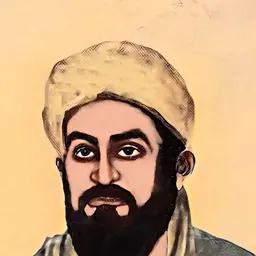
Saint Radbod (or Radboud; before 850 – 917) was bishop of Utrecht from 899 to 917.
Life Radboud was born around the middle of the 9th century from a noble Frankish family near Namur. His mother was of Frisian origin and a descendant of the Frisian king Radboud (died in 719). Radboud began his studies under the care of his maternal uncle Günther, Archbishop of Cologne, from 850 until his deposition in 863. After that Radboud continued his studies at the court school of the Western Frankish king Charles the Bald (843- 877), whose chaplain he became. Much of his life was devoted to study and science.
After Charles's death, he presumably became a Benedictine monk in the famous Saint-Martin convent of Tours. In 899 Radboud was elected bishop of the diocese of Utrecht with the permission of Emperor Arnulf of Carinthia (887-899). Because Utrecht was destroyed by the Normans, he did not live there but in Deventer
He had appointed his successor, Balderik, himself.
Writings A number of smaller writings are attributed to Radboud, but there are doubts about his authorship. Most of the writings are saints' lives, some in prose, others in verses. He described the life of the Anglo-Saxon missionaries Boniface (in prose), Suitbert and Lebuïnus (both in a sermon and in verses), as well as St. Amalberga (?) and Bishop Saint Servatius of Maastricht .
Veneration He was buried in the Lebuin Church of Deventer. Several sources, including historian Johan Picardt, indicate that his intestines have been buried in the church in Nijenstede. During the Middle Ages, the veneration of Saint Radboud remained limited to the diocese of Utrecht. His feast day is 29 November.
Patronage In the Netherlands, Radboud is the patron of Catholic scientific practice. In 1905, the St. Radboud Foundation was established with the aim of promoting Catholic higher education in the Netherlands and in particular the establishment of a Catholic university. In 1923 the Catholic University of Nijmegen was opened, in 1956 the associated Sint-Radboud hospital (now Radboudumc). On 1 September 2004, the university adopted the name Radboud University Nijmegen.
Don’t just read it —
keep it.
Full-length biographies made to live with: read them, listen on the way to work, watch them tonight.
- E-book
- Audio
- Video
Instant download · yours to keep · every purchase keeps this site free
Important facts
People in Radboud of Utrecht's life
Named in this biography and alive at the same time

Related people
Same field, nearest in time

Contemporaries
People whose lives overlapped Radboud of Utrecht's



Frequently asked questions
Who was Radboud of Utrecht?
Dutch saint and bishop of Utrecht
When was Radboud of Utrecht born?
Radboud of Utrecht was born in 850 in Namur.
When did Radboud of Utrecht die?
Radboud of Utrecht died on 29 November 917 in Deventer, Ootmarsum.
What was Radboud of Utrecht's occupation?
Radboud of Utrecht was a catholic priest and catholic bishop.
What nationality was Radboud of Utrecht?
Radboud of Utrecht's recorded nationality: East Francia.
Sources & further reading
· Wikipedia: Radboud of Utrecht
Cite this page
APA: Biography.guide. (2026). Radboud of Utrecht. https://biography.guide/radboud-of-utrecht/
MLA: "Radboud of Utrecht." Biography.guide, https://biography.guide/radboud-of-utrecht/.
Chicago: "Radboud of Utrecht." Biography.guide. https://biography.guide/radboud-of-utrecht/.
Data last updated: 2026-09-20 · Spot an error? Report a correction.
Page generated 2026-09-27 05:28 UTC