
About Rachel Eny
Lived 1868 – 1913 (aged 45). Rachel Eny was a French dancer.
Rachel Eny, known by the stage name La Belle Fatma, was an Algerian dancer during the Belle Époque in France.
Career
According to the French theatre historian Arthur Pougin, Rachel Eny first attracted public attention as a child at the 1878 Paris Exposition. At the time, a small concert Tunisien was situated near the Pont d'Iéna. Pougin described its principal musician as a large Algerian man known as the “Géant de Souze” (“Giant of Souze”), who was Rachel's father. During the exhibition, he reportedly encouraged his seven- or eight-year-old daughter to dance for the visitors. Having been impressed by the “danse du ventre” (belly dance) she had seen in Algiers, the child imitated it, initially “somewhat awkwardly, without putting any particular intention into it”. According to Pougin, the performance proved highly popular: she received numerous caresses, coins and even silver pieces, and repeated the dance daily, sometimes several times a day. Pougin identifies the child by her real name as “Rachel Bent-Eny” and states that she later became known to the public as “la belle Fatma”.
In April 1884, La Belle Fatma performed at an Easter fair, also known as the Quasimodo Fair, as part of one of the two present concerts tunisiens.
At the October 1884 fair in Bordeaux, one of two Concerts Tunisiens operating side by side featured La Belle Fatma under new management. The account described her as "toujours admirablement belle et gracieuse" ("still remarkably beautiful and graceful") and identified the "colosse de Sousse" and other performers as part of the establishment. Their programme featured original dances accompanied by what the writer called the "rythme oriental" and "pas pleins de langueur"; the establishment was reportedly never empty.
In November 1885, M. Lagneau, identified as director of the Concert tunisien, published a notice stating that La Belle Fatma was alive and performing successfully in Rouen, correcting reports that she had been killed in Arles.
In December 1886, concerts tunisiens was the advertised title of an attraction at the Eden Theatre in Paris featuring Rachel Eny. The theatre's operating company had installed an “immense baraque” in the public foyer for the exhibition of the “belle Fatma”, accompanied by her regular musicians.
By 1887, Fatma's name had become a recognizable reference within the popular culture surrounding Tunisian-themed entertainment. A contemporary account published in July 1887 offered an early narrative of Fatma's rise to prominence. According to the article, a young woman named Fatma came to Paris with her family in 1878 and performed at the Moroccan pavilion of the 1878 Paris Exposition. After subsequently travelling through the provinces, she was reportedly discovered by a man named Lagneau, who established what the article called the “vrai concert tunisien”. By 1887, the article stated, Parisians had come to admire “la belle Fatma”, describing her as “la plus jolie femme du monde” and distinguishing her from imitators performing with Lagneau at the Neuilly fair.
Another contemporary account of the Fête de Neuilly observed that “les concerts tunisiens sont nombreux” and described their dancers as performing “à l'instar de la belle Fatma”. The same article reported that the sculptor Antonin Mercié was said to have considered using Fatma as a model for a female figure, although the report does not establish that he actually did so.
In 1889 La Belle Fatma returned to the 1889 Paris Exposition where, according to Pougin, her previous success made an appearance seem almost inevitable. She performed at several locations during the exposition. She appeared first at the Grand Théâtre de l'Exposition in early June, before the Gitanas of Granada became one of its major attractions. She subsequently appeared, according to Pougin, at one of the two Moroccan tents on the Rue du Caire, before establishing herself near the Gitanas in the bazaar surrounding the Grand Théâtre, in a small establishment.
Pougin described seeing her at the small establishment called the Concert Tunisien. He gave a detailed description of the venue and its performers. The room, decorated with tapestries, was small enough to accommodate approximately fifty spectators, many of whom had to remain standing. La Belle Fatma occupied a raised position at the back of the stage, seated before a large mirror and holding a tambourine. Her father, whom Pougin again called the “colosse de Souze”, performed beside her on a stringed instrument. The ensemble also included several percussionists and dancers, as well as a Tunisian pianist living in the Batignolles district of Paris.
According to Pougin, the approximately twelve-minute programme consisted of three dances: a “danse algérienne”, described by him as a stylised or imitation belly dance; a “danse circassienne”, presented as a sword dance; and a “danse tunisienne”, performed by La Belle Fatma herself. The admission price was one franc for civilians, soldiers and children's nurses. Pougin remarked that the Tunisian dance could be repeated several times a day without apparently exhausting its performer.
Another contemporary 1889 account described the “famous” concert tunisien was already associated with La Belle Fatma and presented it alongside the reconstructed souks and other Tunisian-themed attractions.
A 1900 account retrospectively identifies La Belle Fatma as one of the attractions of the 1889 Exposition, stating that “la Belle Fatma et sa danse du ventre firent courir tous les badauds” (“La Belle Fatma and her belly dance drew crowds of curious spectators”). It presents her as emblematic of the Tunisian-concert and belly-dance spectacles associated with the 1889 Exhibition.
In December 1891, a Bordeaux newspaper reported that la troupe du Concert-Tunisien performed during the intervals at the Folies-Bordelaises. The programme featured Fatma Eny in the “danse du Sérail de Tunis”, followed by the “Danse algérienne” performed by Baya Adge-Kelil, the “Danse égyptienne” by Zora Kadour, the “Danse circassienne” by Aïcha Kedaouedje, and the “Danse du Soudan” by Sidi Yousef Rahman. The newspaper noted that the troupe would remain in Bordeaux only temporarily.
Don’t just read it —
keep it.
Full-length biographies made to live with: read them, listen on the way to work, watch them tonight.
- E-book
- Audio
- Video
Instant download · yours to keep · every purchase keeps this site free
Important facts
People in Rachel Eny's life
Named in this biography and alive at the same time

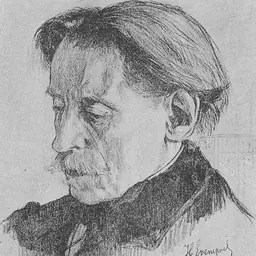
Related people
Same field, nearest in time
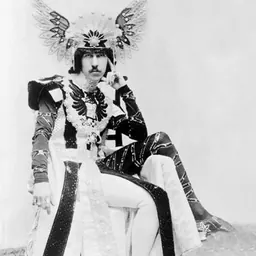
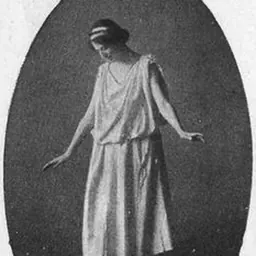
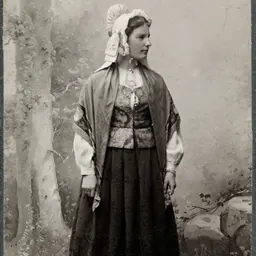

Contemporaries
People whose lives overlapped Rachel Eny's


Frequently asked questions
Who was Rachel Eny?
French dancer
When was Rachel Eny born?
Rachel Eny was born on 29 January 1868 in Algiers.
When did Rachel Eny die?
Rachel Eny died on 5 September 1913 in 4th arrondissement of Paris.
What was Rachel Eny's occupation?
Rachel Eny was a dancer.
What nationality was Rachel Eny?
Rachel Eny was French.
Sources & further reading
Cite this page
APA: Biography.guide. (2026). Rachel Eny. https://biography.guide/rachel-eny/
MLA: "Rachel Eny." Biography.guide, https://biography.guide/rachel-eny/.
Chicago: "Rachel Eny." Biography.guide. https://biography.guide/rachel-eny/.
Data last updated: 2026-09-20 · Spot an error? Report a correction.
Page generated 2026-09-27 05:24 UTC