
About R. Brent Tully
Born 1943. R. Brent Tully is an American astronomer.
Richard Brent Tully (born March 9, 1943) is a Canadian-born American astronomer and cosmologist. He is known for his work on the large-scale structure of the universe, the distances to galaxies, and the mapping of cosmic flows.
Early life and education Tully was born in Toronto, Ontario, Canada, and raised in Vancouver, British Columbia. He received a Bachelor’s degree from the University of British Columbia and a Ph.D. in astronomy from the University of Maryland in 1972. After completing his doctorate, he spent two years as a postdoctoral researcher in Marseille, France before joining the faculty at the Institute for Astronomy in Hawaiʻi in 1975.
Career and research Tully’s research focuses on the astrophysics of galaxies, the large-scale structure of the cosmos, and the distance scale of the universe.
Tully–Fisher Relation In 1977, with colleague J. Richard Fisher, Tully published what became known as the Tully–Fisher relation, an empirical correlation between the rotational velocity of a spiral galaxy and its luminosity. This relation allows astronomers to estimate a galaxy’s distance by comparing its intrinsic brightness to its observed brightness, and it remains a fundamental tool in extragalactic astronomy.
Galaxy Mapping and Catalogs In 1988 Tully published The Nearby Galaxies Catalog and the Nearby Galaxies Atlas, which provided three-dimensional positions for thousands of galaxies in the local universe. These works were among the first comprehensive efforts to depict the distribution of galaxies in space. Subsequent distance catalogs published by Tully and collaborators now include measurements for 55,000 galaxies, the largest assembly of directly measured galaxy distances available. Tully curates his own catalogs and others extracted from the literature in the publicly accessible Extragalactic Distance Database.
Cosmicflows and Large-Scale Structure Tully has played a leading role in the Cosmicflows program, which compiles galaxy distances and peculiar velocities (motions relative to cosmic expansion). Data from this program have been used to map the flows of galaxies and the distribution of matter, including dark matter, within a volume of hundreds of millions of light-years around Earth.
Tully and collaborators identified and named the Laniakea Supercluster, the vast supercluster of which the Milky Way is a part, and contributed to the discovery of the South Pole Wall, a large filament of galaxies in the nearby universe.
Scientific contributions Since 1982, Tully’s work has provided insights into the large-scale web-like structure of the universe, characterized by filaments of galaxies and superclusters separated by vast voids. His studies of the local universe have contributed to broader understanding of how gravitational interaction and dark matter shape cosmic structure.
Cosmicflows‑2 assembled measurements for over 8,000 galaxies using multiple independent methods including the Tully–Fisher relation, Cepheid variables, surface brightness fluctuations, and Type Ia supernovae providing a calibrated distance scale for studying cosmic expansion and motions. Cosmicflows‑3 expanded the dataset to nearly 18,000 galaxies by incorporating additional measurements, such as infrared photometry from the Spitzer Space Telescope and fundamental plane distances, enabling more detailed analyses of local cosmic flows, voids, and walls. Cosmicflows‑4 further increased the compilation to more than 55,000 galaxies, employing eight distinct distance measurement techniques, including photometric, kinematic, and supernova indicators, creating one of the most comprehensive three‑dimensional datasets of extragalactic distances to date. The dataset has been instrumental in mapping galaxy motions and the gravitational influence of large-scale structures across the nearby universe.
Honors and awards
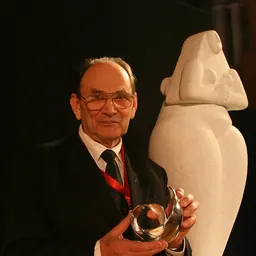
Gruber Prize in Cosmology (2014), shared with Jaan Einasto, Kenneth Freeman, and Sidney van den Bergh, for contributions to Near Field Cosmology, the study of the nearby universe’s structure. Wempe Award from the Leibniz Institute for Astrophysics Potsdam, honoring his work on galaxy structure. University of Maryland Distinguished Alumnus Award and research excellence medals from the University of Hawaiʻi.
Selected Publications
Don’t just read it —
keep it.
Full-length biographies made to live with: read them, listen on the way to work, watch them tonight.
- E-book
- Audio
- Video
Instant download · yours to keep · every purchase keeps this site free
Important facts
People in R. Brent Tully's life
Named in this biography and alive at the same time

Related people
Same field, nearest in time





Contemporaries
People whose lives overlapped R. Brent Tully's


Frequently asked questions
Who is R. Brent Tully?
American astronomer
When was R. Brent Tully born?
R. Brent Tully was born on 9 March 1943 in Toronto.
What is R. Brent Tully's occupation?
R. Brent Tully is an astronomer.
What nationality is R. Brent Tully?
R. Brent Tully is American.
Sources & further reading
Cite this page
APA: Biography.guide. (2026). R. Brent Tully. https://biography.guide/r-brent-tully/
MLA: "R. Brent Tully." Biography.guide, https://biography.guide/r-brent-tully/.
Chicago: "R. Brent Tully." Biography.guide. https://biography.guide/r-brent-tully/.
Data last updated: 2026-09-20 · Spot an error? Report a correction.
Page generated 2026-09-27 05:02 UTC