
About Quintus Roscius Gallus
Lived 126 BC – 62 BC (aged 63–64). Quintus Roscius Gallus was a Roman actor and stage actor.
Quintus Roscius ( Roscius afterwards performed without payment, which allowed him to preserve his status as an equestrian, since attached to the taking of pay for performances.
Like his contemporary Aesopus, Roscius amassed a large fortune. Macrobius relates that Roscius' popularity was so great that he received daily 1,000 denarii a day from public funds. Late in his life, he was earning 300,000 sesterces per year. He also was an educator and mentor, training slaves in acting as well as a mentor in dramatic oratory to members of the aristocratic elite such as Cicero. He also established a formal school for acting and had written treatises on acting and oratory. In 62 BC, Roscius died, as evidenced by Cicero's remarks of his artistic excellence in a speech that year.
Trial
Most of what is known about Roscius emerges from a civil trial where Cicero defended him from suit by a Gaius Fannius Chaerea for 50,000 sesterces. The date of the trial is not well established. Estimates place it between 76 and 68 BC, with the classicist Andrew R. Dyck preferring 72 or 71 BC. Evidence for the date of the trial is focused on at least three things: that Roscius had acquired a farm during a time of economic uncertainty fifteen years before the trial; that Roscius had stopped taking pay for his acting for ten years; and Cicero argued the trial in his youth. Dyck associates the acquisition of the farm with the end of the Social War and the end of his acting for pay with Roscius' elevation by Sulla to the equestrians .
The legal dispute centred on the joint ownership between Roscius and Fannius of a slave called Panurgus, who had been bought by Fannius and trained in acting by Roscius. Some fifteen years before the trial, Panurgus had been slain by a third party (a certain Quintus Flavius) and in compensation for Panurgus' death, Roscius had received from that third party a farm. Fannius alleged that Roscius had held the farm, taking all profits from it, for twelve years without his knowledge and thereby misappropriated Fannius' share of compensation for Panurgus' death. According to Fannius, Roscius had already settled with Fannius Fannius for 100,000 sesterces, of which only 50,000 had been paid; Fannius therefore brought suit for the remaining 50,000.
Cicero's speech now called Pro Q. Roscio Comoedo comically played up Roscius' theatrical excellence and made references to well known comedic tropes, also referencing a legend Roscius had been found "sleeping wrapped in the embrace of snake" as an infant. He also argued that Roscius' compensation to Fannius was already sufficient since the value of the farm as it had been received was far less than the already-paid 50,000 sesterces. Cicero also denied the settlement between Fannius and Roscius existed on the grounds of poor documentation.
Reputation
Roscius was so renowned for his talents that his name became a byword for someone who had become highly skilled within their field.
By the Renaissance, Roscius formed the paradigm for dramatic excellence. When Thomas Nashe wanted to praise Edward Alleyn as the best actor of his generation, he called Alleyn a Roscius (Pierce Penniless, 1592); John Downes titled his history of Restoration drama Roscius Anglicanus (1708). David Garrick, the leading English actor of his day, was known as the English Roscius. The African American actor Ira Aldridge, who was born in New York in 1807 and died in Lodz, Poland in 1867, and one of the finest Shakespearean actors of his age, was known as 'The African Roscius'.
In literature
Roscius is mentioned by Hamlet in Act II, Scene II of Shakespeare's tragedy, and in Henry VI, Part 3 Act 5, Scene 6.
In the 1850 novel David Copperfield by Charles Dickens, the character Mr. Barkis calls the title character 'a young Roeshus', the misspelling apparently meant to reflect Barkis' rustic background.
Don’t just read it —
keep it.
Full-length biographies made to live with: read them, listen on the way to work, watch them tonight.
- E-book
- Audio
- Video
Instant download · yours to keep · every purchase keeps this site free
Important facts
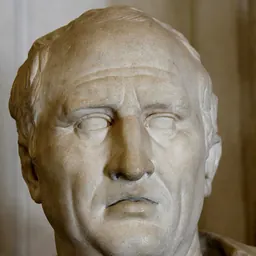
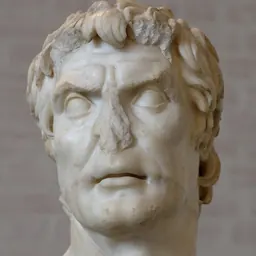
People in Quintus Roscius Gallus's life
Named in this biography and alive at the same time
Related people
Same field, nearest in time






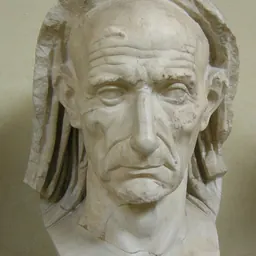
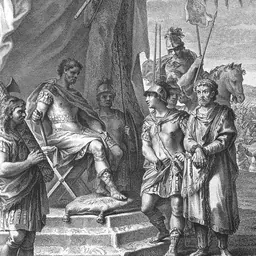
Contemporaries
People whose lives overlapped Quintus Roscius Gallus's


Frequently asked questions
Who was Quintus Roscius Gallus?
Roman actor
When was Quintus Roscius Gallus born?
Quintus Roscius Gallus was born in 126 BC in Ancient Rome.
When did Quintus Roscius Gallus die?
Quintus Roscius Gallus died in 62 BC.
What was Quintus Roscius Gallus's occupation?
Quintus Roscius Gallus was an actor and stage actor.
What nationality was Quintus Roscius Gallus?
Quintus Roscius Gallus was Roman.
Sources & further reading
· Wikipedia: Quintus Roscius Gallus
Cite this page
APA: Biography.guide. (2026). Quintus Roscius Gallus. https://biography.guide/quintus-roscius-gallus/
MLA: "Quintus Roscius Gallus." Biography.guide, https://biography.guide/quintus-roscius-gallus/.
Chicago: "Quintus Roscius Gallus." Biography.guide. https://biography.guide/quintus-roscius-gallus/.
Data last updated: 2026-09-20 · Spot an error? Report a correction.
Page generated 2026-09-27 05:30 UTC