
About Quincy Porter
Lived 1897 – 1966 (aged 69). Quincy Porter was an American composer, musicologist, music educator, conductor, violinist and pedagogue.
William Quincy Porter (February 7, 1897 – November 12, 1966) was an American composer and teacher of classical music.
Biography Born in New Haven, Connecticut, he went to Yale University where his teachers included Horatio Parker and David Stanley Smith. Porter received two awards while studying music at Yale: the Osborne Prize for Fugue, and the Steinert Prize for orchestral composition. He performed the winning composition, a violin concerto, at graduation. Porter earned two degrees at Yale, an A.B. from Yale College and a Mus. B from the music school.
After graduation, he spent a year in Paris, studying at Schola Cantorum, then went to New York where he studied with Ernest Bloch and Vincent d'Indy. In 1923 Porter joined the faculty of the Cleveland Institute of Music where he was later appointed head of the Theory Department. He remained there until 1928 when he resigned to focus on composition. Returning to Paris on a Guggenheim Fellowship Porter began composing in earnest. During his 3 years in Paris, he composed Blues Lointains (1928), the Suite for Viola Alone (1930), his 3rd String Quartet (1930), 4th String Quartet (1931), his 2nd Violin Sonata (1929), and his Piano Sonata (1930). During the first trip, his daughter, Helen, was born.
In 1931 Porter returned to the United States, first rejoining the faculty at the Cleveland Institute of Music, then teaching at Vassar, where he was appointed a professor in 1932. In 1954, Porter's 1953 Concerto Concertante, a concerto for two pianos and orchestra, was awarded the Pulitzer Prize for Music. Music historian Nicholas Tawa calls the piece, "affectively compelling, orchestrally luminous, and contrapuntally active"; cooperative rather than competitive. In 1938 later Porter became dean (1938–42) and then director (1942–46) of the New England Conservatory of Music, and in 1946 returned to Yale, as professor, to teach until 1965. His students there included Natalia Raigorodsky. Porter also served, from 1958 until his death, as chairman of the board of directors of the American Music Center, which he had founded with Howard Hanson and Aaron Copland in 1939. He died in Bethany, Connecticut.
He wrote a substantial amount in the "absolute (established) forms", including nine string quartets (1923–1953), several concertos (including one for harpsichord, one for viola, and one for two pianos, the latter work receiving the 1954 Pulitzer Prize for Music), and two symphonies. His later music—while tonal—is harmonically acerbic and dissonant. His work was also part of the music event in the art competition at the 1936 Summer Olympics.
Selected works Symphonies Symphony no. 1, 1934 Symphony no. 2, 1962 Other orchestral Ukrainian Suite, 1925 Poem and Dance, 1932 Dance in Three-Time, 1937 Music for Strings, 1941 New England Episodes, 1958 1925, 1930, 1931, 1935, 1937, 1943, 1950, 1958 Piano Quintet, 1927 Quintet for harpsichord and strings, 1961 Oboe quintet (Elegiac), 1966 Little Trio (Suite in E Major) for flute, violin, and viola, 1928 Clarinet quintet, 1929 Two violin sonatas (1926, 1929; second recorded in the 1950s and more recently, 1st given its premiere recording in the late 1990s) (also an early sonata from 1919 has been recorded) Suite for viola alone, 1930 Piano Sonata (1930) Sonata for horn and piano, 1946 Sextet on a Slavic Folk-Theme, 1947 Blues Lointains for flute and piano (1928)
Books Porter, Quincy. A Study of Sixteenth Century Counterpoint; Based on the Works of Orlando di Lasso. Boston: Loomis. 3rd ed. 1948. Porter, Quincy. A Study of Fugue Writing; Based on Bach's Well-tempered Clavichord. Boston: Loomis. 1951.
Don’t just read it —
keep it.
Full-length biographies made to live with: read them, listen on the way to work, watch them tonight.
- E-book
- Audio
- Video
Instant download · yours to keep · every purchase keeps this site free
Important facts
People in Quincy Porter's life
Named in this biography and alive at the same time

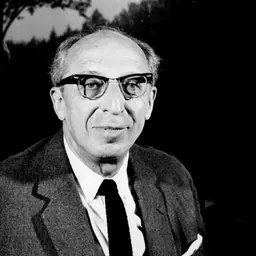
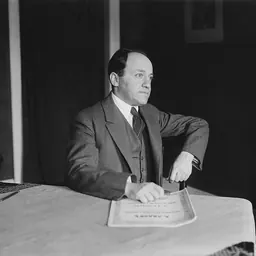



Related people
Same field, nearest in time




Contemporaries
People whose lives overlapped Quincy Porter's

Frequently asked questions
Who was Quincy Porter?
American composer (1897–1966)
When was Quincy Porter born?
Quincy Porter was born on 7 February 1897 in New Haven.
When did Quincy Porter die?
Quincy Porter died on 12 November 1966 in Bethany.
What was Quincy Porter's occupation?
Quincy Porter was a composer, musicologist, music educator, conductor, violinist and pedagogue.
What nationality was Quincy Porter?
Quincy Porter was American.
Sources & further reading
Cite this page
APA: Biography.guide. (2026). Quincy Porter. https://biography.guide/quincy-porter/
MLA: "Quincy Porter." Biography.guide, https://biography.guide/quincy-porter/.
Chicago: "Quincy Porter." Biography.guide. https://biography.guide/quincy-porter/.
Data last updated: 2026-09-20 · Spot an error? Report a correction.
Page generated 2026-09-27 05:20 UTC